A Randburg brief for sharper finishing
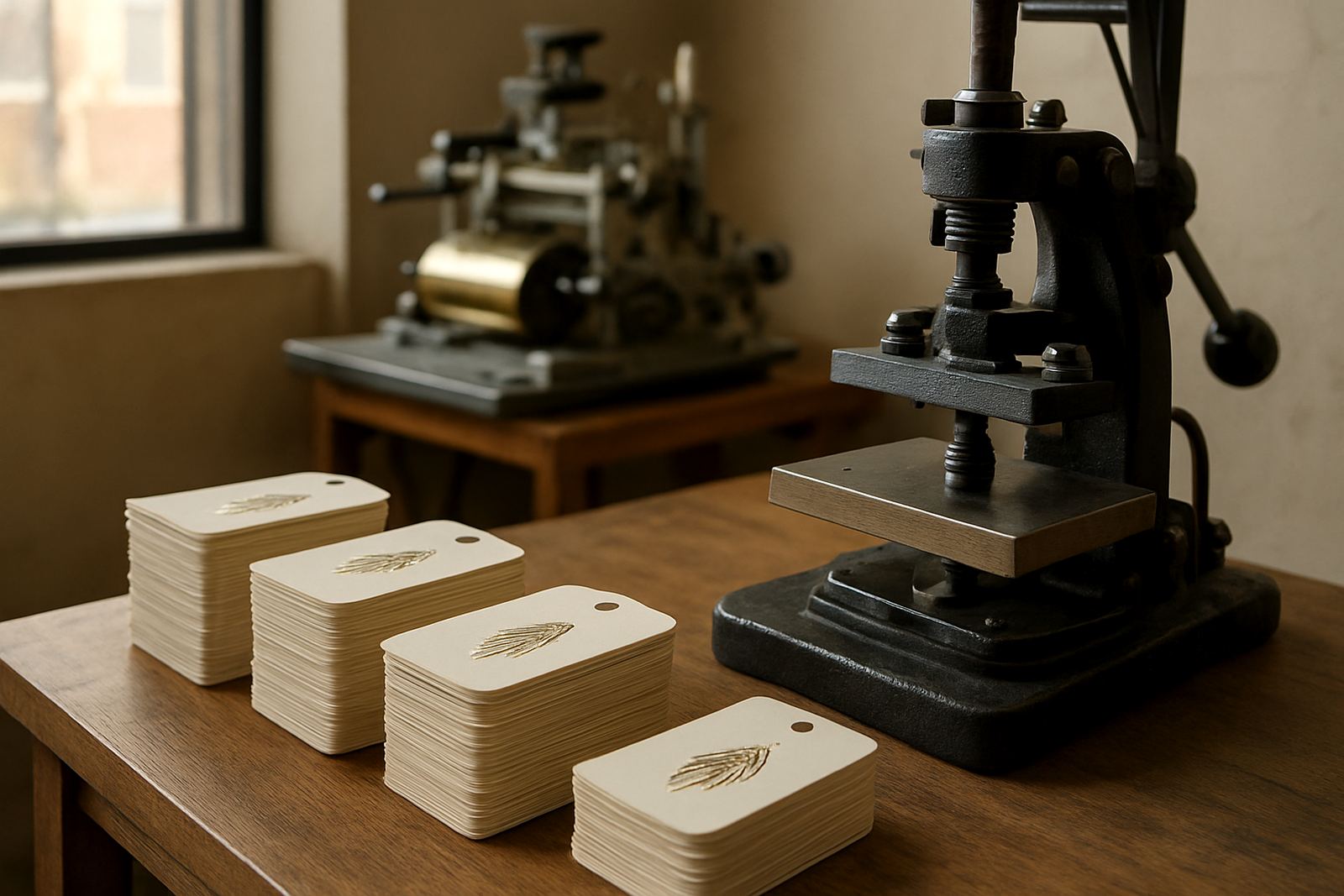
The client was a print shop in Randburg that already handled cards, sleeves and light packaging work for local businesses. They wanted to add foil swing tags so they could offer a stronger finish for clothing labels, gift tags and product hang tags without sending that work out.
The brief was practical. They needed a press that could handle small to medium batches, keep foil placement consistent and work reliably in a production area where the team often moved between different jobs in the same shift. The machine had to suit local power conditions too, because load-shedding and voltage dips can quickly affect heat stability and output.
They also needed a setup that would not take over the floor. Space in the finishing area was limited, so the press had to fit into an existing workflow with room for stock, dies and packing tables. The plan was to improve their offering without creating extra handling or long changeover times.
What the workshop had to solve
The main challenge was consistency. Foil on swing tags shows every fault, from uneven pressure to poor registration, so the client needed repeatable results across mixed card weights and different tag sizes. They were working with coated board, uncoated stock and a few textured papers, which meant temperature and pressure setup mattered from the start.
Another issue was labour. Their operators were experienced in general print finishing, but foil stamping was new to the shop. That meant the project had to include proper operator training, not just machine handover. We also had to make sure they could identify when a problem came from die mounting, foil matching or heater calibration, because those small details affect turnaround time.
- Different tag sizes from small apparel tags to larger retail swing tags
- Mixed paper and board stocks, including coated and uncoated material
- Compact production area with limited floor space
- Need for quick setup between foil colours and repeat jobs
- Protection against heat variation during power interruptions
Press supply and setup in Johannesburg City West
FoilPress supplied a hot-foil stamping press suited to the client’s volume and finishing mix, together with the foils, tooling advice and the first round of production support. The machine was installed from our Industria West base, with delivery into Randburg and on-site setup by our technical team.
We handled heater calibration, pressure setup and die mounting so the first production tests could start on correct settings rather than guesswork. The team also checked foil feed, impression balance and dwell time across a few common tag sizes. That gave the client a working baseline for both short runs and reorders.
Because the client wanted to keep the line moving, we set the press up to suit quick changeovers. The team could switch between tag designs with less wasted stock, and the foil matching process was simplified by keeping a clear record of stock type, die temperature and finish result. The whole exercise took 2 weeks from final sign-off to the first usable production run.
Operator training and daily production control
Once the press was installed, our technical manager and client support lead spent time with the operators on day-to-day running. Training covered safe warm-up, starting pressure, foil advance, die cleaning and how to spot a poor impression before a full batch was spoiled. That was especially important because the shop needed more than one operator to use the machine when work was busy.
We also covered simple production habits that keep foil quality stable in Randburg’s dry indoor conditions and across the summer humidity that can affect board behaviour in Johannesburg. The goal was not to overcomplicate the process. It was to make the machine usable by the team on any normal day, even when the schedule changed fast and the phone did not stop ringing.
- Warm-up checks before every shift
- Foil tension and feed checks before running a batch
- Pressure and temperature notes for each common stock type
- Die storage and cleaning between jobs
- Fast fault reporting for any uneven imprint or foil pull
Results after the first production weeks
Within the first few weeks, the client was producing foil swing tags for retail and small brand customers in-house instead of outsourcing them. That shortened lead times and gave them better control over finish quality. It also opened the door to upsell foil as an option on cards and packaging pieces they already printed.
The new service helped them quote more confidently on short runs, because they could keep finishing under one roof and avoid courier delays between suppliers. The team reported cleaner edges, more consistent foil coverage and fewer rejected sheets once the settings were locked in. For a shop of this size, that translated into less waste and a steadier production pace.
There was also a commercial gain. Foil swing tags are a visible product, so the client could show samples to walk-in customers and buyers in Randburg, Sandton and Roodepoort. That made it easier to explain the value of the finish, and the added margin on tagged work made sense without needing huge volumes.
What we would do again for a similar print shop
If we were doing the same project again, we would keep the process exactly this practical: assess the stock range first, match the press size to the real workload and allow time for training before the first live batch. That approach avoids early frustration and gives the operator confidence.
For a shop handling cards and packaging in a busy Gauteng area, we would also recommend a service plan from the start. Preventive servicing, heater calibration and a spare parts check help protect output when the machine is working most days of the week. In a market where turnaround matters, that small bit of preparation pays off quickly.
The Randburg project showed how a focused foil setup can widen a print shop’s finishing offer without a major change to the business model. With the right press, the right setup and steady support, swing tags became another profitable line rather than an add-on that caused delays.
Key facts
| Project location | Randburg, City West Johannesburg |
|---|---|
| Client type | Independent print shop serving retail and packaging customers |
| Machine type | Hot-foil stamping press for cards and swing tags |
| Typical material | Coated board, uncoated stock and textured tag paper |
| Timeline | 2 weeks from sign-off to first production run |
| Support supplied | Installation, training, die mounting, heater calibration and setup |
| Service coverage | Johannesburg, Roodepoort, Sandton, Midrand, Germiston and nationwide |