A retail packaging brief with a simple aim
The client was a young gift packaging startup in Soweto making rigid boxes for boutiques, events and corporate gifting. Their lids were already well made, but the plain print was not giving the product the shelf appeal they wanted. They needed a metallic logo that looked sharp from 30 cm away and still held up under handling, stacking and transport.
The brief was straightforward on paper, but it had a few practical demands. The finish had to work on short runs and smaller batch sizes, because orders changed often. The boxes also had a lightly coated surface, so the foil had to bond cleanly without crushing the lid board or leaving a patchy edge. We started by checking the board thickness, the lid size and the logo area before recommending the stamping setup.
In this case the main challenge was not the artwork, it was consistency. A gift box can look good on one sample and then drift when production starts. Our job was to set the press conditions so each lid came off looking the same, with clear foil edges and no burn marks.
What we supplied for the Soweto run
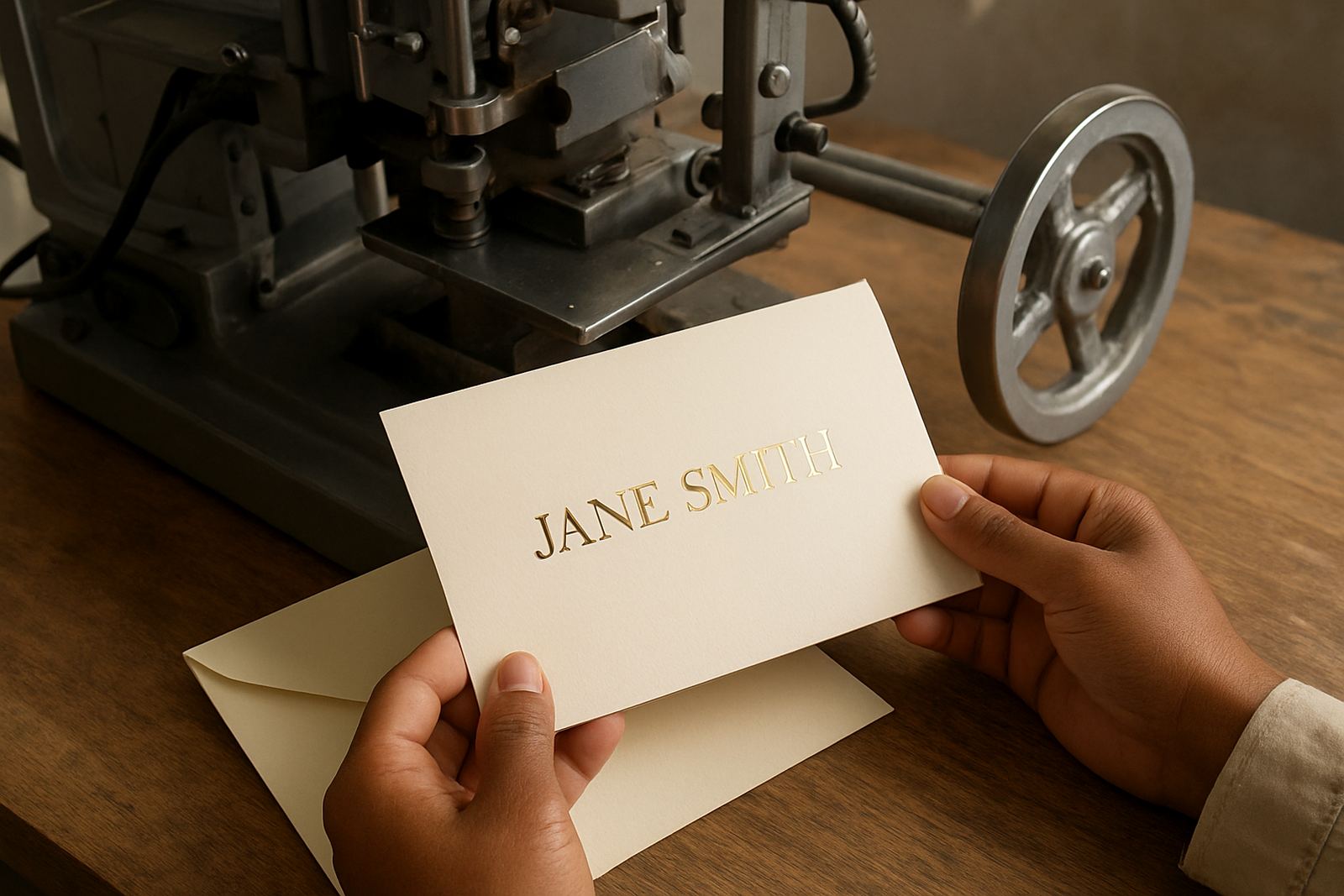
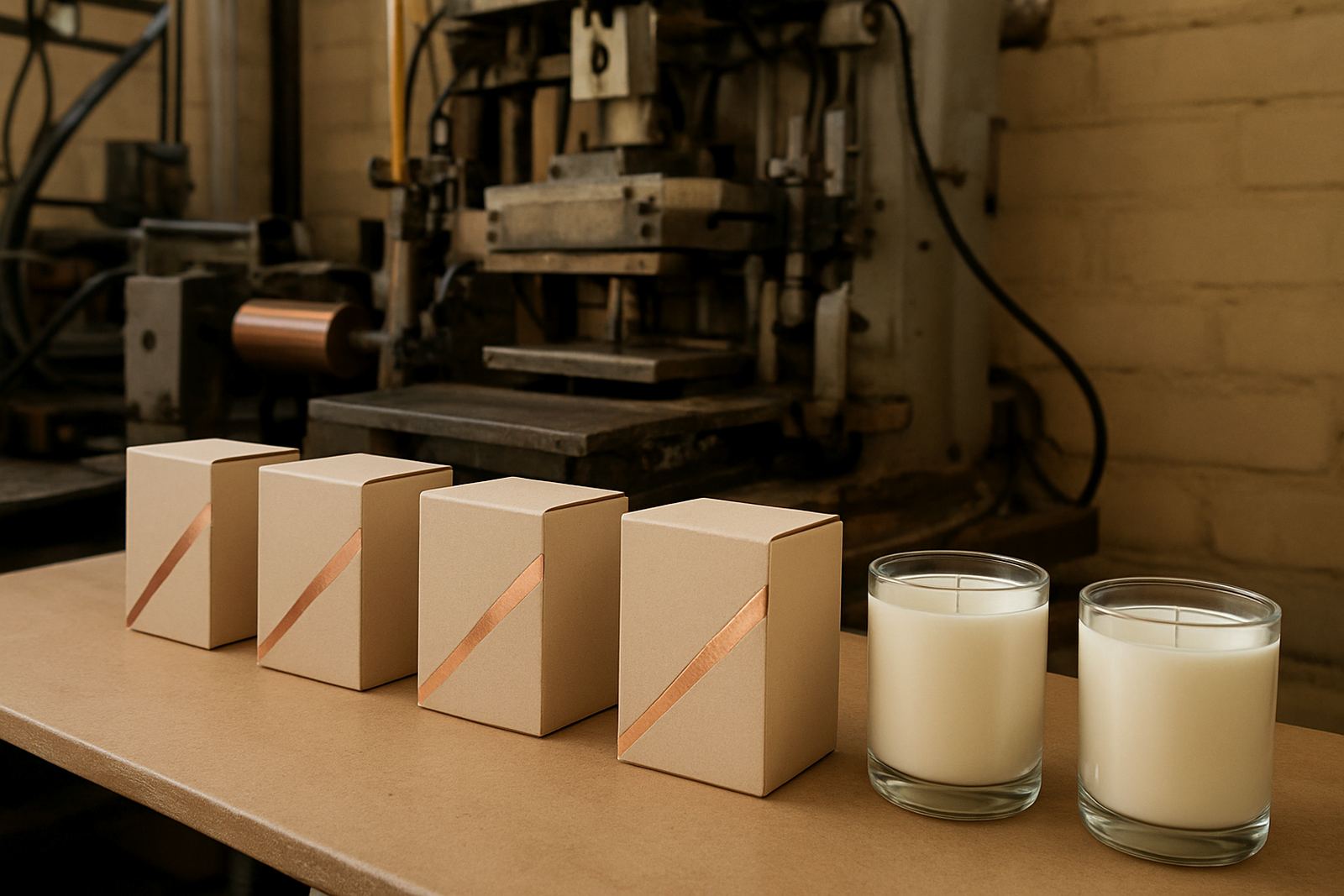
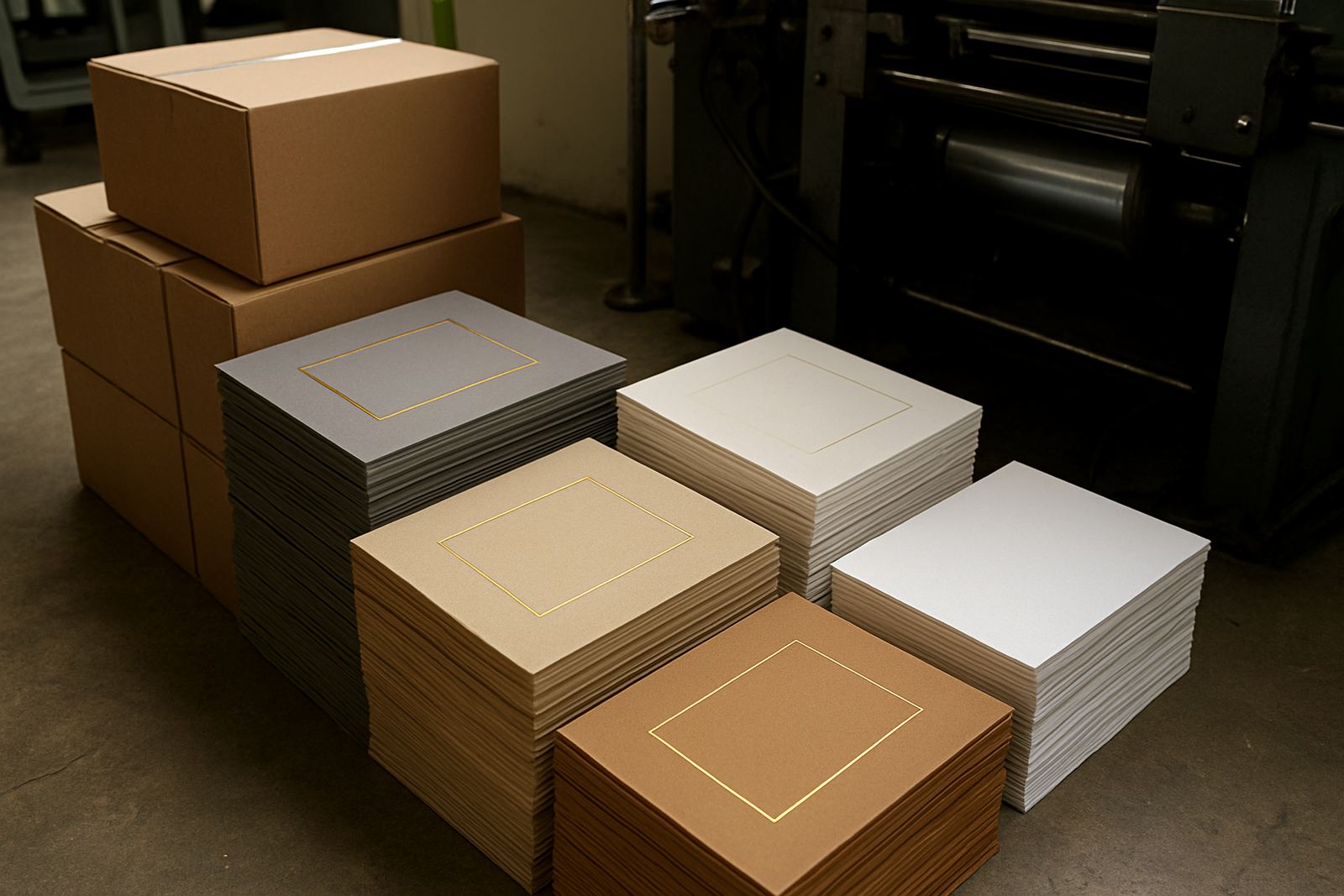
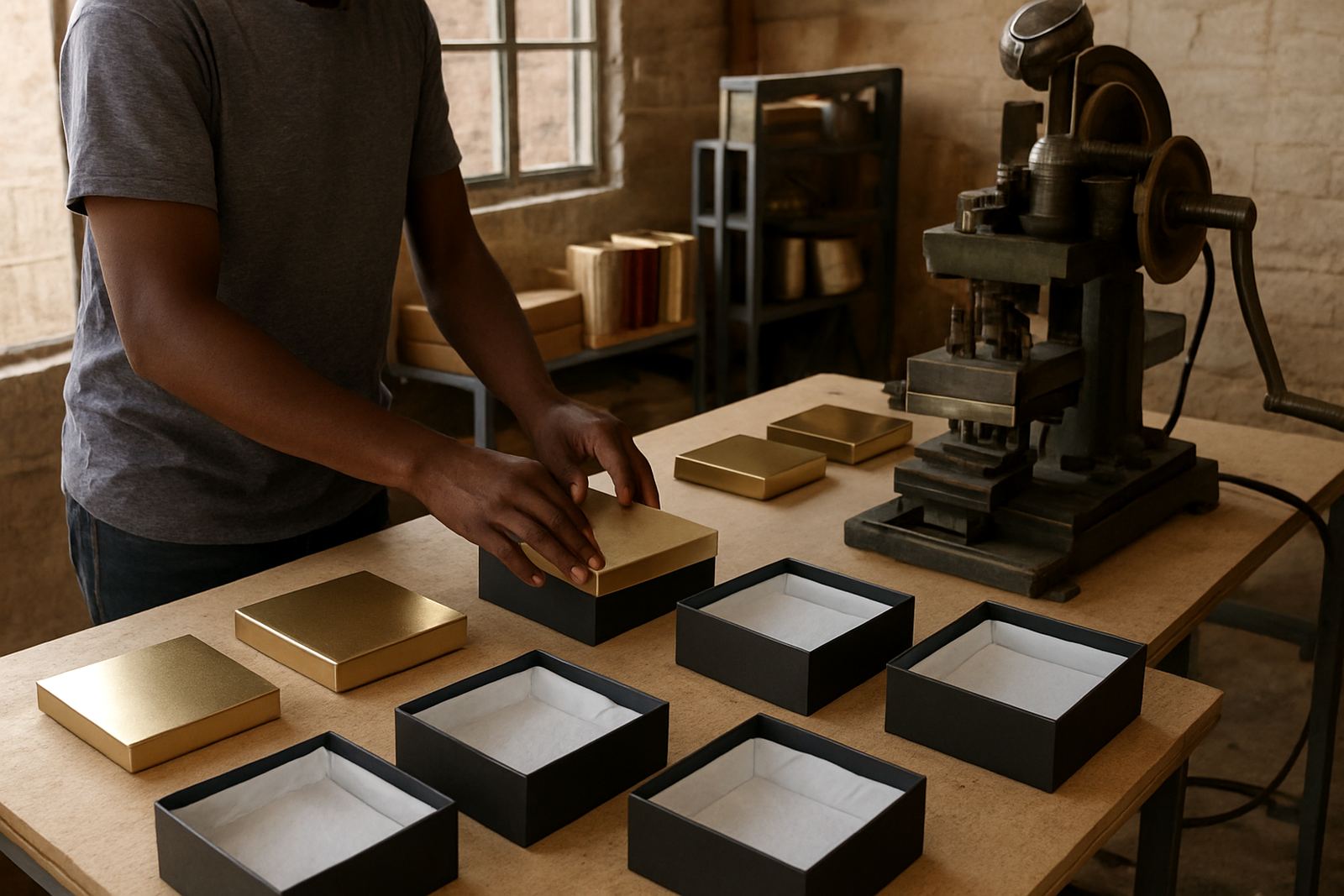
We supplied the hot-foil stamping press setup, the foil specification guidance and on-site support for the first production run. The logo area was kept modest so the finish stayed neat and the press cycle remained quick enough for the startup’s output. We also helped match the foil shade to the box colour, because a metallic finish can look too pale or too heavy if the contrast is wrong.
For this job we recommended a medium gold foil on a rigid lid with a smooth top wrap. The press settings were tuned for steady heat and even pressure across the full logo area. That mattered because the lids were being made in batches and the client could not afford visible variation from box to box.
- Rigid gift box lids with metallic logo stamping
- Logo area sized for retail presentation, not full lid coverage
- Foil matched for strong contrast on a dark wrap colour
- Press setup adjusted for consistent bond on coated board
- Cycle set for small and medium production batches
The production constraints we had to work around
Soweto deliveries often need to move around municipal loading times and traffic peaks, so the client wanted a process that would not waste hours. We planned the setup around a single visit and kept the test stage tight. Because the startup was operating from a compact workspace, the equipment also had to fit into a production area shared with cutting, folding and packing tables.
Load shedding was another practical issue. The client needed a press routine that could recover cleanly after power interruptions without losing alignment. We explained how to restart safely, warm the plates back to the right range and check pressure before resuming full runs. Coastal humidity was not a major factor in Soweto, but we still advised on foil storage in sealed cartons away from heat and dust, since foil can pick up damage if it is left open in a busy packing room.
- Small production floor with shared packing space
- Batch work that changed from week to week
- Power interruptions that required restart checks
- Need for clean results on coated rigid board
- Storage guidance for foil rolls and spare dies
Setup, training and first-pass testing
The project took three weeks from initial assessment to approved production settings. In week one we reviewed samples and confirmed the press size, die mounting method and foil choice. In week two we handled installation, pressure setup and heat checks, then ran sample lids until the logo sat correctly in the centre of the lid panel. Week three focused on operator training and short production runs so the team could work independently.
Our technical manager and workshop supervisor worked through the first pass with the client’s operators, showing where small changes in pressure made a big difference to foil transfer. We also covered die cleaning, heater calibration, and how to check for slight movement if the board had been stored in a warm room. The aim was not just a nice sample, but a repeatable process the team could keep using on busy days.
By the end of the third week, the startup had a stable routine for setting up the die, checking the first box and then running the batch without stopping every few minutes to correct the finish.
The result on the shelf and on the packing table
The finished gift boxes looked more premium at retail level, and the metallic logos gave the brand a clearer identity. More importantly, the startup could now produce a clean, repeatable finish without relying on outside help for every run. Their packing team reported fewer rejects because the registration stayed true and the foil was not lifting at the edges.
The client also saw an improvement in speed. Once the temperature and pressure settings were locked in, the press was able to hold its quality through longer runs, which helped them fill weekend orders and smaller retail replenishment jobs. In practical terms, that meant less rework, less wasted board and better use of labour in a small workshop.
For a startup, that kind of consistency matters. Buyers notice when box lids look uneven, and retail suppliers do not enjoy chasing packaging defects. This finish gave the business a cleaner first impression and a more dependable production rhythm.
What we would do again on a similar project
If we were doing the same kind of job again, we would follow the same approach: sample first, then set the press for the actual board and foil combination, then train the operators on the exact routine they will use in production. That keeps the result practical and it avoids problems later when the rush orders arrive.
We would also keep the foil match simple and purposeful. For rigid gift boxes, a well chosen gold or silver finish often works better than trying to force a complicated effect that looks good in theory but loses clarity on the lid. The key is to balance appearance, batch speed and board performance so the packaging looks good and the workflow stays manageable.
For businesses in Soweto, Roodepoort, Randburg, Midrand, Sandton and across Gauteng, that approach saves time and cuts down on wasted material. It is especially useful where teams need equipment support, spare parts and quick call-out help without long downtime.
Key facts
| Project type | Rigid gift box lid foil stamping for retail presentation |
|---|---|
| Location | Soweto, Johannesburg |
| Timeline | 3 weeks from sample review to production-ready settings |
| Foil finish | Metallic gold foil on logo area |
| Substrate | Rigid box lids with coated top wrap |
| Support delivered | Installation, training, pressure setup, heater calibration and first-run testing |