Why bakery boxes need foil that reads well from the till point
Bakery packaging has a short first impression window. At the till point, at a market stall, or in a mixed retail shelf, the box has to tell the customer what it is and why it is worth taking home. Foil works well on cake boxes, pastry cartons, biscuit sleeves and gift packs because it catches light even when the print is simple.
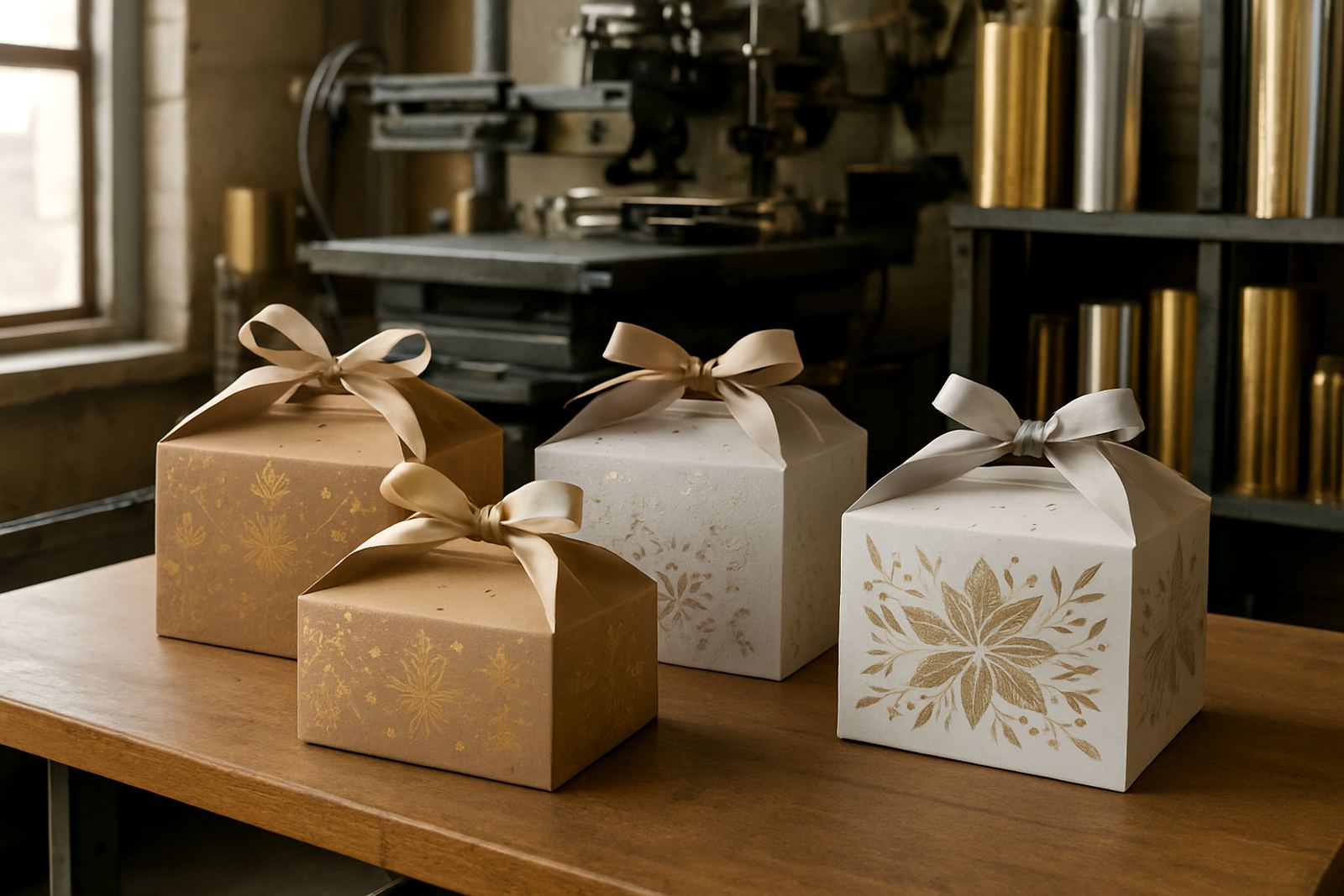
For bakeries in Johannesburg, Sandton, Randburg and Roodepoort, the pressure is usually on seasonal turnover. Mother’s Day, Christmas, Valentine’s Day, Easter and year-end gifting all need short runs with sharp detail. Foil makes those runs feel considered without needing a full rebrand every time. It also helps smaller producers who sell through deli counters, coffee shops and farm stalls where packaging does a lot of the selling.
Moisture from fresh bakes, freezer storage and handling in humid coastal deliveries can all affect carton stock. The right press setup keeps the foil clean on coated board and on the thicker uncoated grades often used for sturdy bakery boxes.
Typical press setup for bakery box work
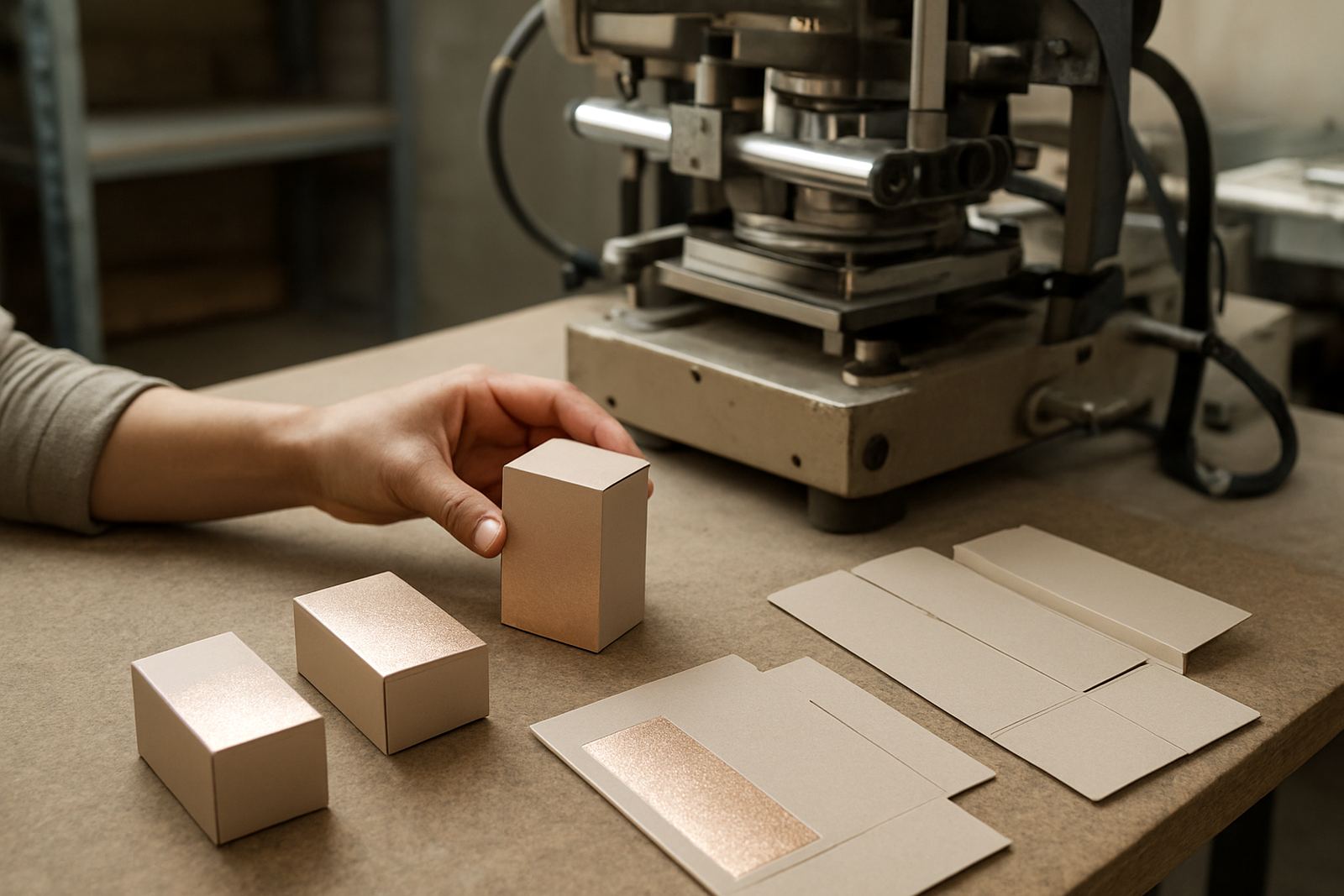
Bakery box work usually suits a compact to mid-size hot-foil stamping press with a flat bed, consistent heat control and accurate pressure adjustment. For short promotional runs, many clients use a hand-fed setup with quick die changes. For larger packing lines, a heavier press with a wider bed and repeatable registration is easier to keep in line.
Common equipment choices include:
- a flatbed hot-foil press for lids, sleeves and carton panels
- a heated plate or head with steady temperature control
- brass or magnesium dies for logos, borders and seasonal marks
- foil reels in gold, silver, holographic or coloured finishes
- simple guides or stops for repeat positioning on box faces
For bakeries running early shifts, stable warm-up matters. Load-shedding can interrupt production and a press that returns to set temperature quickly saves waste. Kagiso Molefe and the technical team often focus on heater calibration, pressure setup and die mounting first, because those are the areas that show up in the finished box straight away.
Planning the artwork and box layout before the first run
Good foil starts long before the press is switched on. On bakery boxes, the logo position, fold lines and glue flaps need to be checked together. A design that looks fine on screen can land badly if the foil sits too close to a crease or if a logo crosses a panel that flexes during filling.
For most carton work, keep the foil mark in one clean area rather than spreading it over several folds. Boxes for cupcakes, macarons and celebration cakes often benefit from a centred mark on the lid, while smaller pastry cartons usually need a corner mark or band so the product name still has room.
- Leave enough space from folds, cut lines and glued corners
- Keep fine text larger than you would on a label
- Match foil colour to print ink and board colour early in the job
- Allow for slight movement on hand-fed runs
- Test on the exact carton stock, not a sample sheet
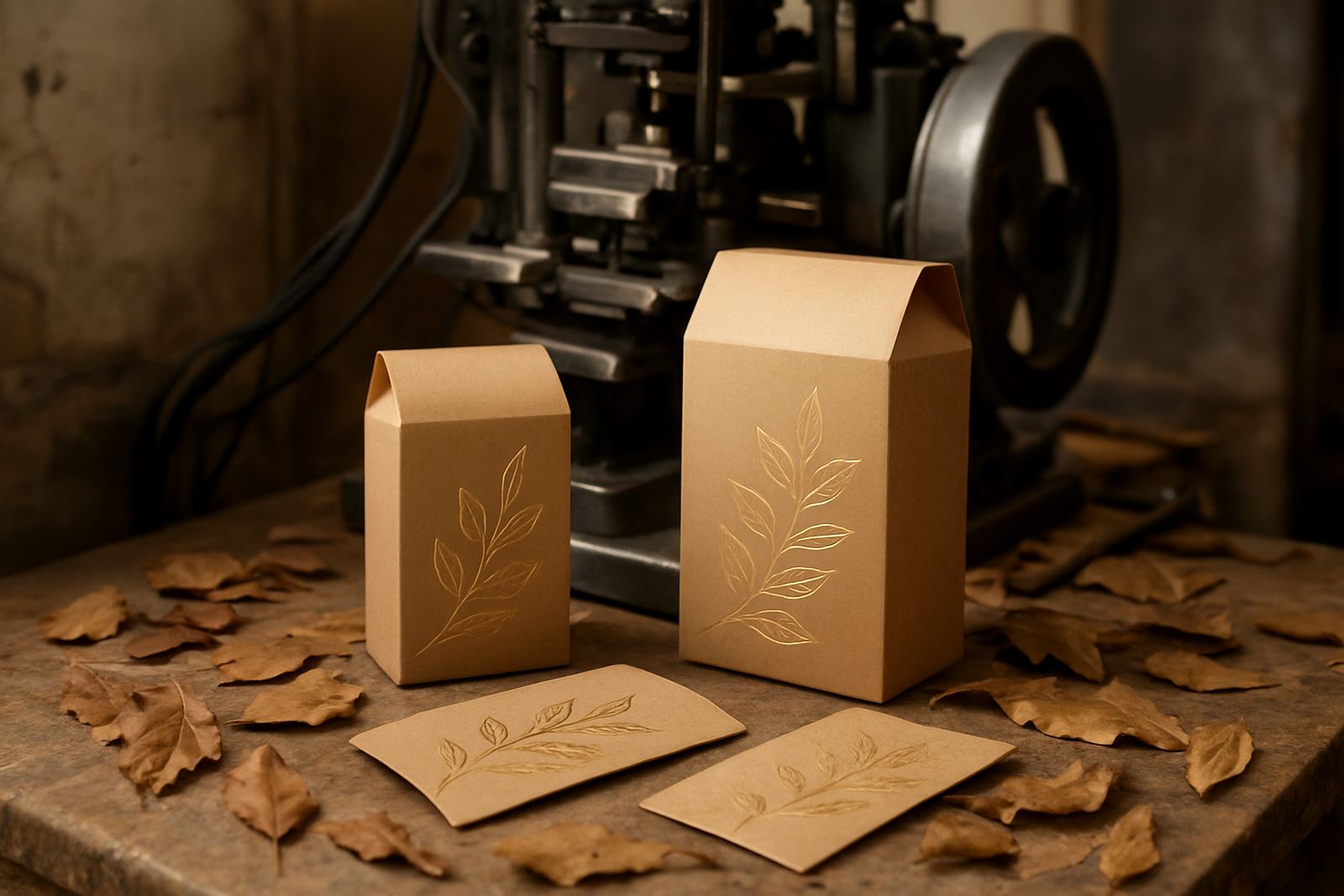
Foil matching is worth doing properly. A pale champagne foil on kraft board reads differently to the same foil on white SBS stock. If the bakery is selling premium gift boxes, a warmer metallic finish often works better than a very bright reflective one.
Where bakery box projects go wrong most often
The most common fault is too much detail in too small a space. Fine script, thin borders and tiny ingredient text do not transfer well to foil on textured or soft board. Another common problem is poor pressure balance, which leaves patches where the foil misses or the edges look doubled.
Heat is another issue. Too much heat can flatten the board grain and make the finish look dull, while too little heat gives weak transfer and short life on the pack line. On bakery work, where boxes may be handled with flour dust, gloves or slightly warm product, the finish still needs to look neat after packing.
Clients in Germiston, Midrand and Industria West often ask about speed, but speed only helps once setup is right. A badly set press makes more scrap, more rework and more downtime. Preventive servicing, die checks and a proper test sheet save money over the season.
Budget ranges for bakery box foil work in Rand
Costs depend on run size, box material and whether you need a compact press for short promotional batches or a higher output machine for regular production. In the South African market, a small bakery that wants to start with seasonal boxes may look at a practical entry setup, while a manufacturer supplying retail chains needs heavier duty equipment and better spares support.
As a rough guide, many bakery box projects fall into these ranges:
- entry-level hot-foil press setups: from about R45 000 to R95 000
- mid-range production presses: about R95 000 to R220 000
- larger presses and upgraded control systems: from about R220 000 upwards
- dies, foils, setup parts and service work: budget separately for each run
For a growing bakery in the West Rand or Johannesburg north, it often makes sense to start with a machine that can handle both box lids and sleeves. That gives better use across the year, not only during gifting months. Sibusiso Mthembu and the FoilPress team support installation, operator training and production optimisation so the equipment is set up for the actual box sizes being used.
Servicing and support for bakeries that cannot afford downtime
Bakery production works to early schedules. If a foil press goes out of alignment before a dispatch run, the packing team loses time fast. That is why breakdown repairs, preventive servicing and spares supply matter as much as the machine itself. For businesses in Industria West, Roodepoort or Sandton, same-day or next-day response can keep orders moving.
Regular checks usually cover pressure, temperature stability, die condition, alignment and foil feed. On carton work, operators also need training on how the stock behaves, because board density changes from one supplier to the next. A box that stamps well in winter may need a small adjustment in summer when humidity shifts.
FoilPress supplies presses and foils nationwide, with support from Johannesburg City West for clients across Gauteng and beyond. For bakery boxes, the aim is simple: clean foil, repeatable results and enough control to make seasonal packs worth the effort.