What a wide platen press does for larger pack work
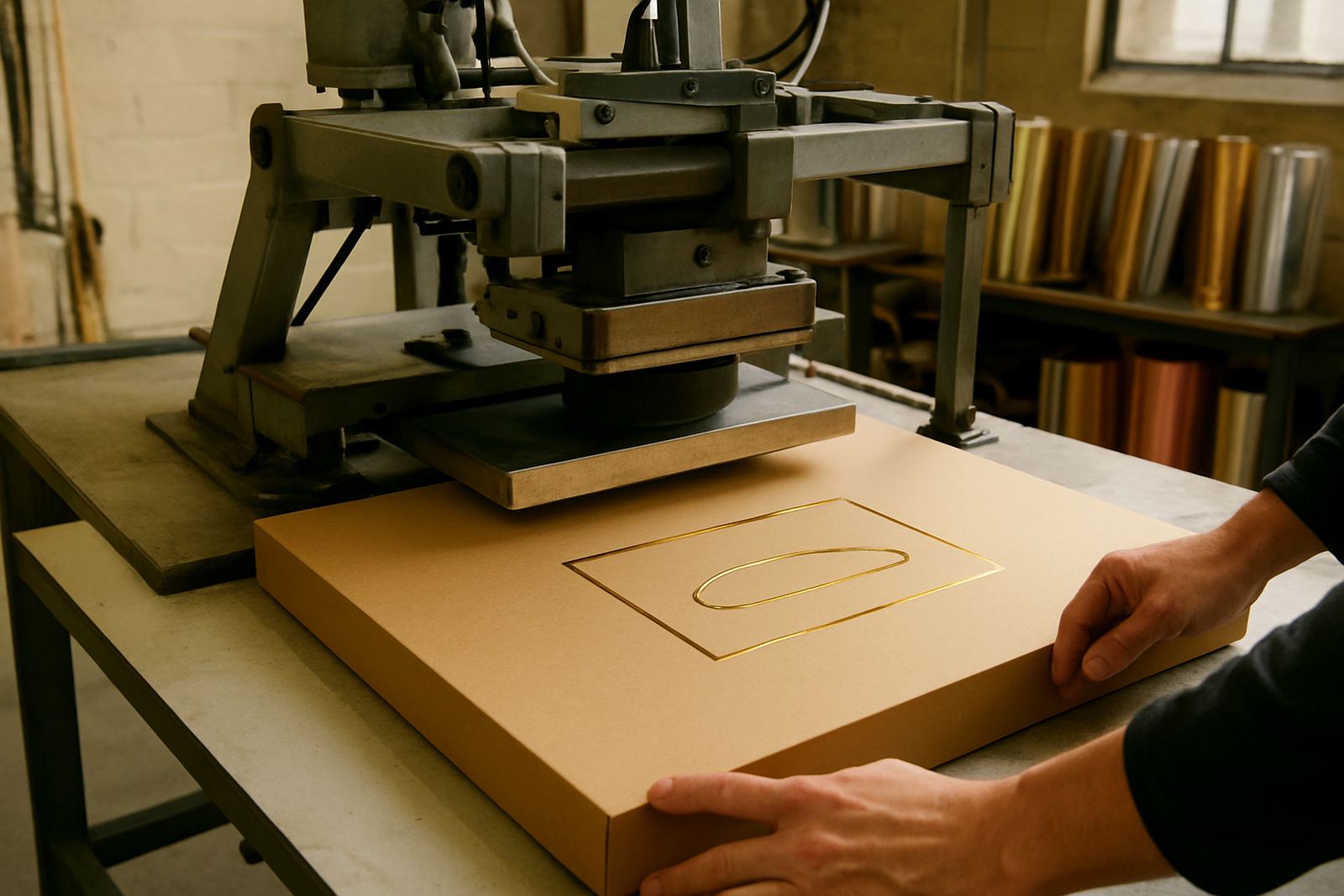
A wide platen machine is built for bigger sheets and broader foil areas than a standard hand-fed press. It is used where a carton, folder or presentation box needs a larger stamping face, more even pressure and repeatable placement across the whole panel. That matters in packaging because a weak impression shows up fast on coated board, textured stock and laminated surfaces.
For many jobs, the main gain is not only size but control. A wider platen gives better support for larger dies and reduces the chance of uneven foil transfer at the edges. In practical terms that means cleaner logos, fuller solid foils and less waste during make-ready. On busy runs, that saves time and film, especially when your artwork covers a broad front panel or a long flap.
- Suitable for cartons, rigid boxes, file covers and presentation sleeves
- Works well for larger single hits and repeated brand marks
- Helpful where the foil area sits close to score lines or folds
Size ranges and format choices we supply
Wide platen presses come in different bed widths and feed openings, depending on the board size and the shape of the job. Some customers only need a slightly wider throat for A3 and SRA3 type work, while others want a full packaging press for oversize carton panels. The right choice depends on die size, sheet size, daily volume and how much room you need for guides and handling.
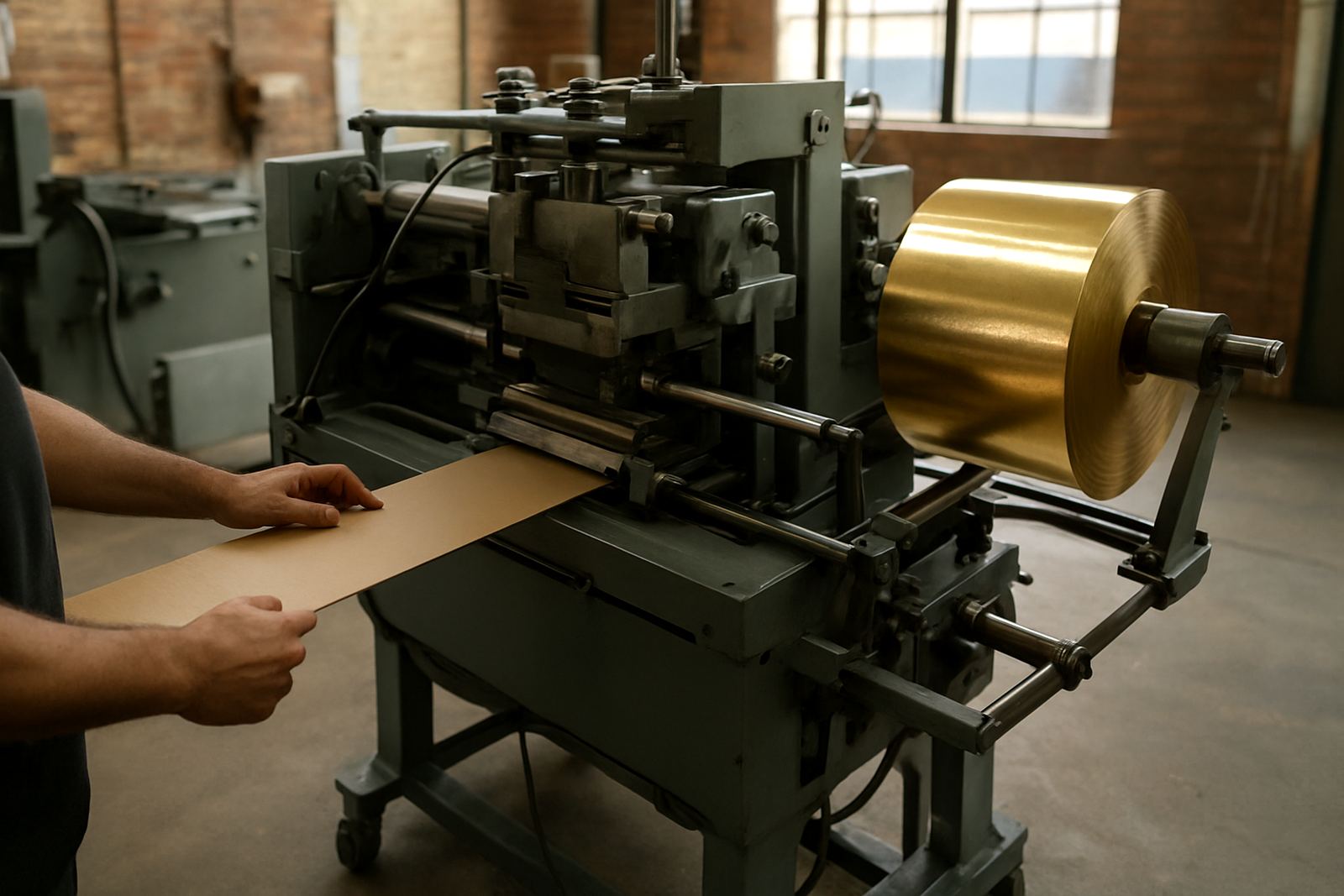
Typical options include manual feed for short production runs, semi automatic feeding for higher output and heated platens that hold temperature more consistently through the shift. If the work changes often, adjustable side lay, front lay and pressure zoning can make setup quicker. For heavier board, a machine with a stronger frame and stable platen travel is worth the extra floor space.
- Small and mid format units for folders, sleeves and sample boxes
- Large format units for carton fronts, lid panels and rigid packaging
- Options for temperature control, timers and repeat stroke settings
Where a wide platen machine suits best
These presses suit packaging printers, carton converters, display makers and craft businesses that have moved into larger presentation work. They also fit short to medium run jobs where foil detail is important and the pack has a premium finish. In Johannesburg and across Gauteng, a wide platen machine is often used where clients want quick turnaround for retail launches, corporate gifts and special edition packs.
It is especially useful for businesses that work with thick board, folded cartons and multi panel items. If you are producing gift boxes for the coastal market, moisture stable handling becomes important as well, because humidity can affect board flatness and foil adhesion. In inland areas like Midrand, Randburg and Germiston, the issue is often dust control and heat consistency in the workshop. A well set machine handles both if the setup is right.
- Packaging plants needing larger foil areas and cleaner registration
- Printers doing short runs of premium cartons and sleeves
- Box makers and finishers working with coated, laminated or textured stock
Installation, power and workshop setup
Installation starts with floor space, power availability and safe access for loading the machine. A wide platen press needs a level base, enough clearance for opening covers and enough room for the operator to feed sheets without strain. For larger models, plan for forklift access or proper moving gear, because the frames are heavy and should not be dragged across a workshop floor.
Most machines will need a stable single phase or three phase electrical supply depending on the model, heater load and control system. If your site has load-shedding, it is worth planning for a proper shutdown routine so the platens cool safely and settings are not lost. Some sites also need extraction or improved ventilation, especially where foil fumes or heat build-up become a concern. We assess the site before installation so the press lands in the right place first time.
- Check floor load capacity, door widths and access routes
- Confirm power supply, isolator position and emergency stop access
- Allow space for dies, foil reels and board staging
Heat, pressure and alignment settings that matter
Good foil work depends on three things working together: temperature, pressure and dwell time. On large cartons, the challenge is keeping those settings even over a wider platen face. If pressure is too light at one side, the foil breaks up or the impression looks pale. If heat is too high, fine detail can blur or the stock may scorch. That is why calibration matters before full production starts.
Presses supplied by FoilPress can be matched to your typical board thickness and foil type, then adjusted during setup for the exact job. During commissioning we check heater calibration, pressure balance and die mounting so the operator is not fighting the machine every day. A small change in stock or coating can alter the result, so the machine should be set with repeatability in mind. This saves time on rework and keeps the pack looking consistent across the run.
Care, servicing and support through the year
A wide platen press will last longer and run more predictably if it is serviced on schedule. That means checking heaters, wiring, moving parts, guide surfaces and pressure systems before a breakdown interrupts production. In busy pack shops, a small fault can stop a whole job line, so preventive servicing is usually cheaper than waiting for a failure.
FoilPress supports installation, operator training, preventive servicing, breakdown repairs, heater calibration, pressure setup, die mounting, foil matching, spares supply and production optimisation. We work from Industria West in Johannesburg and support clients across Roodepoort, Randburg, Midrand, Sandton, Germiston and nationwide. For coastal customers, we also keep an eye on corrosion and storage conditions, because humidity and salt air can affect machine parts and foil stock if they are not handled properly.
- Keep platens clean and free of adhesive build-up
- Check cables, thermostats and safety switches regularly
- Store foils and dies in a dry area away from direct heat
What to confirm before you place an order
Before ordering, it helps to measure the biggest sheet you expect to run, the die area you need and the thickness of board or substrate. You should also know whether the job is mainly cartons, folders or presentation boxes, because that changes the platen width and feeding setup. If you plan to add foil to embossed panels or heavy laminated work, tell us upfront so the machine can be specified correctly.
We also suggest confirming your production volume, available power and who will operate the press day to day. That tells us whether a manual machine, semi automatic model or larger production unit will suit you best. If the job mix changes often, ask about accessories that improve registration and reduce setup time. The better the brief, the easier it is to match the press to the work and avoid costly changes later.
- Largest finished sheet size and foil area
- Board thickness, coating type and expected daily volume
- Power supply, workshop space and delivery access
Key facts
| Product type | Wide platen hot-foil stamping press |
|---|---|
| Main use | Larger cartons, folders, presentation boxes and packaging panels |
| Format range | Small, mid and large format options available |
| Pressure system | Adjustable platen pressure for fine detail and larger solid areas |
| Heat control | Heated platen with temperature calibration support |
| Support areas | Johannesburg, Gauteng and nationwide supply and servicing |