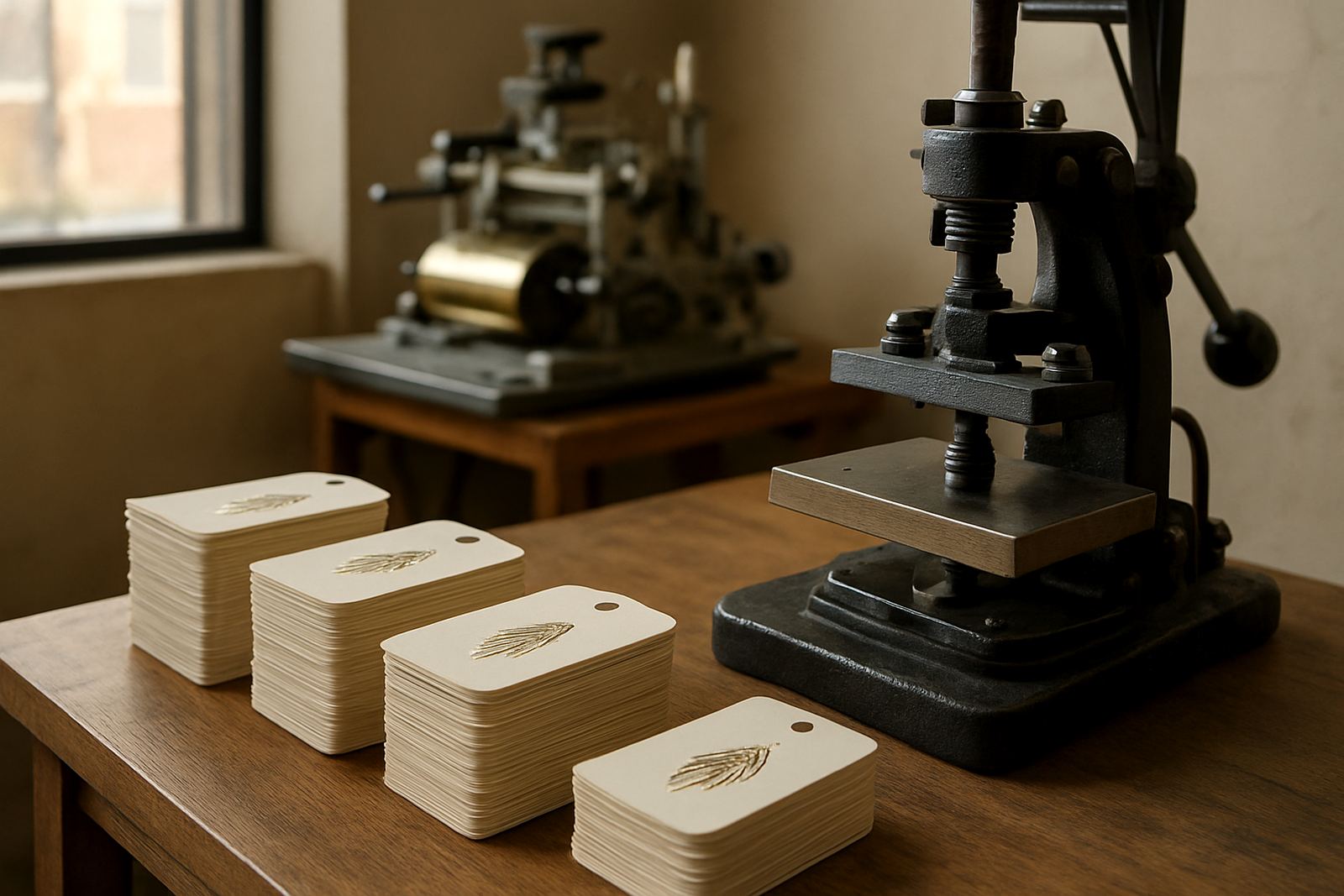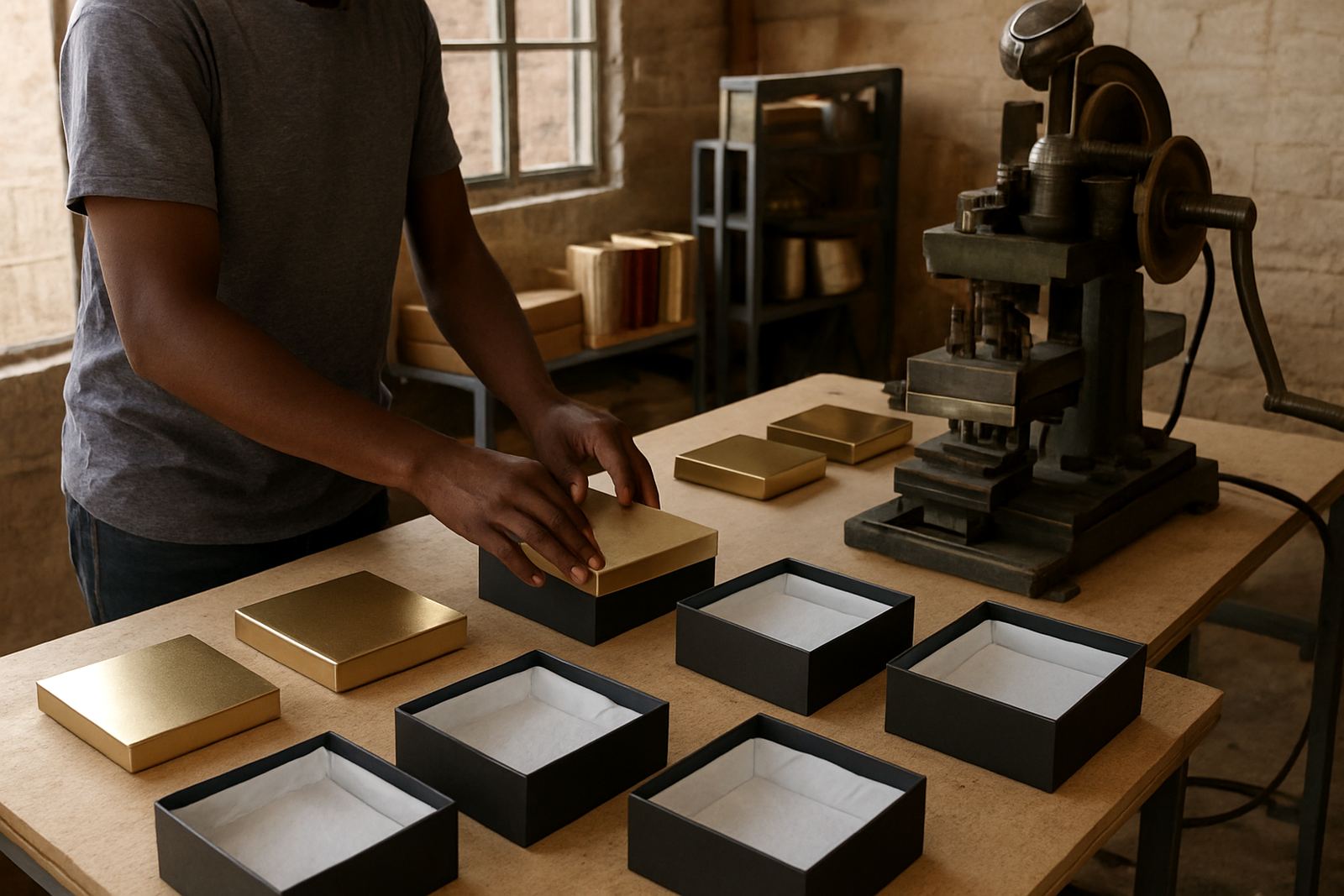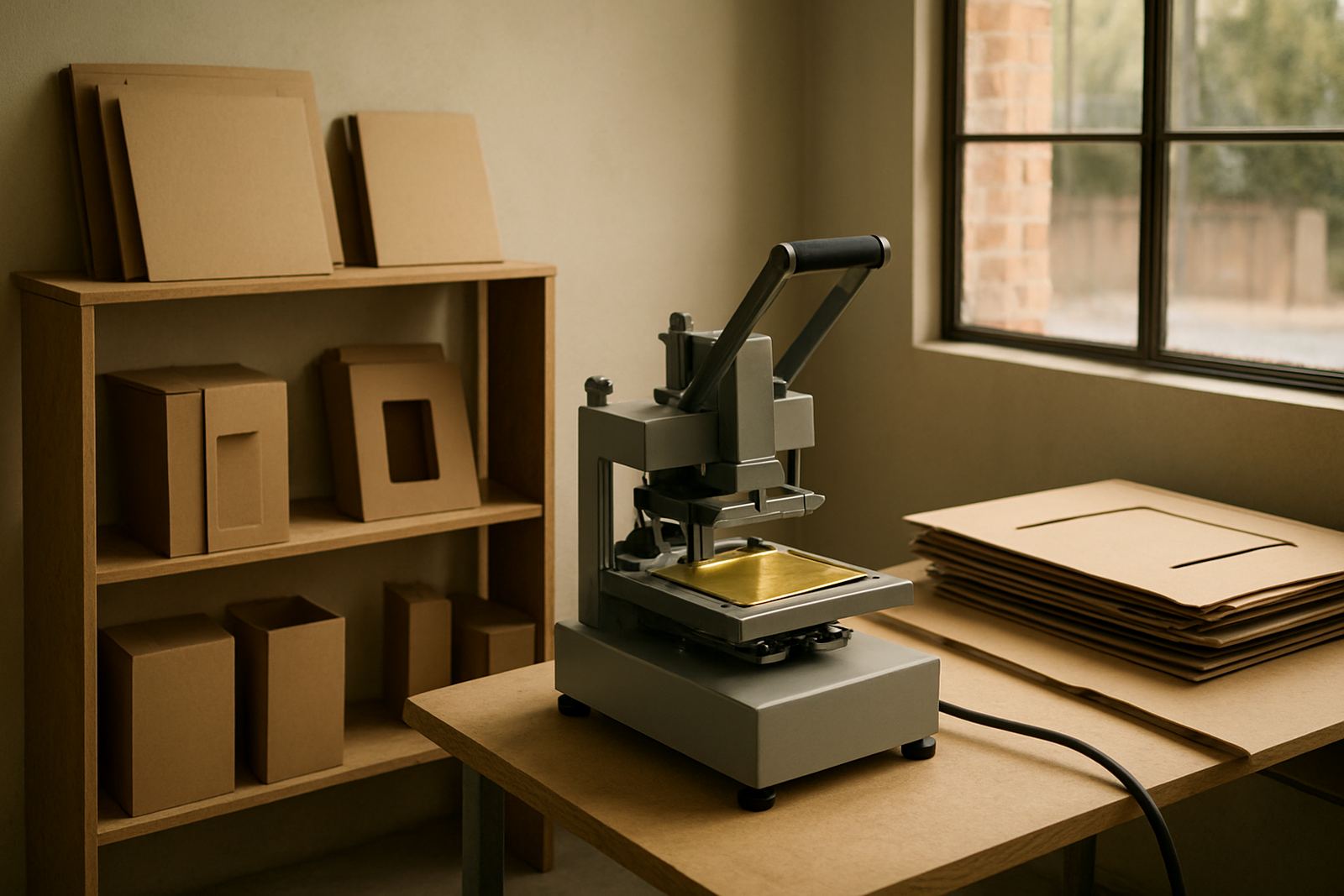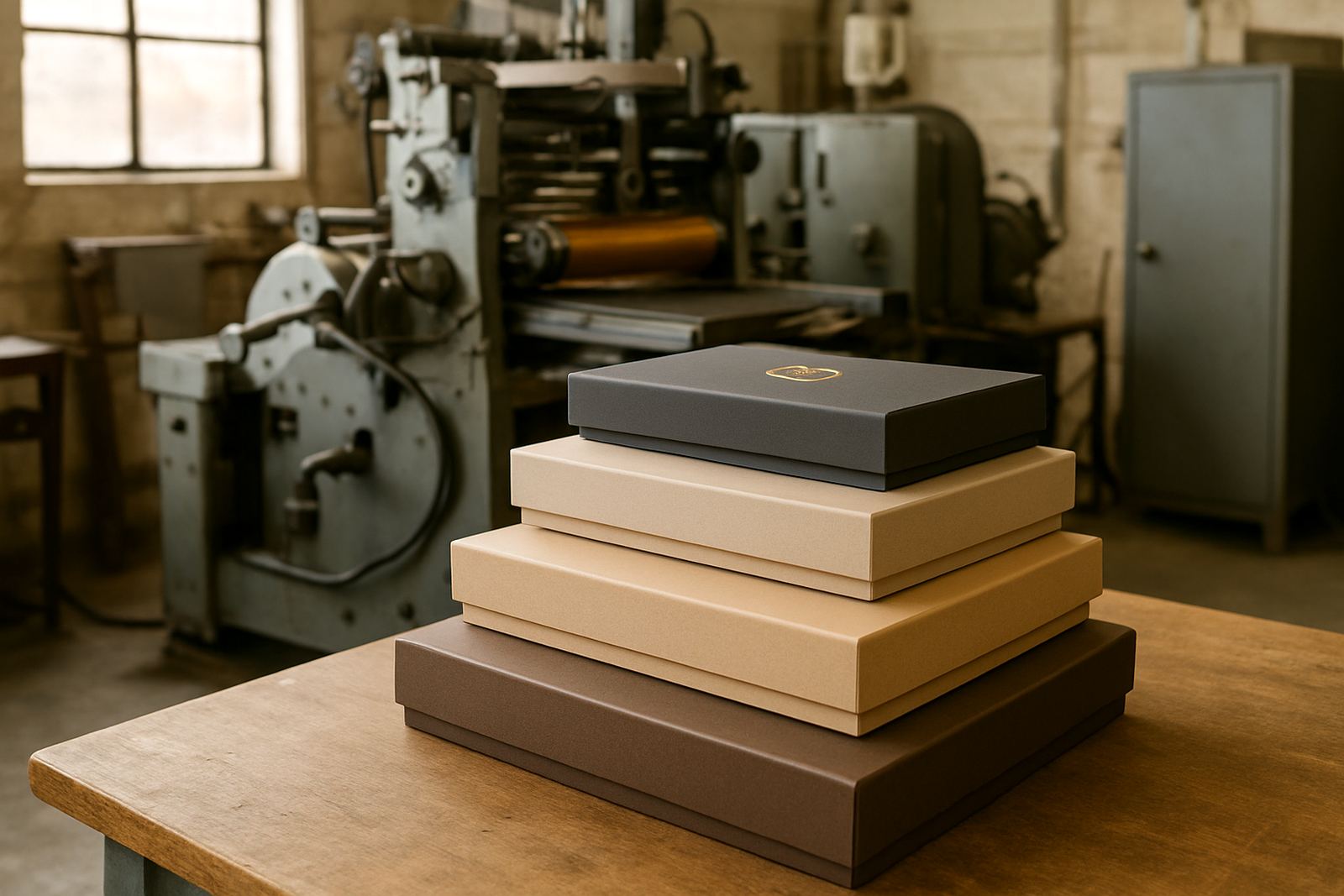
A West Rand brief with several lid sizes
The client was a local rigid box manufacturer in the West Rand supplying presentation packs, gift boxes and retail packaging to customers across Johannesburg and Gauteng. Their problem was simple to explain and hard to fix on the floor. They had three lid sizes moving through the same branding line, and the foil mark needed to sit in the same position on every one, with no smudging, no patchy transfer and no visible shift when the operator changed from one size to the next.
They were also working against normal production pressures. Orders came in batches, some runs were small and urgent, and the factory had to manage load-shedding pauses, staff rotation and the usual pressure that comes with finishing cardboard and boardwork in a warm, dusty workshop. On top of that, the lids had a coated surface that looked good but can be unforgiving if heat and pressure are not set correctly. A little too much heat and the foil can open up at the edges. Too little pressure and the image starts to break up.
- Client type: rigid box and packaging manufacturer
- Area: West Rand, serving Johannesburg and nearby distribution routes
- Product: multiple box lid sizes with branded foil marks
- Main issue: repeatable alignment and finish across sizes
What the press had to do on the floor
The brief was to standardise the foil branding setup so the operator could move between lid sizes without long rework periods. The customer wanted a press that could hold accurate registration, heat up evenly and recover quickly after power interruptions. They also needed training that was practical enough for a production team, not just a once-off handover.
We specified the job around production realities. The press had to cope with short set-up windows, decent daily output and repeat runs on the same artwork. That meant checking platen heat stability, pressure distribution and die mounting position before the first full run. We also looked at the way the foil fed through the machine because inconsistent tension is one of the quickest ways to waste foil and time. In a packaging plant, that matters more than theory.
- Key requirement: repeatable registration across three lid formats
- Secondary requirement: stable heat after power cuts and restarts
- Finish requirement: sharp foil edges on coated board
- Operating requirement: quick changeover between runs
Press setup, die mounting and foil matching
FoilPress supplied the rigid-box press, set the heater calibration and handled the die mounting for the branded artwork. The press was aligned to suit the customer’s largest lid first, then adjusted for the smaller sizes so the same mark stayed centred and square. We checked pressure setup at different points across the platen, because even a small high spot can show up as weak foil transfer on the outer corners.
Foil matching was done with the board finish in mind. The client was using a coated surface that needed a clean release without over-burnishing the board. We tested a few foil options and settled on the one that gave the best transfer at a moderate temperature. That reduced the chance of scorching and helped keep the cycle steady across the day. The workshop team then confirmed the feed direction, trim allowances and cooling time between pulls.
Because the site had to deal with interruptions from the municipal power supply and occasional load-shedding, we also showed the team how to restart the press safely after a stop. That included checking platen temperature, confirming the die was still seated properly and making sure the first sheet after a restart was not sent straight into stock without inspection. It saves wasted board and avoids mixed-quality packs getting through.
- Work completed: installation, heater calibration, pressure setup and die mounting
- Testing focus: foil release, corner coverage and centred placement
- Restart process: safe warm-up checks after outages or stoppages
Training for operators and supervisors
The line was only going to stay consistent if the operators understood why the settings mattered, so we spent time on hands-on training. The machine team were shown how to identify when a lid needed a minor pressure adjustment and how to tell the difference between a foil issue and a board issue. That part is important, because packaging factories often lose time chasing the wrong fault.
We also trained the supervisor on the daily checks that keep the press stable. These included cleaning around the platen, checking the die face, confirming foil roll alignment and watching for heat drift during longer runs. The client wanted clear routines that could be followed even when the shift was busy and the order book was full. A good setup only stays good if somebody keeps an eye on it.
- Operator training covered start-up, alignment and inspection points
- Supervisor training covered daily checks and fault spotting
- All checks were adapted for busy production shifts
Timeline from first visit to production run
The full project took four weeks from the first site visit to stable production. Week one covered assessment and sample testing. Week two covered press installation and the main mechanical setup. Week three was used for die mounting, foil matching and fine pressure work. Week four focused on operator training, production trials and a final handover once the output had settled.
That timeline worked because the client had the lids and artwork ready, and the project stayed tightly managed from our Industria West base. We coordinated the delivery, planned the install around factory shifts and returned for a follow-up check after the first proper production batch. The customer did not need to stop the full plant. They just needed the new foil process to fit into the flow they already had.
- Week 1: assessment and sample testing
- Week 2: installation and mechanical setup
- Week 3: die mounting and foil matching
- Week 4: training, trials and handover
Results on lid consistency and waste
Once the settings were locked in, the manufacturer got cleaner branding, better consistency between lid sizes and fewer rejected pieces at the finishing table. The team could move from one size to another with less trial-and-error, which helped them keep to delivery dates when the week got busy. They also used less foil during make-ready, because the press was no longer being adjusted blindly with each change.
From a production point of view, the best result was not just the look of the foil. It was the calm in the process. The operator knew what to check, the supervisor knew what to watch and the workshop had a repeatable method instead of a different fix for every order. That sort of control matters in West Rand packaging work, especially when customers want short lead times and neat presentation.
- Cleaner foil edges on coated lids
- Less waste during setup and changeovers
- Better repeatability across three lid sizes
- Quicker return to production after power interruptions
What we would repeat on the next packaging line
If we were doing the same job again, we would approach it the same way: test the board early, set the press around the biggest format first and train the operators before the pressure of a live order run kicks in. That sequence saves time and avoids the common mistake of fixing the machine after production has already started. It also gives the client a cleaner handover.
For rigid-box work in Johannesburg, Roodepoort, Randburg, Midrand, Sandton and Germiston, the key is always the same. The press has to suit the product, the foil has to suit the surface and the team has to know how to keep both under control. If those three pieces line up, the results stay consistent through the week and through the next order cycle too.
- Best practice: test first, then lock in settings
- Keep a simple restart routine for outages
- Match the foil to the board finish before production starts
Key facts
| Project type | Rigid box lid foil branding standardisation |
|---|---|
| Client region | West Rand, Gauteng |
| Press type | Hot-foil stamping press for rigid box work |
| Lid sizes | Three formats on one production line |
| Timeline | 4 weeks from assessment to handover |
| Services used | Installation, training, calibration, die mounting, foil matching |