Why the board matters more than many teams expect
In hot-foil stamping, the board is not just a surface, it is part of the process. A board that compresses too easily can lose definition, while a board that is too hard may not accept the foil cleanly at lower dwell times. The aim is to match the board to the press settings, the artwork, and the kind of finish you need.
For South African production, this matters even more because many workshops run mixed jobs through the same shift. One day it is folding cartons for a cosmetic line, the next it is invitation cards or rigid presentation covers. If the board changes but the settings stay the same, the foil result changes too. That is where testing saves money. A short trial on the actual board stock usually tells you more than guesswork ever will.
Boards that usually give the cleanest foil release
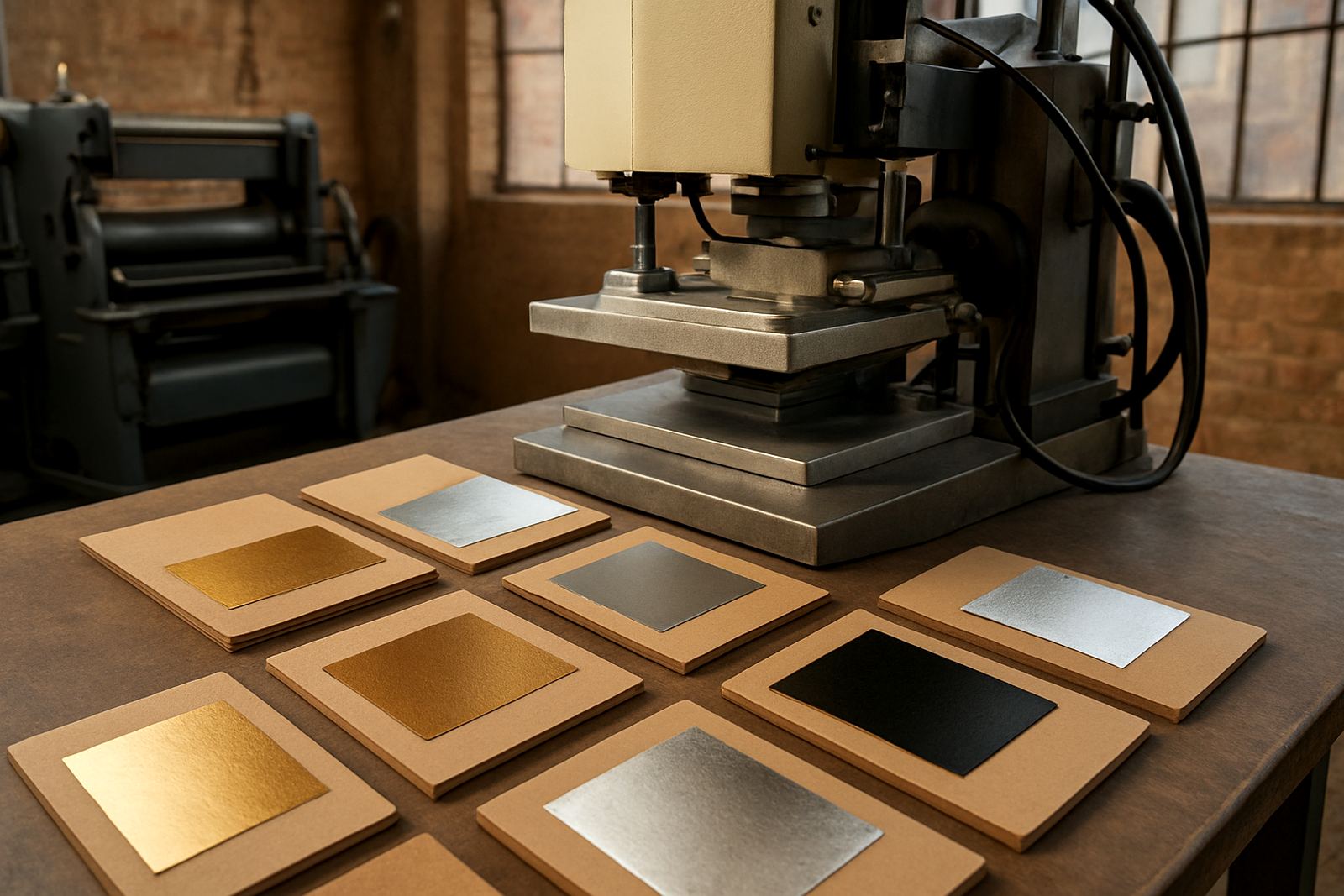
For most foil stamping work, smooth coated boards and fine-fibre packaging boards give the most consistent release. They hold detail well and can handle controlled heat without excessive sink-in. On lighter card stocks, the foil will usually pop better because the surface is more even and the fibres are less open.
Heavier boards are often used for packaging, but they need tighter control. If the board has a rough face or a very absorbent core, the foil can look dull or break at the edges. In those cases, a press operator must balance heat and pressure carefully, not just turn up the settings. Too much pressure can crush the sheet, too much heat can make the adhesive spread wider than it should.
- Coated board gives a cleaner image on small text and fine lines
- Greyboard or rigid packaging board needs more careful heat control
- Uncoated textured board can work, but detail loss is common
- Double-sided smooth board is better for premium cards and sleeves
How heat, dwell and pressure change the result
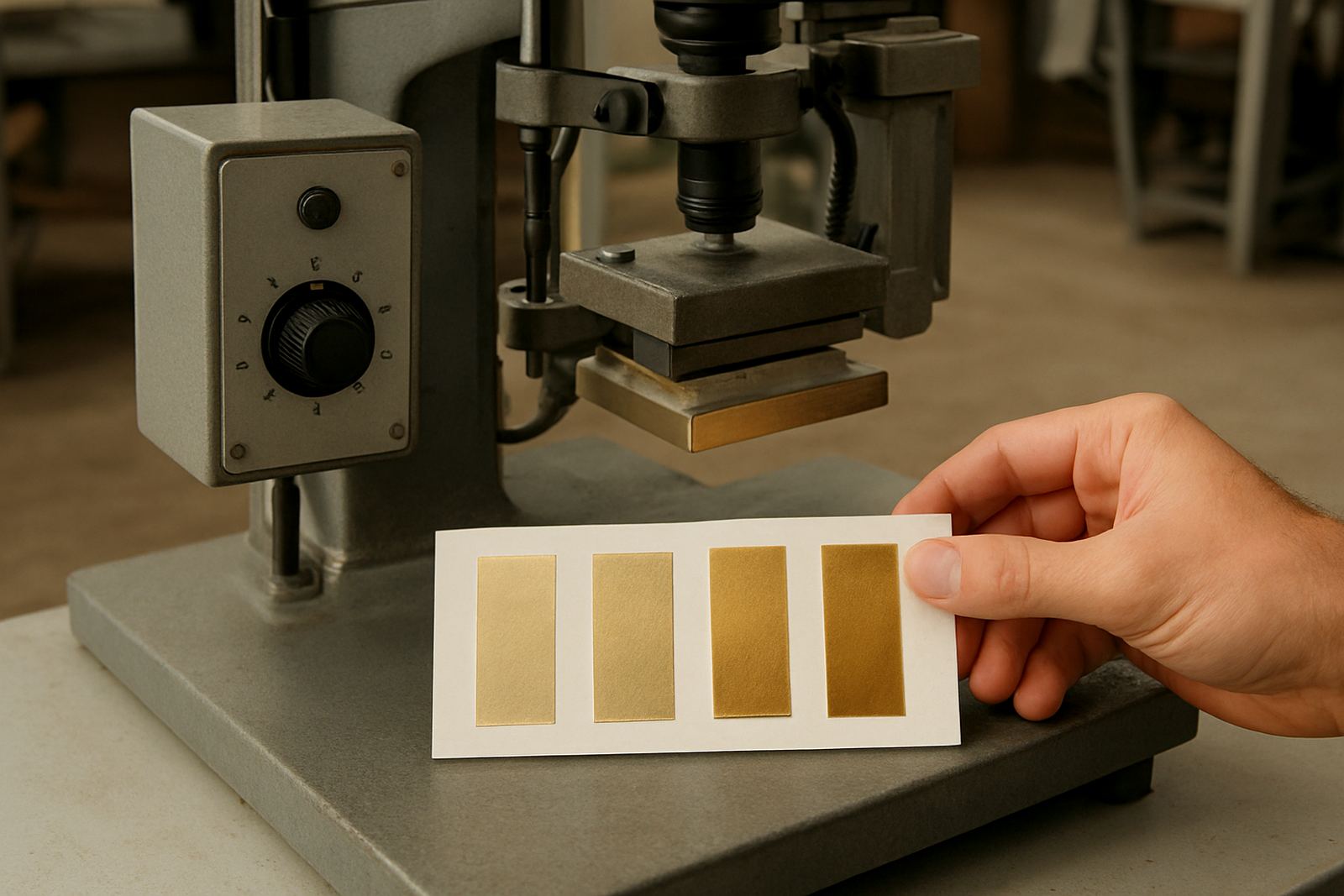
Board choice is really about how the material responds to three things: heat, dwell and pressure. If the board is dense, the press may need slightly more heat or dwell time for the foil layer to transfer fully. If it is soft, less pressure may be needed to stop the image from sinking too deep into the stock.
A good rule is to make one adjustment at a time. If you change the board and the foil roll and the pressure all at once, it becomes hard to know what fixed the job or what caused the problem. Operators in busy shops often blame the foil, but the board is sometimes the real issue. A steady setup with documented settings is worth its weight in saved material.
In Johannesburg, where many packaging lines run through load-shedding and temperature swings, consistency matters. If a job runs in a cooler morning shift and then again later in a warmer workshop, the board may react slightly differently. Keeping material stored flat and dry helps more than people realise.
Practical board checks before you start the run
Before a full production run, check the board as if you were checking a supplier delivery. Look at the surface, the cut edges, the moisture level and the board thickness. A board that looks fine from a distance may still have issues like fibre lift, warp or inconsistent coating. Those small faults show up immediately in foil work.
It also helps to test the exact area where the foil will sit. A board may take foil nicely on one face and fail on the other if the finish is different. For packaging jobs, fold lines and creases should be tested too, because excessive pressure near a crease can crack the board or distort the artwork.
- Store boards flat and off the floor
- Avoid damp corners, especially in coastal freight or humid storage rooms
- Check for curl before feeding into the press
- Test near folds, edges and solid black areas, not only in open spaces
- Record the board type, press settings and foil used for repeat jobs
Matching the board to the kind of job
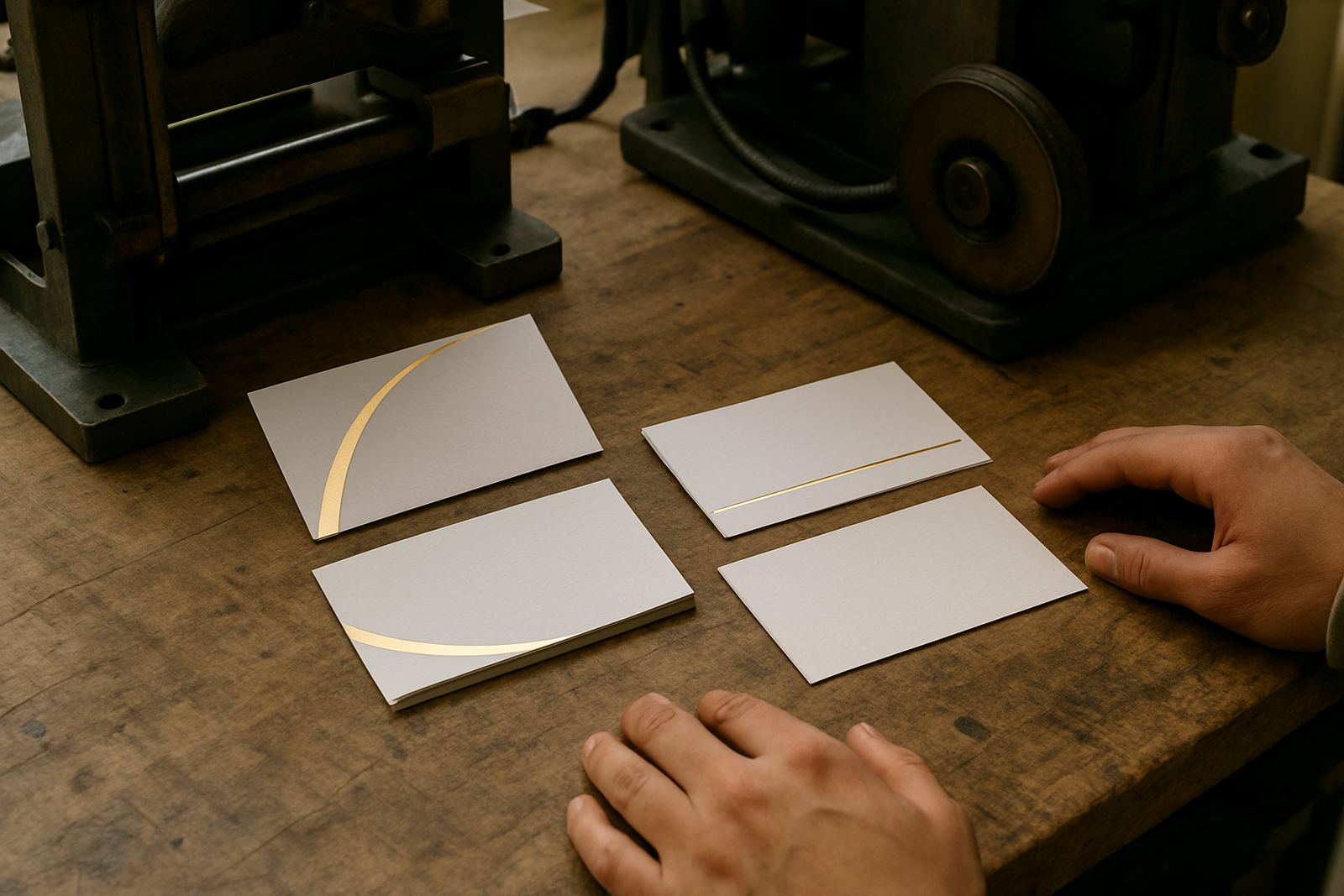
Not every board needs the same finish, and that is where practical decision-making matters. A luxury card stock for Sandton events may need a crisp metallic logo with high detail, while a product sleeve for a Randburg retail pack may need stronger coverage and quicker throughput. The best board depends on whether the job is decorative, functional or both.
For small craft businesses, a smoother board can help achieve good results on shorter runs without constant adjustment. For larger manufacturers, board consistency across batches is more important than chasing a slightly brighter finish. A board that behaves the same every time gives better production control and fewer rejects.
If you are foiling across different substrates, keep a simple job sheet for each one. Note whether the board was coated, laminated, textured, or absorbent, and keep the settings that worked. It sounds basic, but it saves time when a repeat order lands on the press at 4 pm and the team needs to move quickly.
Common problems and what they usually mean
When foil does not transfer properly, the board often leaves clues. A speckled finish may suggest the surface is too porous or the pressure is uneven. A blurred edge can mean the board is soft, the dwell is too long, or the die is not seating cleanly. Patchy coverage on a solid area may point to a board that is absorbing heat unevenly.
Some issues come from the board, but others come from setup. Heater calibration, die mounting, and pressure setting all affect the result. That is why a workshop should not treat board selection as a separate task from press setup. The two work together, and if one changes the other must be checked too.
For teams in Industria West, Roodepoort, Midrand or Germiston, it is often faster to sort the setting on a test board before starting a large run than to stop mid-job for corrections. A 10 minute test can prevent hours of rework.
A local production example from a Johannesburg packaging run
A packaging client in City West needed foil on folding cartons for a premium gift line. The first trial used a board that was slightly too open in fibre structure, and the foil broke up on fine lettering. The second trial used a smoother coated board with slightly lower pressure and a longer dwell, and the result was clean and even. Same artwork, same press, different board choice.
That is the practical lesson. Good foiling is not only about the machine, it is about matching the machine to the board in front of you. When the board is right, production becomes easier, spoilage drops, and the finish looks more professional from the first sheet to the last.
At FoilPress in Industria West, the focus is always on getting the right combination of press, foil and board for the actual job. That kind of practical support matters whether you are running a small craft order or a full packaging line.