What dwell time does in hot-foil stamping
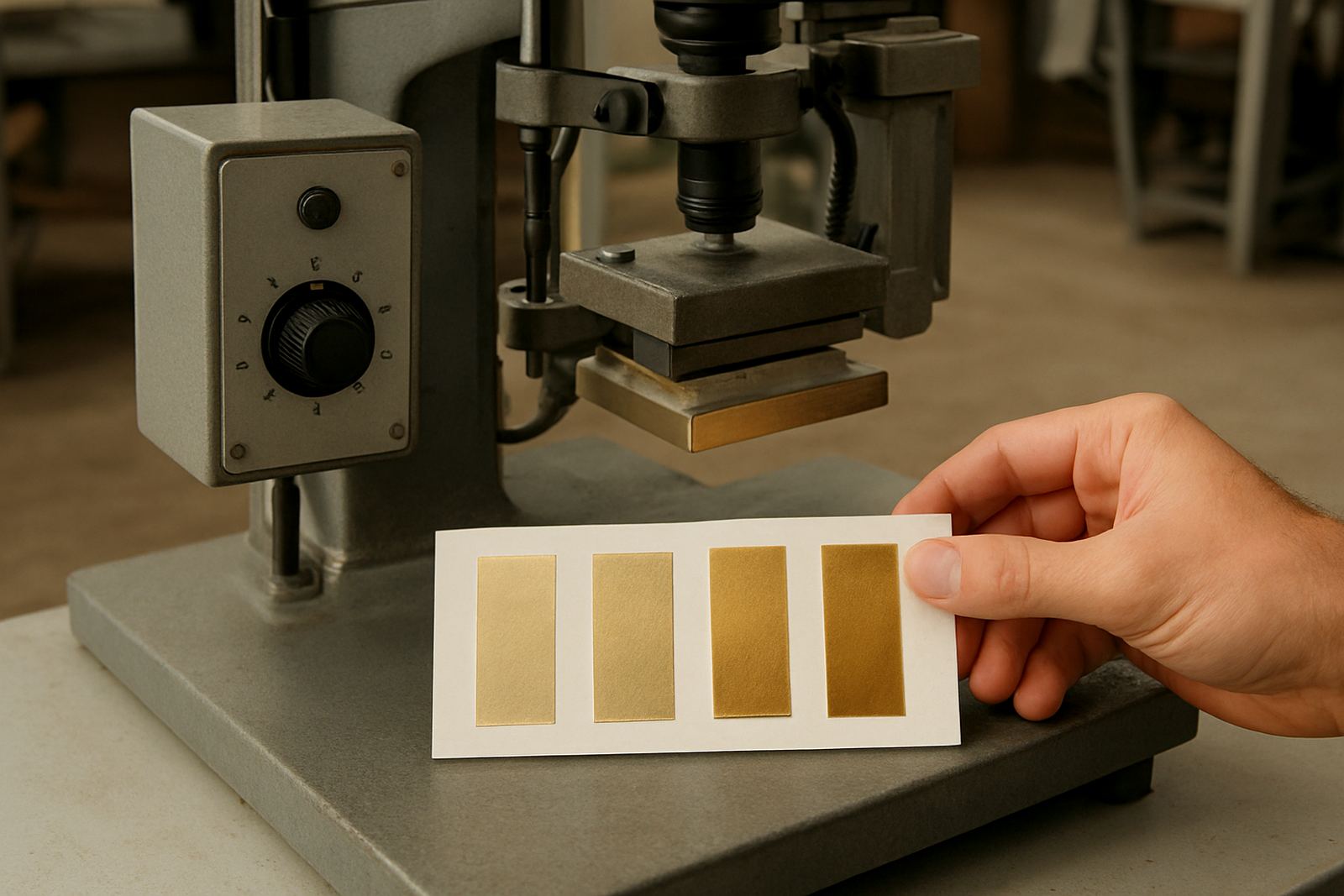
Dwell time is the length of time the heated die stays in contact with the substrate before releasing. In simple terms, it gives the foil enough time to transfer properly under heat and pressure. Too short, and the foil may look patchy or weak. Too long, and you can overcook the finish, crush fibres, or leave a mark where you did not want one.
For card printers and packaging teams in Johannesburg, dwell time is not a side setting. It sits right alongside temperature, pressure, foil choice and the board itself. A smooth coated carton behaves very differently from a textured craft board, and a small logo behaves differently from a full-panel cover. If you only change one setting at a time, dwell time often tells you where the real problem is.
Why textured boards need more patience
Textured boards and uncoated stocks need the foil to bridge tiny peaks and valleys. That takes time. The heat must travel into the surface, the adhesive layer on the foil must activate and the impression must hold long enough for the transfer to settle evenly. When dwell time is too short on a textured sheet, the result can look speckled, broken or washed out at the edges.
This comes up often with invitation printers, boutique packaging makers and label converters using natural or embossed boards. In Industria West or Roodepoort, you may see the same artwork pass on one stock and fail on another because the texture changes how quickly the heat works. A slight increase in dwell time can make the difference between a light kiss and a proper, clean foil image.
- Increase dwell time gradually, not in big jumps.
- Test the same design on at least two board types.
- Watch the foil edge first, then the solid areas.
- Keep notes on pressure, temperature and run speed for each job.
Large coverage areas behave differently from small logos
A small monogram may transfer well with a short contact time because the die has less area to heat evenly. Once you move into larger blocks, borders or full logo panels, the die needs more time to do the same job across the whole surface. If the dwell time is too short, the centre may transfer while the corners lag behind. That gives you uneven shine and visible inconsistency from sheet to sheet.
For packaging work in Midrand or Sandton, where presentation matters and runs can be mixed, this is a common production issue. Large coverage areas also pull more heat from the die, especially in colder mornings or when machines have been idle. That means your first few sheets after setup can behave differently from the rest of the run, so the operator should always check transfer after warm-up, not only after the first sample.
- Use a longer dwell for broad solids and dense artwork.
- Allow extra warm-up time after power interruptions or load-shedding.
- Check the first ten sheets before signing off the job.
- For fine detail, do not rely on dwell time alone, pressure and alignment still matter.
The signs your dwell time is off
When dwell time is wrong, the sheet usually tells you. The problem might be faint transfer, uneven brightness, ghosting, scorching or a dull finish where the foil should be strong. On some jobs the die may also leave a deeper impression than needed because the pressure was held for too long. That can be a problem on lighter card, folded cartons and packaging that needs a clean look on both sides.
If you are troubleshooting a run in Germiston or Randburg, do not change everything at once. Make one adjustment and recheck the result. Many operators move the temperature up when the real issue is dwell time, or they slow the machine when the foil could have been improved by a cleaner pressure setting. A disciplined test sheet saves material and hours of rework.
- Patchy transfer usually points to too little dwell or not enough pressure.
- Blurry detail can mean too much dwell, too much heat, or both.
- Darkening or a burnt smell suggests the process is staying on the stock too long.
- If the foil lifts on fine lines, check dwell before you change the die.
Matching dwell time to foil, substrate and machine
Foil choice matters. Some foils release quickly on coated stock while others need a bit more time on rough or absorbent surfaces. The same is true for machine setup. A press with stable heating and even pressure control will handle dwell time more predictably than one that swings in temperature. That is why calibration and preventive servicing are worth doing before a big run, not after a complaint comes in.
In South African production, conditions can change by the hour. A humid day in Johannesburg may behave differently from a dry winter morning. Add in thicker boards, foil reels from different batches and a machine that has sat through a power cut, and your old setting may no longer hold. Keep a simple job card record with the foil type, board type, temperature, pressure and dwell time. It is one of the easiest ways to keep quality steady.
- Coated boards often need less dwell than uncoated or textured stocks.
- Large dies need more time to heat evenly across the full surface.
- After a heater calibration, retest your dwell settings from scratch.
- If you change supplier on foil or board, do a fresh test sheet even if the job looks familiar.
A Johannesburg example from production floor reality
A packaging client in City West was running a medium-sized carton with a textured finish and a wide foil panel. The first samples looked fine at the edges but soft in the middle. The team wanted to raise pressure, but the real issue was dwell time. By extending contact time in small steps and keeping the temperature steady, the transfer improved across the full panel without crushing the board.
That sort of adjustment matters when you are working to deadlines and every sheet counts. If your line is in Industria West, Roodepoort or nearby areas, a simple settings change can save a batch from being scrapped. The point is not to chase one perfect number for every job. It is to understand how dwell time behaves so the operator can adapt quickly and keep the finish consistent from the first sheet to the last.
Practical checklist before you start a foil run
Dwell time should never be guessed. A short checklist before the run begins helps the team avoid waste and keeps expectations clear for the client. This is especially useful when you are switching between short runs, larger packaging orders and detailed promotional items in the same day.
- Confirm the board type, thickness and surface texture.
- Check that the die is mounted square and heated evenly.
- Allow the press to stabilise after switch-on or load-shedding.
- Run a test strip before the full order begins.
- Record any changes made during the job for the next repeat order.
When the setup is disciplined, dwell time becomes a tool rather than a guess. That gives you cleaner foil, better repeatability and less waste across the line.