Why textured boards behave differently under foil
On smooth stock, the foil film meets a flat surface and the press only has to transfer detail cleanly. On textured stock, the grain, embossing or rough coating creates tiny high and low points, so the foil does not contact every point in the same way. That is why some jobs look strong on the first sample, then start breaking up or missing detail when production begins.
The challenge is not only the texture itself. Board thickness, moisture content, coating level and even the direction of the grain can change the result. A stock that works in Johannesburg in winter may need a slightly different setup in summer, especially if it has been stored in a warm packing area or near an open loading bay.
- Deep grain often needs a cleaner die edge and more accurate pressure control.
- Light texture can still show a full foil image, but fine lines may need adjustment.
- Embossed surfaces may require a smaller artwork area to keep definition sharp.
The first test should answer four practical questions
Before a full run, a proper test should tell you whether the stock accepts the foil, where the weak points are, and how much setup change is needed. The goal is to avoid waste and to protect the die, heater and press from unnecessary strain. A test also shows whether the board is the problem or the settings are the problem, which saves time when a job is under pressure.
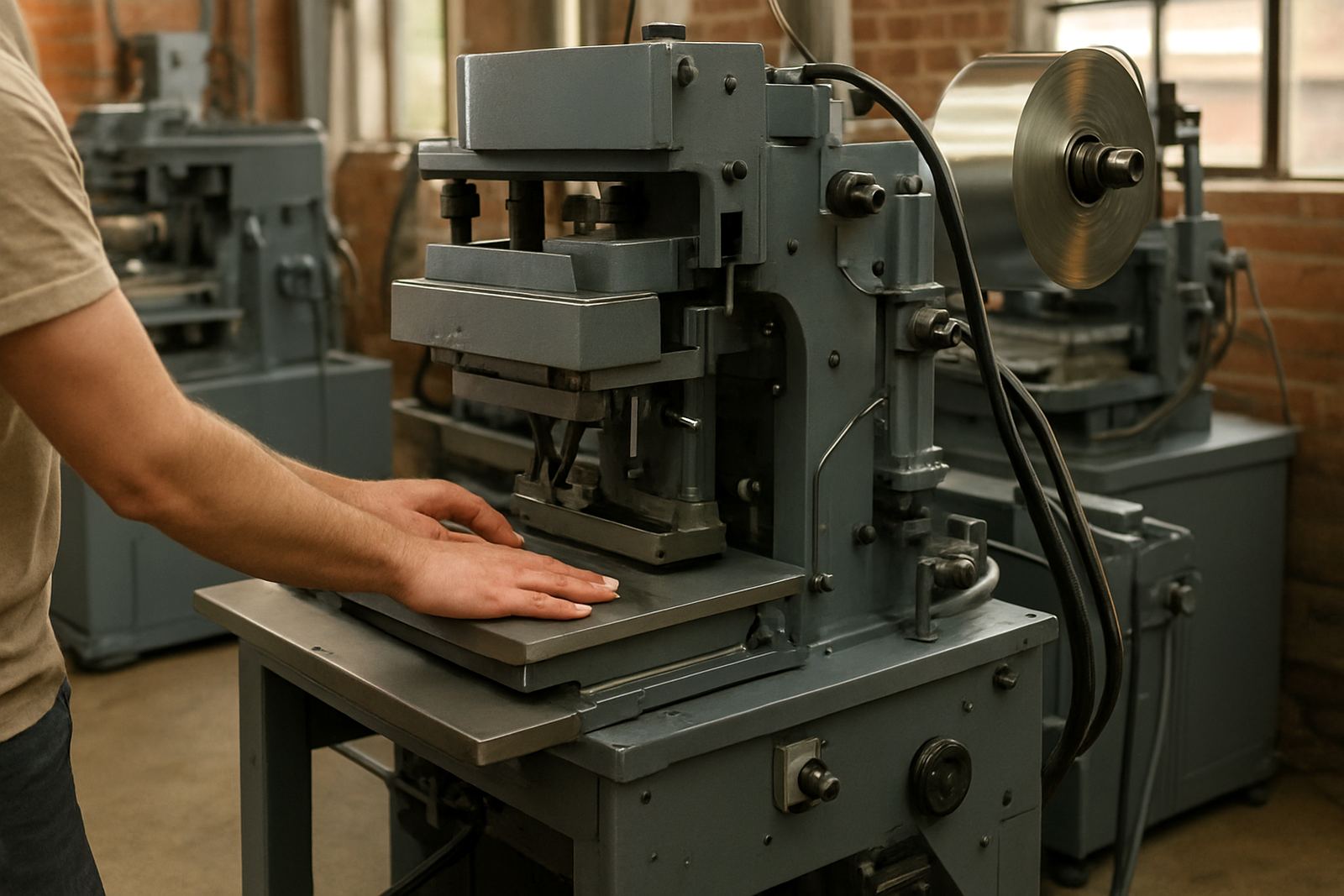
At FoilPress, we normally look at heat, pressure, dwell time and release. If one of those is off by too much, textured stock can give patchy coverage or dull areas that look almost right from a distance but fail in hand inspection. On a craft carton with a light linen finish, a moderate setup may be enough. On a heavy kraft or heavily grained packaging board, the press may need a slower, more deliberate cycle.
- Check whether the foil image breaks on corners, fine text or shaded areas.
- Look for over-crushing, where texture disappears and the board starts to mark.
- Confirm that the foil releases evenly across the full die face.
Stock choice matters as much as the machine setup
Not every textured board is suited to every foil job. Some boards have an attractive surface but are too uneven for very fine lettering. Others carry a coating that helps the foil sit nicely, even if the board still feels rough to the hand. For card makers and packaging converters, it pays to match the finish to the product and not only to the sample picture.
In practice, a lightly textured board with a stable coating usually gives the best balance between appearance and repeatability. Very soft or absorbent material can pull heat away too quickly, while a hard, heavy sheet may need a stronger press and more precise die mounting. In humid coastal areas, board behaviour can shift again, so a stored pallet in Durban does not always act the same as one kept in Industria West.
- Choose a board that holds detail without collapsing under pressure.
- Ask for enough blank space around the foil area to reduce edge distortion.
- Store stock flat and sealed where possible to limit moisture movement.
Pressure, heat and die mounting must work together
People often start by increasing heat, but on textured stock that can make the surface worse if the pressure is not balanced. Too much heat can soften coatings, flatten the texture and leave a dull halo around the foil. Too little heat can cause incomplete transfer, especially on boards with a rough tooth or a strong embossed pattern.
Die mounting is just as important. If the die sits unevenly, the high points on the texture will receive too much contact in one area and too little in another. That is where skilled setup pays off. A careful technician checks alignment, pressure spread and heater calibration before a job runs long enough to burn stock. It is basic work, but it makes the difference between a neat finish and a pile of rejects.
- Set pressure gradually and test after each change.
- Use accurate heater calibration before starting a new board type.
- Keep the die face clean so the foil release stays consistent.
How to avoid common faults on textured foil jobs
Most problems on textured stock fall into a few familiar groups. Missing foil usually points to low pressure, poor contact or a board that is too uneven for the detail size. Smearing or blurring often suggests excess heat, too much dwell, or movement in the sheet feed. Patchy shine can mean the stock is coated in a way that resists full transfer, or the foil itself is not matching the surface well.
When a job is already on the press and the client needs a fast turnaround, the best approach is to isolate one variable at a time. Change the setting, test again and compare the sample under the same light. That is better than making three changes at once and guessing which one fixed the issue. For short production runs in Randburg or Roodepoort, that discipline can save a half day and a lot of board.
- Watch fine strokes first, because they show faults before bold areas do.
- Check samples under daylight and indoor light.
- Keep a written setup note for repeat orders.
A Johannesburg example from a packaging line
A packaging client in Midrand wanted foil on a textured presentation board for a premium sleeve. The first sample looked acceptable at a glance, but close inspection showed weak corners and a slight halo around the logo. Rather than pushing more heat straight away, the setup was tested in stages. Pressure was adjusted, the die mounting was checked, and the foil choice was changed to suit the board’s grain.
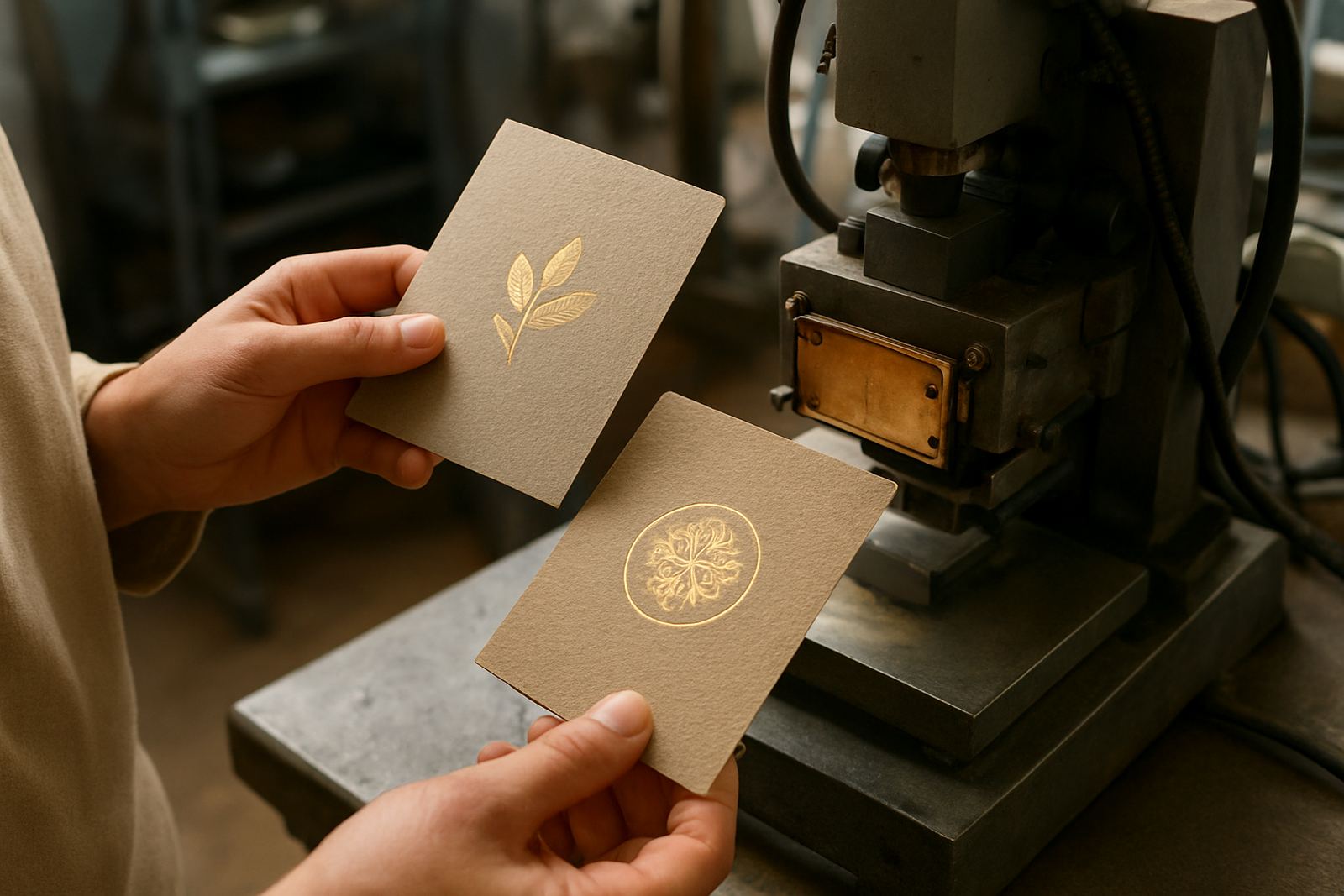
Once the setup was corrected, the image came through cleanly and the texture still showed enough to keep the premium feel. The client kept the intended look without having to switch to a smoother board. That is often the real answer on textured work: do not remove the character of the stock unless the job truly needs it.
For local producers, this kind of testing matters because the same line may run small craft packaging one week and larger carton work the next. A press that is properly installed and serviced can handle both, but only if the operator knows how the stock behaves and the workshop has the right support for breakdown repairs, spares and preventive servicing when a machine starts drifting.
When to call for technical support before production
If a textured foil job keeps failing after sensible setup changes, it is usually time to bring in technical support before more stock is lost. The issue may be with heater control, pressure spread, die fit, sheet flatness or simple operator technique. A short site visit can often settle the matter faster than repeating samples for another day.
For businesses in Industria West, Sandton, Germiston, Midrand or across the broader Johannesburg area, support is most useful before a deadline becomes urgent. The same applies nationwide when a press is due to launch a new product line or when a seasonal run starts and the board choice has changed. Good foil work on textured stock is part skill, part machine condition and part repeatable process, so it pays to treat the setup as a production task rather than a guess.