Why foil storage matters before the first run
Hot-foil rolls may look simple, but the surface finish is sensitive to dust, heat, pressure marks and rough handling. If a roll is left open in a busy workshop, even a thin layer of dust can show up as pinholes, patchy transfer or weak edges on cards and packaging.
In Johannesburg, especially in areas like Industria West and Roodepoort where workshop dust builds up quickly, storage habits make a real difference. A roll that is stored properly will keep its release layer and adhesive coating in better condition, which means more consistent results when you are running invitations, cartons, labels or short production batches.
Good storage also helps with stock control. When rolls are clearly labelled and kept in one place, it is easier to track widths, colours and batch use. That saves time during urgent jobs, which is important when load-shedding, delivery delays or a late client change already put pressure on the day.
Keep rolls in a cool, dry place away from direct sun
Heat is one of the biggest enemies of foil. Leave rolls near a sunny window, a hot machine or a roof that bakes in summer and the material can soften, warp or pick up surface marks. Once that happens, the roll may still look fine but behave badly on press.
Try to store foil in a room that stays cool and dry, ideally between 15 and 25 degrees Celsius if your workshop can manage it. Keep it away from direct sunlight, steam from cleaning areas and damp floors. In coastal humidity you may also want sealed storage bins or covered shelving so the roll ends do not absorb moisture from the air.
- Do not leave foil on a truck bed or in the back of a bakkie in full sun
- Keep rolls off concrete floors by using racks or pallets
- Avoid putting foil near heaters, compressors or curing equipment
- Close windows during dusty wind or rain storms
Store rolls flat or on proper racks, not loose in piles
Foil rolls should never be tossed into a corner or stacked under heavy cartons. A crushed edge can create wrinkles across the web and those wrinkles often show up right through the print. If the core is bent, the roll may also run unevenly through the press.
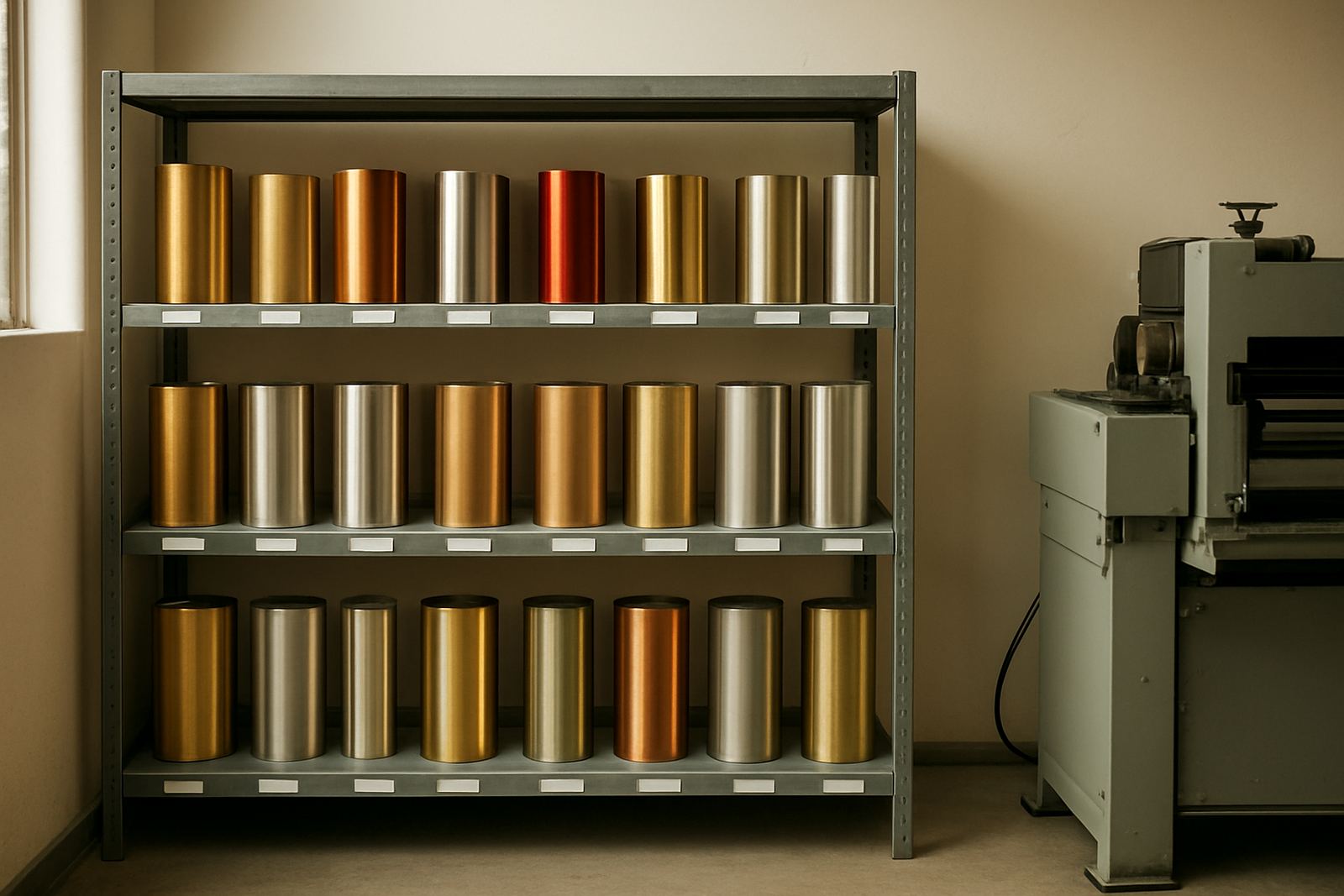
The best option is a dedicated rack or shelving system that keeps each roll supported along its length. If you need to stack, make sure the stack is level, not too high, and that nothing sharp is pressing into the roll edges. Smaller rolls can be boxed or shelved side by side, but leave space so they can be lifted out without scraping the surface.
- Keep the heaviest rolls at the bottom of the stack
- Do not store rolls directly against wall corners where they can get dented
- Use end caps or sleeves if the foil is likely to be moved often
- Label each shelf by colour, width and finish for quick picking
Use a first-in, first-out system so older stock does not age out
Foil does not spoil overnight, but older stock can become a problem if it sits for months on end while newer rolls are used first. The release layer can age, packaging can weaken, and a roll that has been handled repeatedly may arrive at the machine with damaged ends.
A first-in, first-out system is simple and worth the effort. Put incoming stock behind the older rolls and mark each roll clearly with the date received. If a certain finish is used often for premium packaging, keep enough stock on hand without overbuying. That balance matters for small craft businesses in Randburg as much as larger plants in Germiston.
When stock movement is tidy, you can also spot issues early. If a roll has been sitting too long, or one batch seems to give weaker transfer, you can isolate it before it slows production.
Protect the foil from dust, fingerprints and rough handling
Dust is one of the easiest ways to ruin a clean finish. Even if a foil roll is stored well, it can still pick up grit from hands, cutting tables and open shelving. Fingerprints may not always show on the roll itself, but oils and dirt can transfer during unwinding and affect the final result.
Train staff to handle rolls with clean hands and to carry them by the core rather than dragging them by the edge. Keep knives, blades and steel offcuts away from the storage area. If your workshop cuts board or corrugated packaging nearby, cover the foil stock when it is not in use.
For smaller operations, simple habits go a long way. A covered shelf, a clean trolley and one marked storage point can save more material than fancy kit that nobody uses properly. It is a small thing, but it pays back fast when jobs need to be turned around on time.
Match storage habits to your production schedule and machine care
Foil storage should fit the way your shop actually works. If you run short jobs through the week and bigger runs on Fridays, keep the most-used colours easy to reach and the slow-moving stock protected at the back. That helps operators stay organised and reduces handling damage.
It also helps to link storage checks with routine machine care. When a press is serviced, ask the team to inspect the foil area, confirm that rolls are still clean and check whether any material has been exposed to heat or pressure. A quick look at the stock room can prevent a breakdown being blamed on the machine when the real issue is the material.
- Check stored foil weekly for dents, dust and loose wrapping
- Keep a simple stock sheet for widths, colours and batch notes
- Separate expired, damaged or doubtful rolls from usable stock
- Review storage after power cuts or roof leaks
A practical Johannesburg example from a busy packaging floor
A packaging business in City West that runs both short custom jobs and repeat carton orders can lose hours if foil is stored badly. One common issue is rolls being left near a loading bay where dust and temperature changes are constant. Another is mixed stock, where silver, gold and coloured foils are all packed together and the wrong roll gets handled first.
The fix is usually straightforward. Move the stock to a cleaner room, use labelled shelving, keep the rolls covered and assign one person to check received stock before it goes onto the shelf. On a hot week with rolling power cuts, that kind of discipline can make the difference between a clean first pass and a wasted shift.
For businesses in Sandton, Midrand or Germiston that send out foil work every day, good storage is not just housekeeping. It supports better press performance, less waste and steadier output across the whole operation.