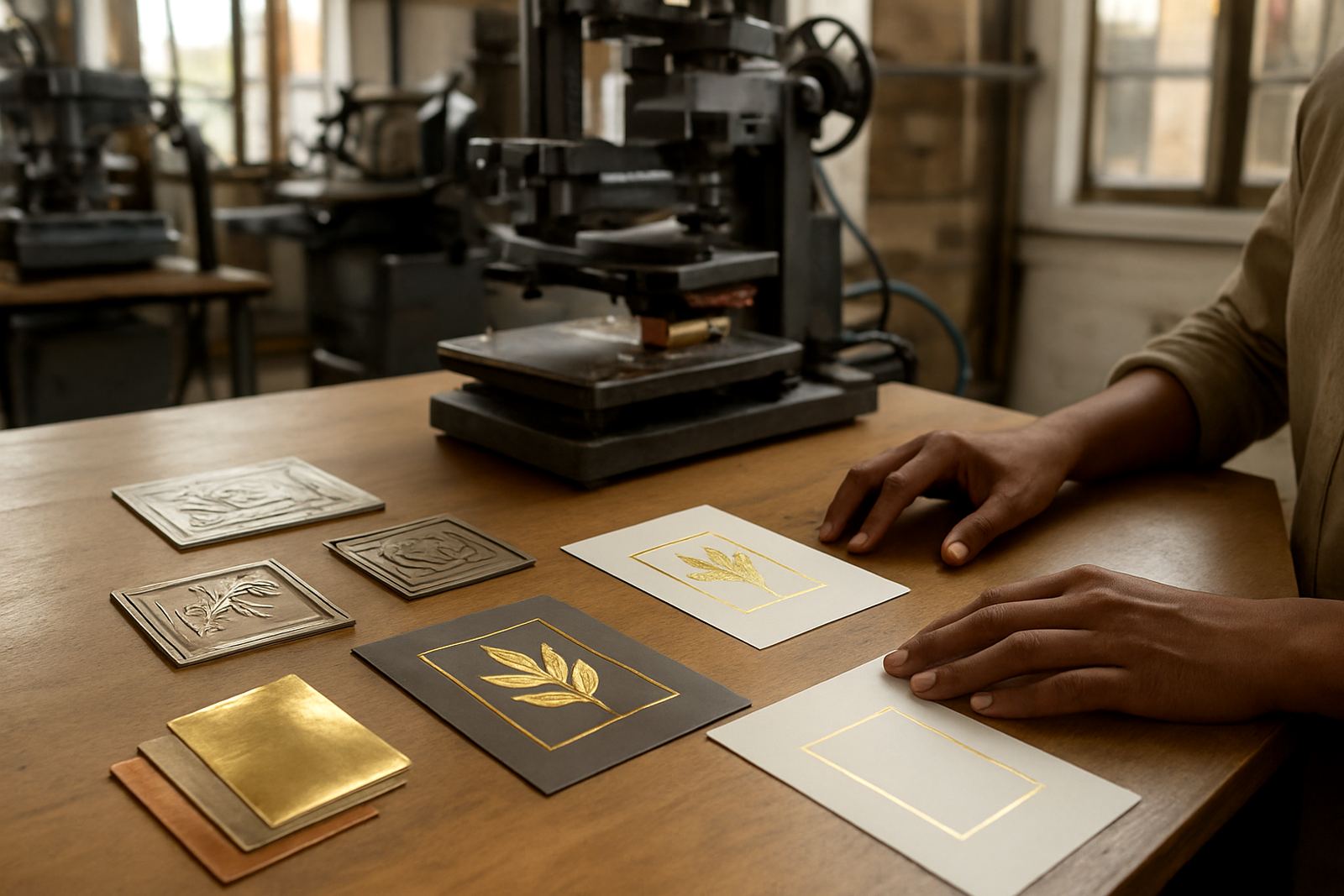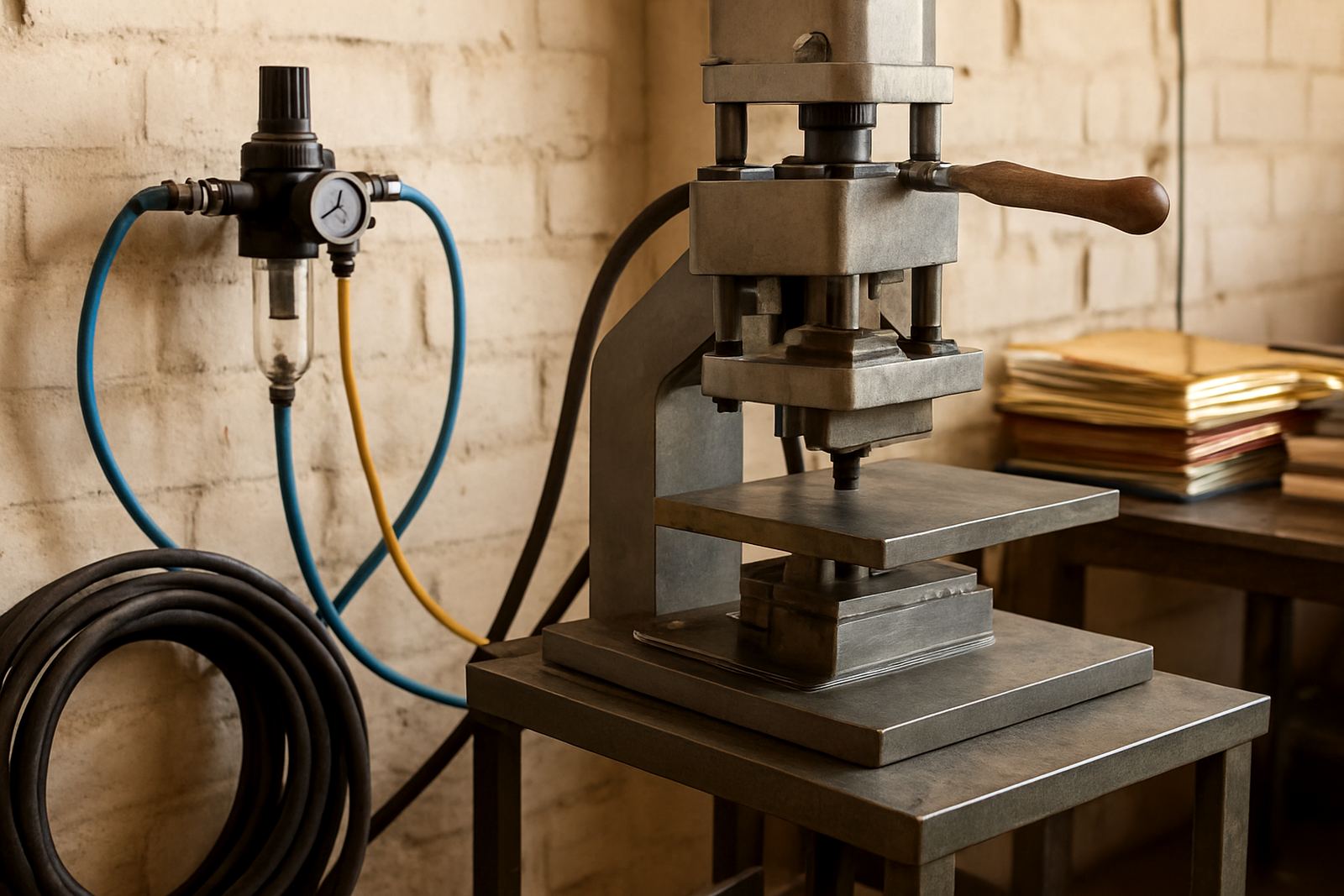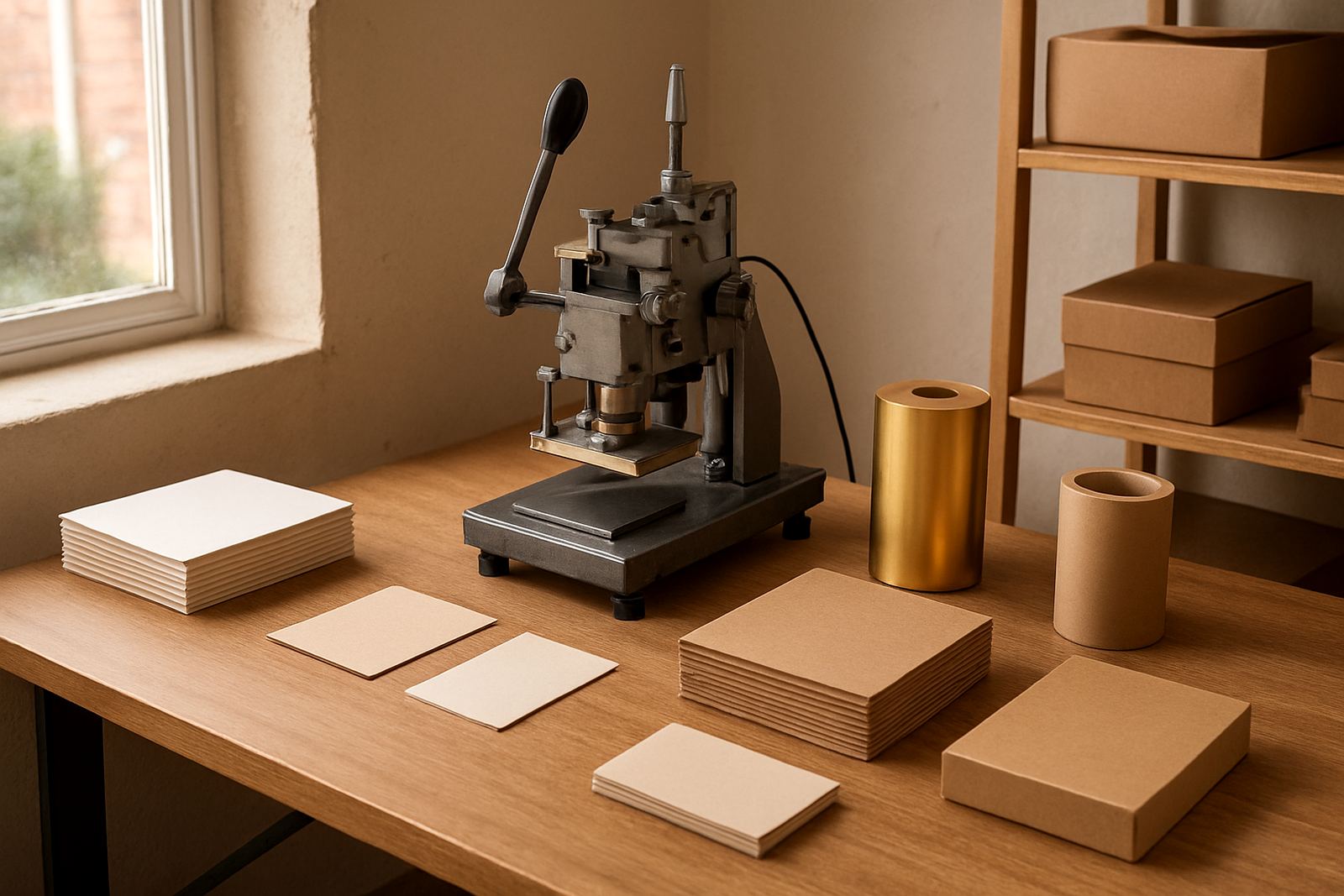
Start with the work you already sell
For a small shop, foil finishing should support existing products, not force you into a new line that sits on the shelf. If you are already doing wedding invitations, short-run packaging, loyalty cards, tags, presentation folders or gift boxes, foil can add value without changing your whole operation. The best first step is to look at what clients ask for more than once, then price that work properly.
Foil is most sensible when the item has a clear premium purpose. A simple card with a clean foil name panel can earn more than a busy design with too much colour. The smaller the business, the more important it is to keep the job mix tight and repeatable. That means fewer one-off experiments and more work you can set up fast, run neat, and hand over on time.
In Johannesburg City West, we often see small print shops and packaging makers start with three to five regular foil jobs a week. That is enough to build skill and recover costs if the press is sized correctly. It also helps to keep spare foils, dies and heat settings recorded so the next run does not start from scratch.
Choose a press size that matches your floor and power
The wrong press can make small-business foil work harder than it should be. A machine that is too large takes up space, needs more power, and slows the day down if you only run short batches. A machine that is too small can limit job size and push you into awkward handling, which leads to waste and rework.
Before buying, check the actual floor space, the 220V or 380V supply available, and whether your workshop can cope during load-shedding if you use backup power. In Industria West, Roodepoort and Germiston, we often advise owners to measure not just the press footprint but the space around it for loading, cooling and finished stock. A press placed too close to a wall becomes difficult to service and even harder to keep clean.
- Measure the largest sheet or card size you need to foil now, plus a little growth room.
- Check the available current at the point of use before you commit.
- Leave working space for die mounting, trimming and stack handling.
- Ask how easy it is to set temperature, pressure and dwell time on the machine.
Keep the first product range narrow
The fastest way for a small business to waste money is to offer too many foil options from the beginning. Foil work is easier to control when you limit the first range to a few base colours, a few standard sizes and a handful of repeatable substrates. That keeps turnaround steady and reduces spoilage when paper stock, board thickness or humidity changes.
Johannesburg is not coastal, but many clients ship packaging from Durban or Cape Town to be finished in Gauteng, and those materials can behave differently in dry and humid conditions. In Midrand and Sandton, where some clients want quick turnaround for launches and events, the better plan is often to standardise the jobs first, then add special colours later if demand proves it.
- Start with the foil colours your customers ask for most often.
- Use one or two board types until settings are proven.
- Keep common die sizes for names, logos and short text.
- Record what settings worked on each job and material.
This approach gives a small business a cleaner learning curve. It also makes quoting easier because you can see which jobs are worth doing and which ones should be declined or priced higher.
Price for setup time, not only per impression
Many small businesses undercharge because they only look at the printed area or the number of impressions. Foil work has setup time, temperature changes, die mounting, foil threading and test pulls. If you ignore those steps, a small job can look profitable and still lose money by the time the operator has finished cleaning the press and checking the result.
Build your pricing around real production time. Add a separate charge for setup, then price the run rate and any special handling. This is especially important for short runs under 500 units, where setup can be a large part of the job. For Cape Town or Durban clients ordering from Johannesburg, you should also factor in courier timing so the order does not sit on the bench waiting for a missing approval.
It helps to know your own break-even point. Once you know how long a job takes from setup to packing, you can tell whether a foil run should be sold as a premium add-on or as a standard production line. Small businesses that do this well usually see less pressure on margins and fewer awkward re-quotes.
A local example from Industria West to Randburg
A small packaging maker in the west of Johannesburg came to us after taking on a higher-end client who wanted foil logos on folding cartons. The team had been outsourcing the work, but turnaround was slow and the courier costs were climbing. They needed a practical in-house setup, not a large industrial line.
We helped them match the press to their normal carton sizes, set the heater calibration, and train the operator on pressure setup and foil matching. Their first good result came after they cut back the product range and ran only two carton formats for the first month. Once the settings were stable, they added a third size and a few invitation jobs for a client in Randburg. That approach kept waste low and gave the owner better control over lead times.
The lesson was simple: small business foil work is easier when the machine, the material and the order book all agree. If you try to do everything at once, you spend more time correcting faults than producing sellable work.
Training and servicing keep small runs profitable
Even a good press needs proper operator training and routine servicing. For small businesses, one tired heater, one loose die or one pressure problem can ruin a whole day of short runs. Because foil finishing often sits alongside regular print or packaging work, the machine must start quickly and repeat accurately without constant tinkering.
Preventive servicing matters more than many owners expect. A quick check on heaters, alignment, pressure settings and moving parts can stop breakdown repairs from eating into busy weeks. In our experience, small teams in Sandton, Roodepoort and Midrand benefit most when they keep a simple maintenance log and do not wait for a fault to become a stoppage.
- Train one primary operator and one backup operator.
- Keep common spares on hand for the parts that fail most often.
- Schedule servicing before peak periods such as year-end and wedding season.
- Check foil matching against the actual substrate, not just a sample sheet.
If your team knows how to read the finish, a small press can work far above its size. Good support is not about fancy talk. It is about keeping the machine moving and the rejects low.
A sensible way to enter foil finishing
Small businesses do not need to chase every foil trend to make the step worthwhile. The practical route is to start with a clear list of products, pick a press that fits the shop, train the operator properly and keep the first jobs narrow enough to control. From there, you can add more colours, more die sizes and more product types as demand grows.
FoilPress works with card and packaging businesses across Johannesburg and nationwide from Industria West. The team handles press installation, operator training, preventive servicing, breakdown repairs, heater calibration, pressure setup, die mounting, foil matching, spares supply and production optimisation. That support matters when the goal is not just to own a machine, but to keep useful work flowing through it.
If your business is ready to add foil finishing in a practical way, the best time to plan it is before the pressure of a rush order. A well-matched setup saves space, saves time and gives you a cleaner way to serve customers who want a more finished look.