Why candle boxes need clean foil, not just shiny foil
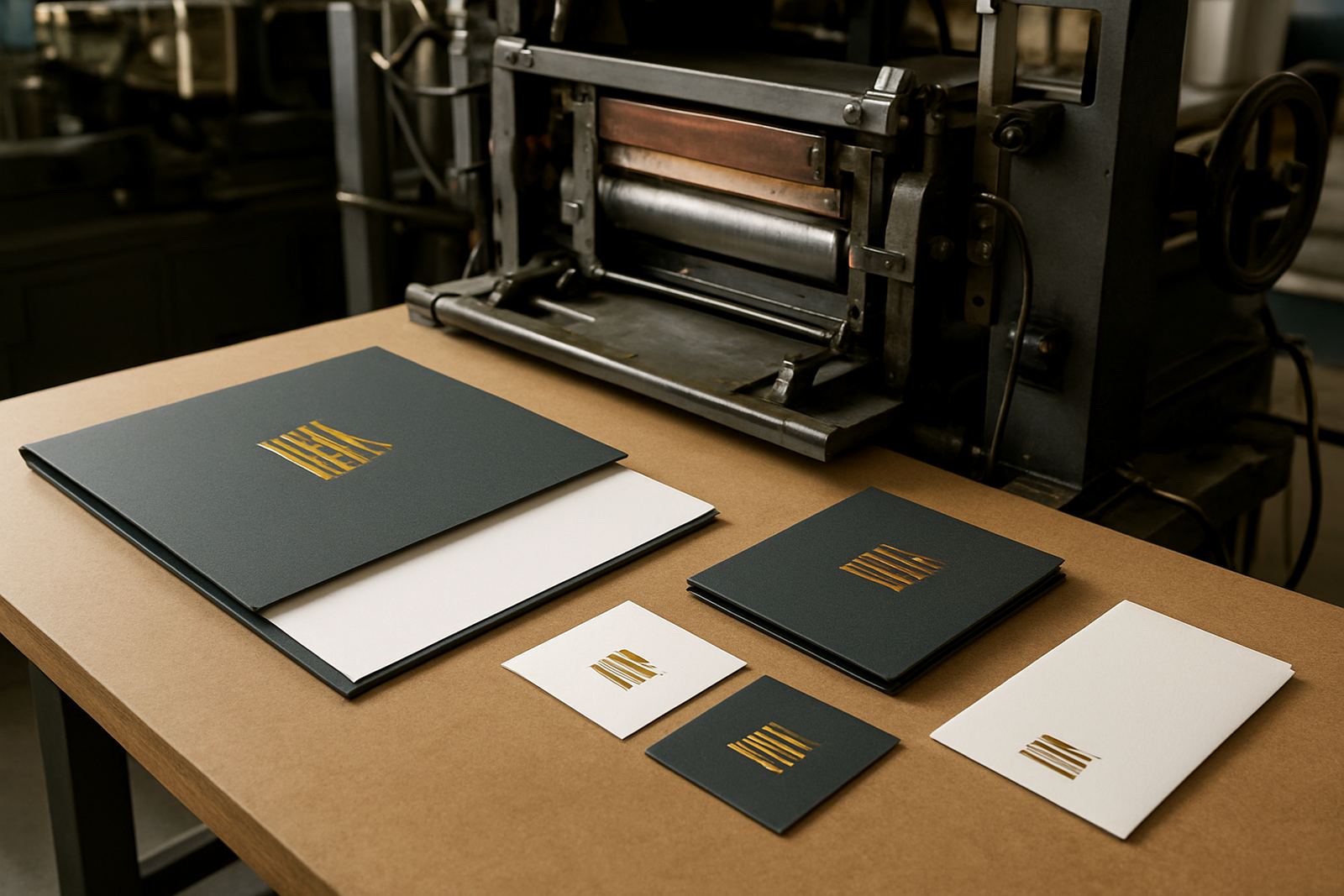
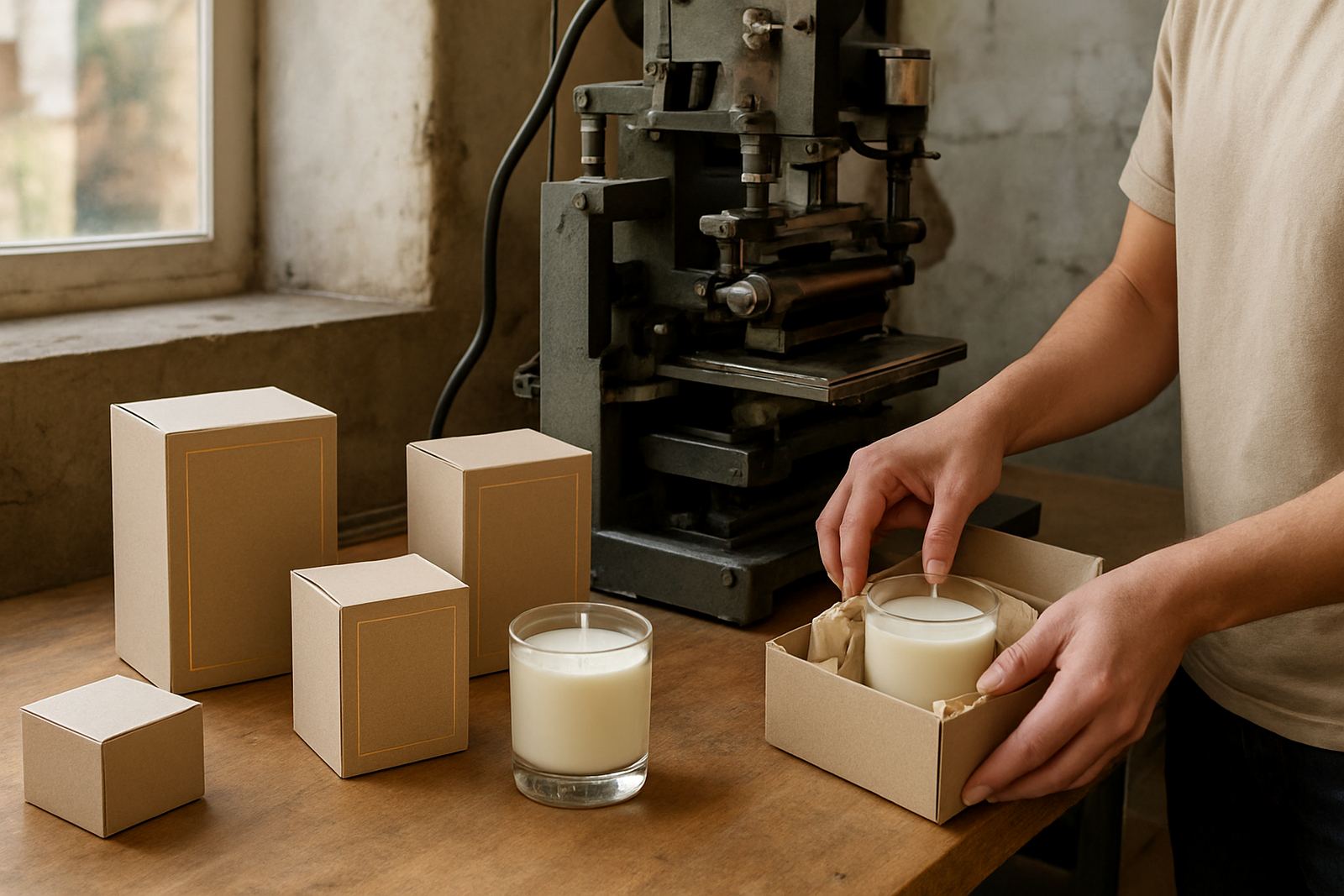
Candle packaging works hard before the customer even opens the lid. It has to look premium on a shelf, protect the product in transit and hold up in warm storage rooms, which is common in Gauteng and on the coast. Foil on candle boxes is often used for the brand name, scent line, or a small emblem because it gives a neat contrast without covering the artwork.
For candle makers in Johannesburg, Roodepoort, Randburg, Midrand, Sandton and Germiston, the challenge is usually not whether foil can be applied. It is whether the detail will stay crisp on different board finishes, lighter pastel cartons and deeper coloured sleeves. If the box is a matte black or kraft style, any slight misalignment shows quickly. On coated white board, pressure and heat need to be set properly so the foil releases evenly.
FoilPress supplies hot-foil presses for this kind of work across South Africa, with installation and support from Industria West. The aim is simple: a press that gives repeatable results on candle boxes, even when the run changes from 200 units to 5 000.
Typical press set-up for candle box work
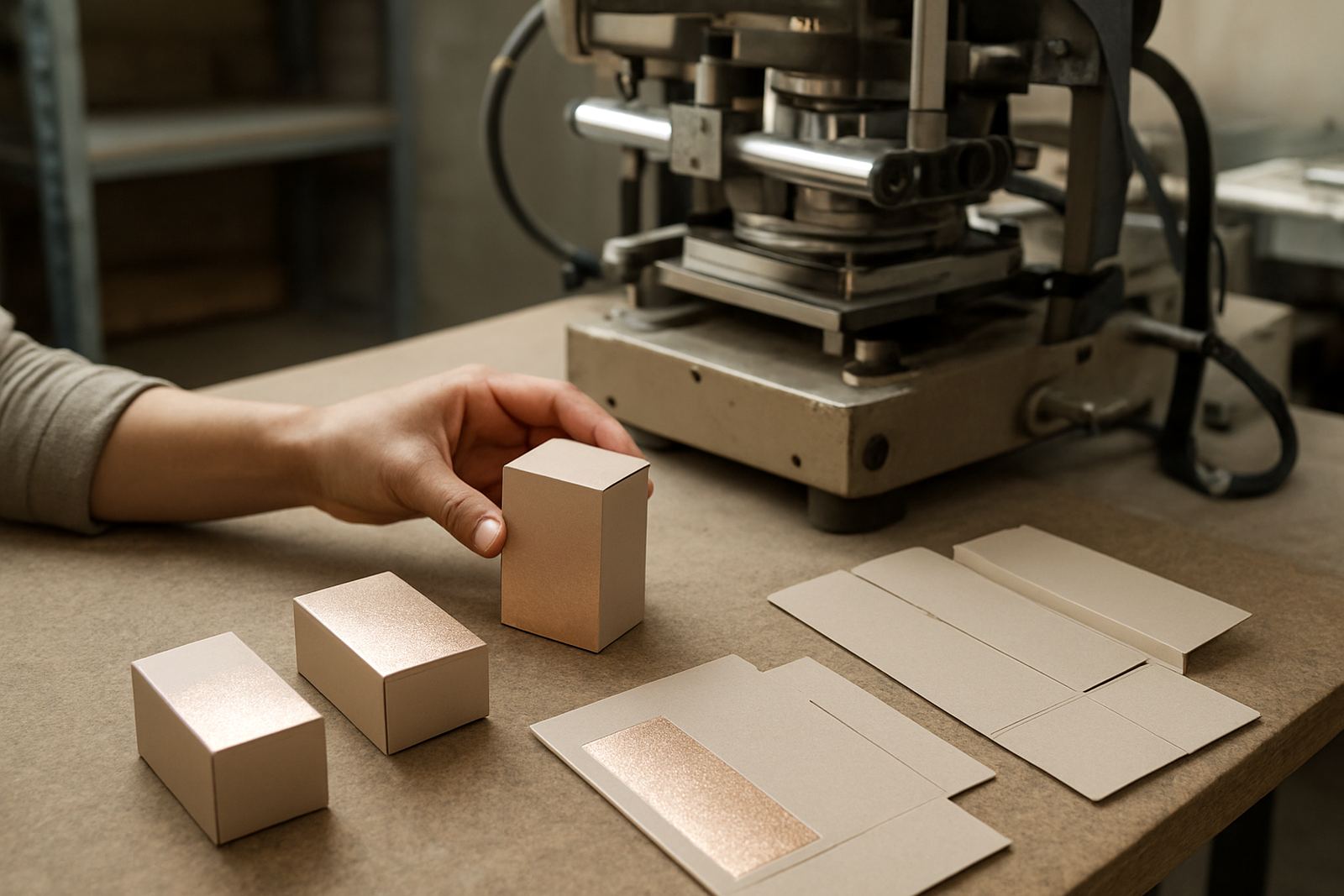
Candle boxes are usually not large, but they still need a press that handles fine type and a neat area of coverage. Many businesses use a compact or mid-size hot-foil stamping press with accurate temperature control, solid pressure adjustment and a platen size that suits folding cartons, sleeves and rigid-style lids. For lines with multiple scents, quick die changes save a lot of time.
- Heated platen for consistent foil release on coated or textured board
- Pressure control for small logos, script type and thin border lines
- Die mounting system that keeps repeat jobs aligned
- Temperature calibration for different foil grades and board weights
- Side guides or a simple registration stop for repeatable box placement
Some candle makers use one press for front-panel branding and another setting for short-run seasonal ranges. Others run one machine all day and swap dies for fragrance names, batch codes and special editions. Kagiso Molefe and the technical team often focus on press fitment, heat stability and die height because those details make the biggest difference to print quality.
How to plan the artwork and box layout before production
Good foil results begin with the layout. Candle boxes often carry a lot of information: fragrance notes, safety instructions, burn time, barcode, and small legal details. If the foil area sits too close to a fold or glue flap, the finish can crack during boxing or when the carton is opened. It is better to keep foil away from score lines and the bottom edge of sleeves.
When planning the artwork, keep the foil shape simple enough for the press and die to handle cleanly. Thin scripts, tiny dots and very close line spacing can work, but only if the press is calibrated properly and the artwork is prepared with care. A small logo on the front panel often performs better than a full-panel foil flood, especially on short runs where setup time matters.
- Allow at least 3 to 5 mm safety from folds, trims and glue areas
- Use heavier line weights for small type where possible
- Keep foil panels away from embossed texture if the box board is uneven
- Check the direction of carton grain before approving the final die
- Match the foil colour to the candle range, for example gold for classic, copper for warm scent lines, silver for clean modern ranges
Common mistakes that waste foil and slow the line
The most common mistake is treating candle boxes like flat labels. Cartons move, spring back and sometimes have a slight curl from humidity, especially in Durban and other coastal areas. If the board is not conditioned properly, the foil can ghost, smudge or leave weak patches. Another issue is underestimating how much heat is needed on darker board. Too little heat gives dull transfer, while too much can distort the print or mark the coating.
Operators also lose time when the die is not mounted squarely or the pressure is uneven across the platen. That causes one side of the logo to look strong and the other side faint. During load shedding, some workshops run heated equipment with backup power, but unstable voltage can still affect temperature recovery. It is worth checking the heater calibration after outages and again before a long production shift.
We also see candle producers re-using the same foil spec for every box, even when the board changes. What works on a smooth luxury carton may not hold the same way on kraft, embossed or soft-touch stock. A short test run is cheaper than scrapping 1 000 printed sleeves later on.
Press installation, training and servicing for busy packaging lines
For businesses that are adding foil branding to candle boxes for the first time, installation and operator training matter just as much as the machine itself. A press has to sit level, with enough space for stock staging, die changeovers and finished carton stacking. In workshops around Industria West, Roodepoort and Midrand, the layout must also allow for safe movement around heated parts and sensible airflow.
FoilPress provides press installation, operator training, preventive servicing, breakdown repairs, heater calibration, pressure setup, die mounting, foil matching, spares supply and production optimisation. That support helps keep the machine working through busy retail seasons, wedding gifting runs and year-end candle promotions. Lerato Ndlovu and the client support team also help with practical questions about stock flow and maintenance timing.
- Train operators on safe heat-up and cool-down routines
- Keep dies labelled by fragrance line or box size
- Schedule servicing before peak trading months
- Check foil feed alignment at the start of every shift
- Store cartons flat in dry conditions to reduce warping
Budget ranges for candle box foil work in Rand
Budget depends on run size, level of detail and whether you need a press for a single box size or mixed packaging. For small makers, a starter setup for candle box foiling can often sit in the lower hundreds of thousands of Rand if the application is focused and the machine size is modest. A more capable production line with better control, faster setup and support for higher daily output can move into the mid hundreds of thousands, depending on specification.
As a rough working range, a compact entry solution might be around R180 000 to R320 000, while a stronger mid-production system can sit between R350 000 and R650 000. More specialised configurations, added tooling and production support can push higher. The final figure depends on platen size, heating system, pressure control and how much changeover time you want to save. If you are running multiple scent ranges, the savings from quicker setup usually matter more than the cheapest starting price.
For candle brands in Gauteng and nationwide, it is usually better to buy for the next 18 to 24 months of output rather than just the current month. That way the press still copes when festive demand spikes or a retailer asks for a larger order on short notice.
},{