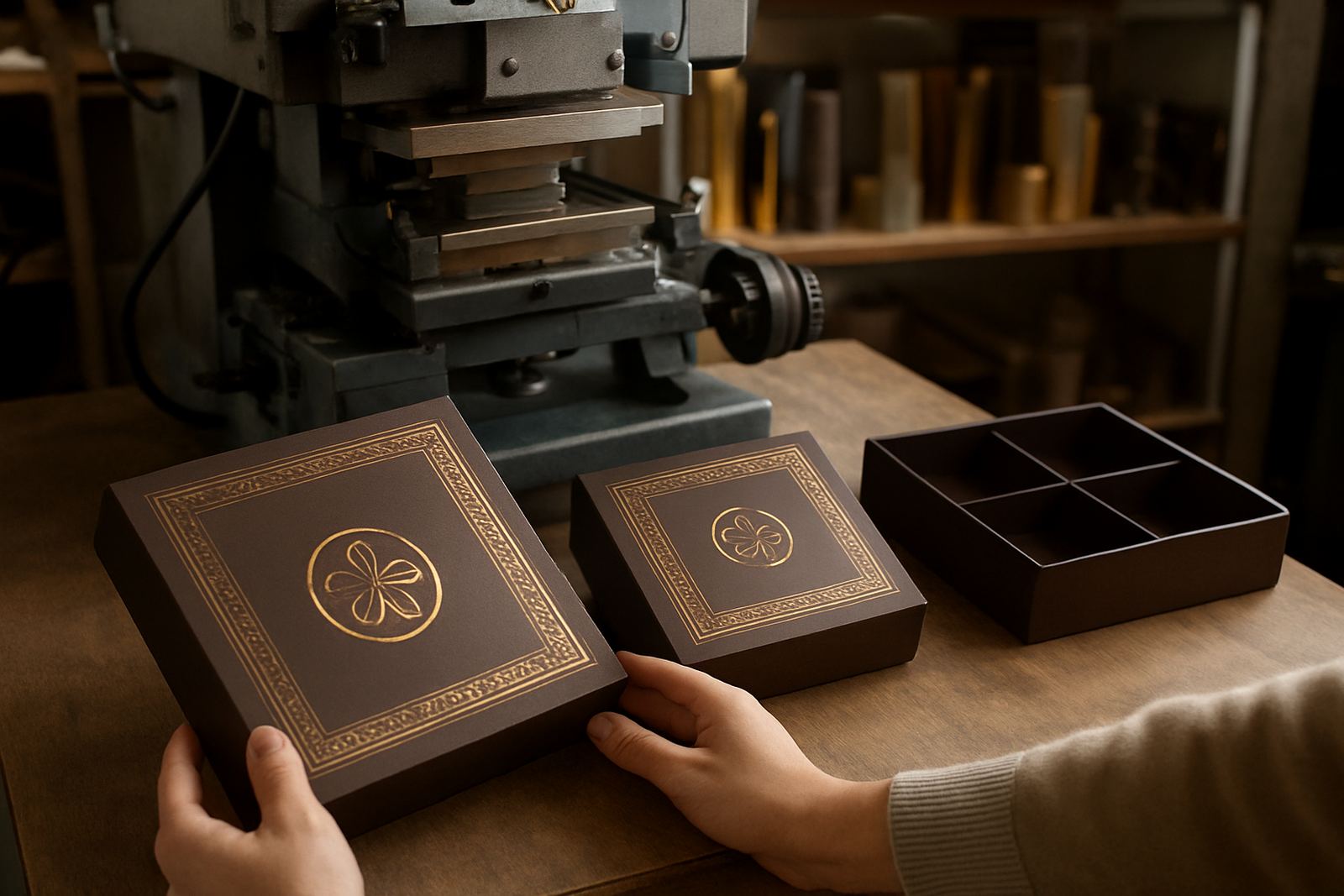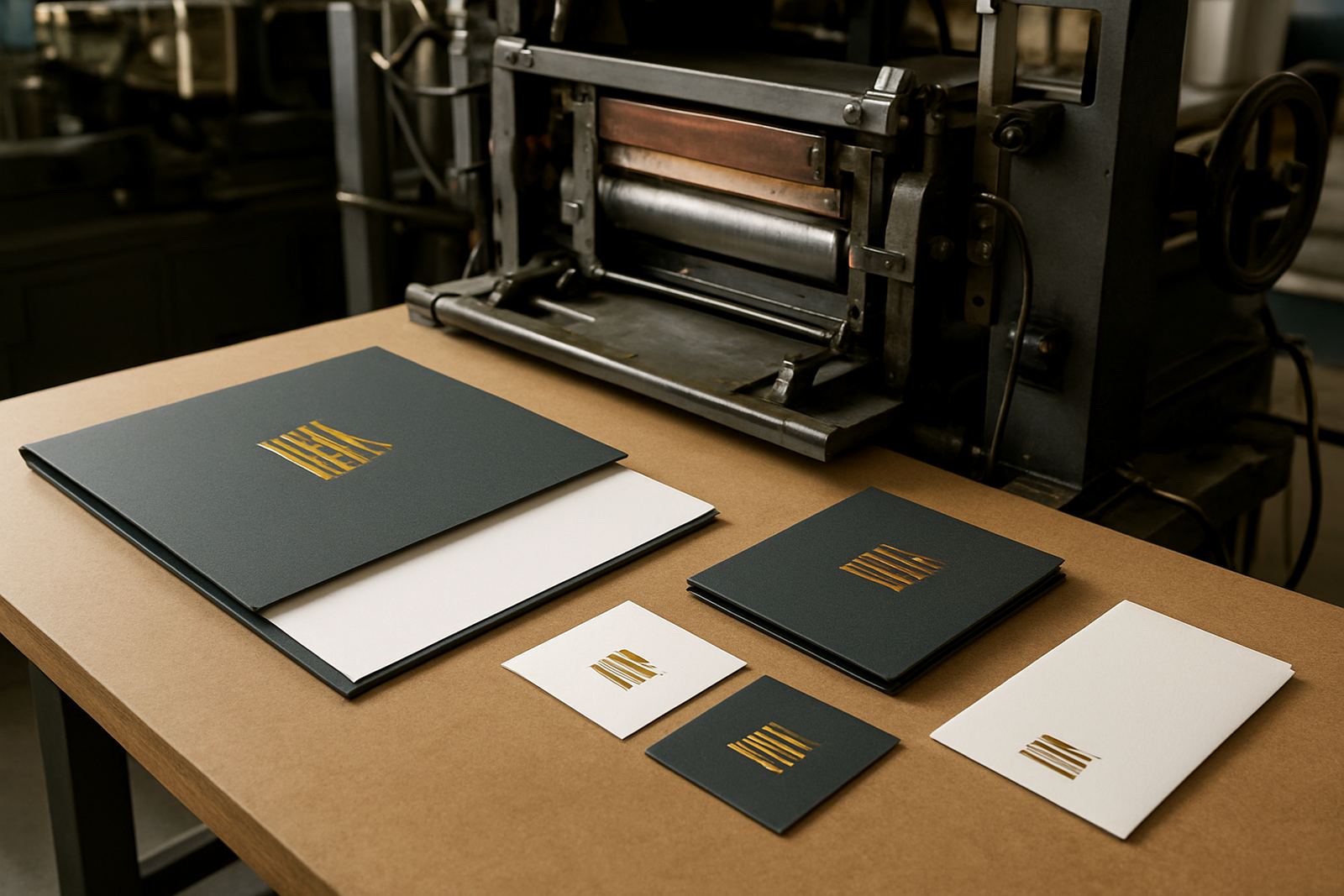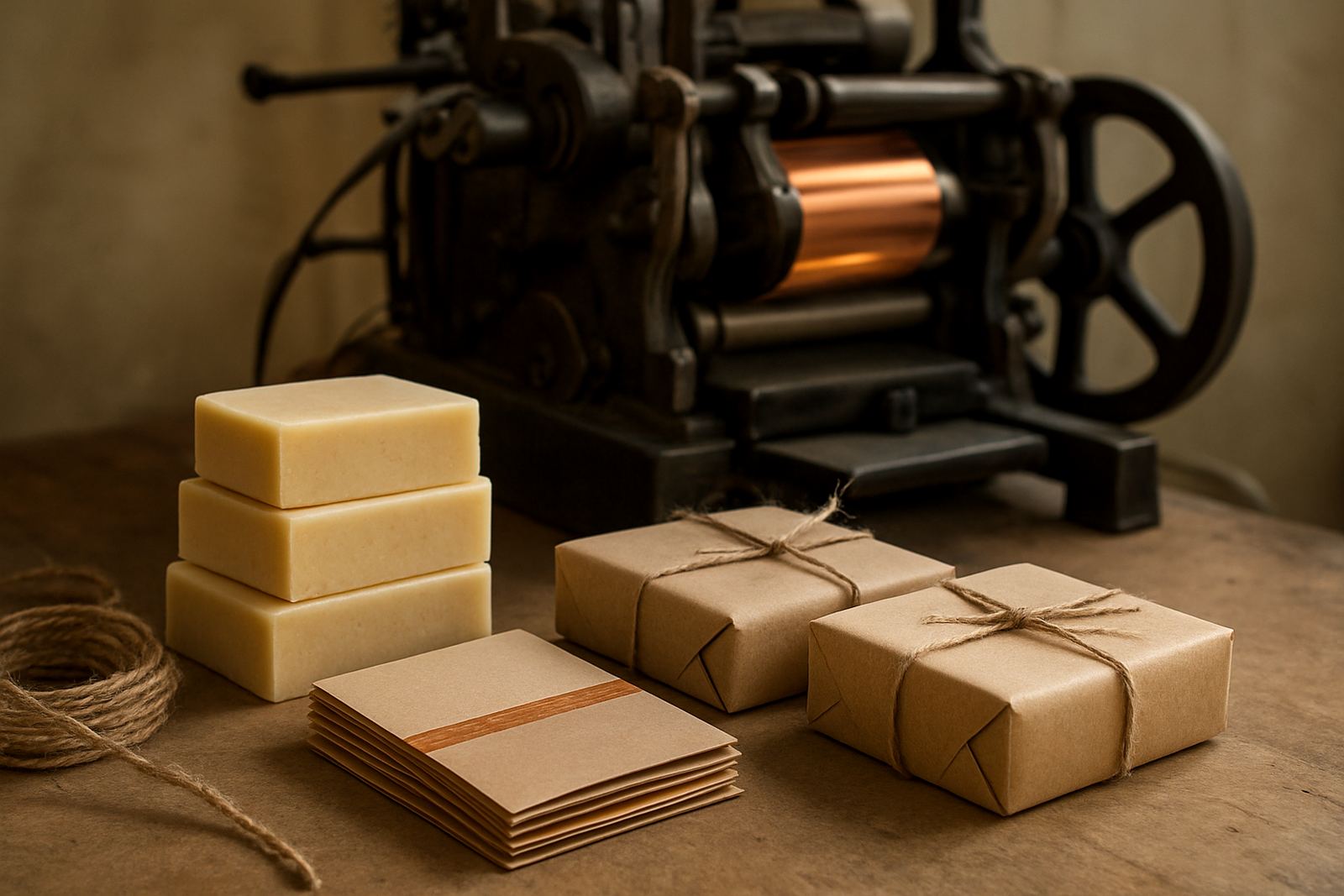
Why soap sleeves need a different setup
Soap sleeves are usually small, but the print area can be tricky. Many use uncoated board, kraft, recycled stock or lightly coated labels, all of which can shift under heat and pressure. If the sleeve wraps around a box or bar, the foil has to sit straight on the face panel and still hold through folding, handling and shelf display.
For natural soap brands, the finish often carries the first impression. Gold, copper, black gloss and clear embossing are common choices, but the real work is in keeping every impression sharp. Even a 1 mm drift can make batch numbers, logo edges or botanical detail look untidy, so press control matters more than sheer speed.
Typical press set-ups for sleeve work
Most soap sleeve jobs suit small to medium format hot-foil presses with accurate platen control and quick changeover between dies. A good machine for this work should handle short repeat jobs, fine line detail and a clean release on lighter board. Where the sleeve is narrow, narrow foils and smaller dies reduce waste and help keep the job tidy.
- Manual or semi-automatic hot-foil press for short and medium runs
- Heated platen with stable temperature control
- Adjustable pressure for light board, kraft and coated sleeves
- Quick die mounting for fast artwork changes
- Foil feed control for narrow repeats and smaller logos
For businesses in Johannesburg, Randburg or Midrand, that flexibility is useful when one week is all about lavender soap and the next is charcoal, shea butter or hotel amenity sleeves. If you are working out of a small pack room, the machine footprint and power draw must also fit the space, especially during load-shedding planning and generator use.
Planning artwork and layout before the first run
Good soap sleeve production starts before the press is switched on. The foil area must match the flat section of the sleeve, not the fold lines or glued tabs. If the artwork sits too close to a crease, you get cracking, poor lift or a dull edge after folding. Leave enough clearance for trimming, folding and any heat sealing the packer may do later.
It also helps to plan the die with the final board thickness in mind. A sleeve for a 100 g soap bar behaves differently from a wider retail carton, and coastal humidity in places like Durban can change board behaviour in storage. In Gauteng, dry conditions may give different results to a wet season batch, so keep your stock conditioned and test a few sheets before full production.
- Keep foil away from fold lines, glue zones and trimming edges
- Allow for board movement when stock is stored in warm or humid rooms
- Use simple, bold artwork for small logo areas and fine type
- Confirm the finished sleeve fits after foil, creasing and folding
Common mistakes that cost money on small-format work
The most common mistake is chasing speed before the settings are right. Too much pressure can crush the board or leave a halo around the foil. Too little heat gives patchy transfer and wastes both foil and time. Another issue is using a die that is too large for the available flat area, which leads to misalignment and off-centre branding.
Some teams also overlook operator training. A good press can still produce poor results if the operator does not understand dwell time, foil tension or heater calibration. That is why routine training and setup checks are worth more than re-running bad stock. It is cheaper to fix the settings on the first carton than to scrap an entire batch of sleeves.
- Do not overheat thin board, it can warp or burn
- Do not mount dies without checking pressure balance across the platen
- Do not store foil rolls in damp rooms near washing areas or open doors
- Do not ignore the difference between test sheets and full production sheets
Costing a foil press for soap packaging work
Budget depends on your run size, the kind of sleeve you print and how much setup support you need. Smaller hand-fed presses for craft producers and niche natural brands generally start lower, while larger units with better control suit contract packers and manufacturers doing daily production. As a working guide, businesses often plan from about R85 000 for a basic entry set-up to R320 000 or more for heavier production work.
That should also include practical items like dies, first foils, operator training and installation. If your team is based in Industria West, Roodepoort or Germiston, it may be worth adding preventive servicing and a spare heater plan so a breakdown does not hold up a soap run. In production, one lost day can mean missed dispatches and unhappy retailers.
What FoilPress supports for soap sleeve producers
FoilPress works with soap makers, pack houses and commercial printers across Johannesburg and nationwide, supplying presses, foils and workshop support. The team can help with press installation, die mounting, pressure setup, foil matching, heater calibration and production optimisation. For businesses scaling from craft markets to wholesale shelf supply, that kind of support keeps the foil side predictable.
Whether you are printing 200 sleeves for a local market in Sandton or several thousand for national distribution, the goal is the same: clean foil, steady registration and a finish that suits natural product branding. If the sleeve is right, the soap looks premium before the box is even opened.