Why invitations need a cleaner foil finish
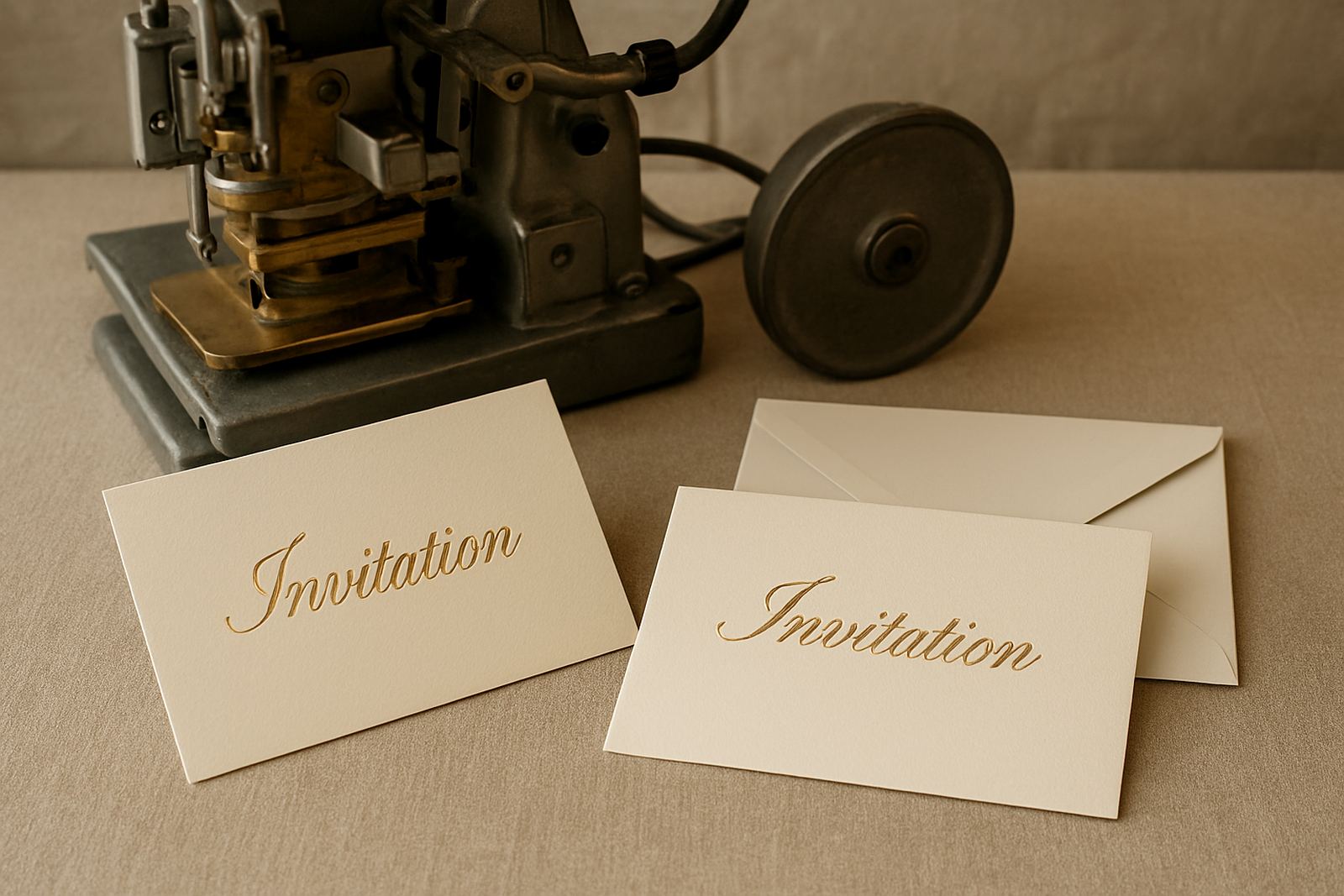
Invitation work is usually short-run, detail-heavy and unforgiving. Guests notice poor registration, patchy foil or crushed card straight away, so the press has to hold even heat and pressure from the first sheet to the last. That matters whether you are printing 80 wedding invites in Sandton or 1,500 launch packs for a corporate event in Midrand.
For this use case, the main challenge is consistency on fine text, borders, monograms and small logos. Card stock thickness can change between batches, and coated board behaves differently from textured or cotton paper. In Johannesburg, where many printers work with tight lead times and mixed job types, a press that is easy to set and repeat gives you less spoilage and fewer late-night reprints.
FoilPress works with invitation printers, binderies and craft studios that need a reliable finish without unnecessary complexity. The goal is simple: clean release, clear detail and a result that looks good in hand, not only under the shop light.
Typical press set-up for invitation work
The right set-up depends on volume, card size and how much finishing you do in-house. Many invitation businesses start with a compact manual or semi-automatic press for short runs, then move to a heavier unit once they are handling regular wedding seasons, corporate launches and event stationery packs.
A practical invitation set-up usually includes:
- A hot-foil press with steady temperature control
- A flat bed sized for A5, A4 or custom invitation formats
- Heater calibration for thin paper and thicker board
- Accurate pressure setup for fine type and full-logo foils
- Dies or plates mounted for names, dates, borders and crests
- Foil rolls matched to stock colour and surface finish
Some clients also add simple trimming and creasing equipment nearby, so the foil stage sits neatly between print and final assembly. If you are based in Roodepoort, Randburg or Industria West, it helps to plan the flow so the operator can move stock without bending corners or marking the sheet.
Planning the layout so invitations stay clean
Invitation jobs are small, but the handling is delicate. The press should sit where the operator can load stock easily and check registration without crossing a busy walkway. Leave enough room for paper, foils, dies, trimming tools and finished stacks. A cramped bench often leads to fingerprints, bent corners and wasted sheets.
For studios in Sandton or offices in Germiston with limited floor space, a narrow but organised finishing line often works better than trying to fit everything into one area. Keep the foil rolls dry and away from direct sun. In humid months, especially near the coast if you are shipping jobs out, board can curl and foil release can change, so storage matters more than many people think.
Power planning matters too. Load-shedding and voltage dips can interrupt production, so many invitation printers plan for a protected circuit or backup power on the press control side. That avoids mid-run temperature swings that can leave you with dull patches on a batch meant for a wedding on Saturday morning.
Common mistakes that waste invitations and foil
The most expensive invitation mistakes are often small. A slight shift in die position or the wrong foil grade can turn a neat batch into scrap. Many first-time users try to push a press too fast before the stock and heater settings are properly matched. That usually shows up as weak edges or missing fine lines.
- Using the same heat setting for every paper type
- Ignoring moisture in stored board
- Running pressure too high and crushing textured stock
- Mounting the die without checking centre point and angle
- Choosing a foil colour only from a sample strip, not a test run
- Overloading one sheet with too many foil elements
FoilPress often advises clients to test one or two sheets first, then lock the settings before the full run. That saves time and helps the final set look consistent across the stack. It also helps when you have multiple invitation styles in one week, which is common for event planners in Johannesburg city west.
Budget ranges for invitation production in Rand
Budget depends on the kind of invitation work you want to do. A small craft business producing limited wedding runs may only need a basic setup, while a print shop serving event planners, hotels and corporates may need a larger press with better throughput and repeatability. It is usually better to buy for the next 12 to 24 months of work, not only this month’s orders.
As a rough guide, small invitation-focused presses and starter setups can begin in the lower tens of thousands of Rand, while heavier production units and fully equipped finishing lines move into the higher tens of thousands and beyond. Final cost also shifts with heater control, bed size, tooling and any training or installation needed on site.
Typical operating costs to plan for include foil rolls, dies, power, stock spoilage and routine servicing. If you are doing seasonal wedding volumes, it is worth comparing your foil use per hundred invites against your labour time. On many jobs, the real saving comes from fewer reprints, not just cheaper consumables.
Support for invitation printers across Johannesburg and beyond
FoilPress supports businesses from Industria West, Roodepoort, Randburg, Midrand, Sandton and Germiston, with presses and foils supplied nationwide. The team handles press installation, operator training, preventive servicing, breakdown repairs, heater calibration, pressure setup, die mounting, foil matching, spares supply and production optimisation.
For invitation work, that support matters because deadlines are usually fixed. Weddings cannot move because a press is running hot or a die is out of line. A quick site visit, proper calibration and a sensible servicing plan can make the difference between a smooth season and a costly rush order. The company was founded in 2009 and is based in Industria West, Johannesburg.
If you are setting up a new invitation line or trying to improve an existing one, FoilPress can help you choose the right press size, match foils to your stock and train your team to get better results from the first batch.