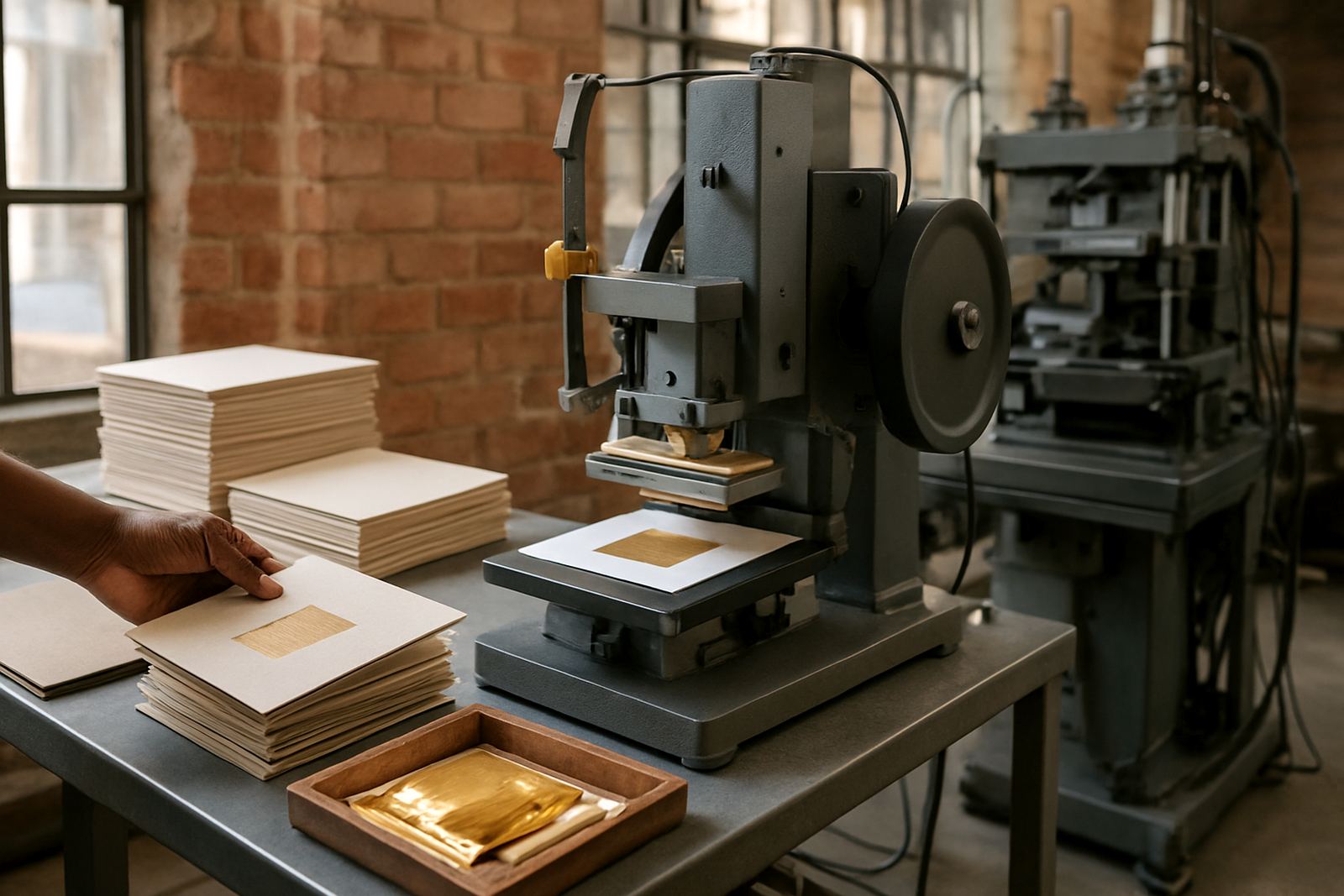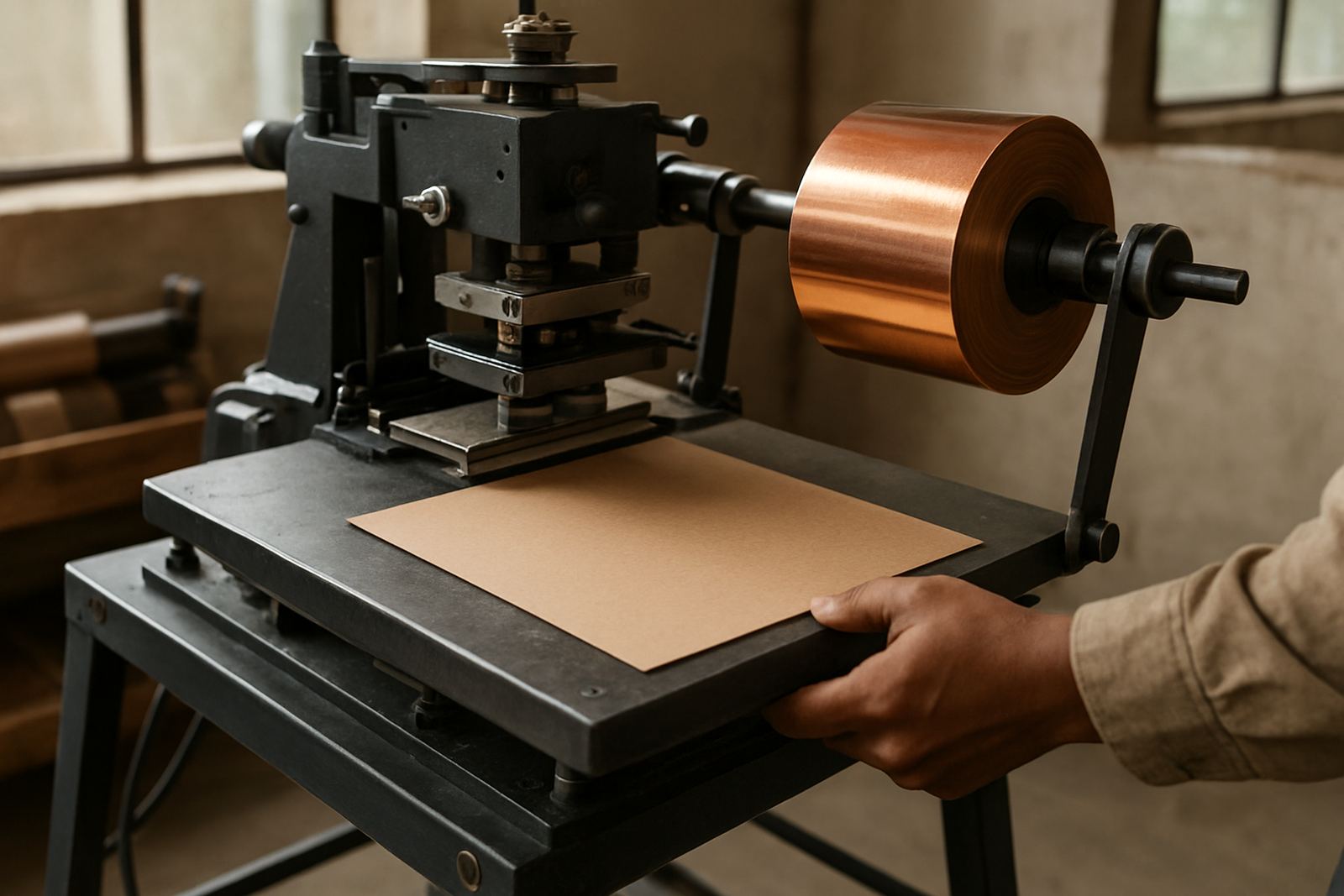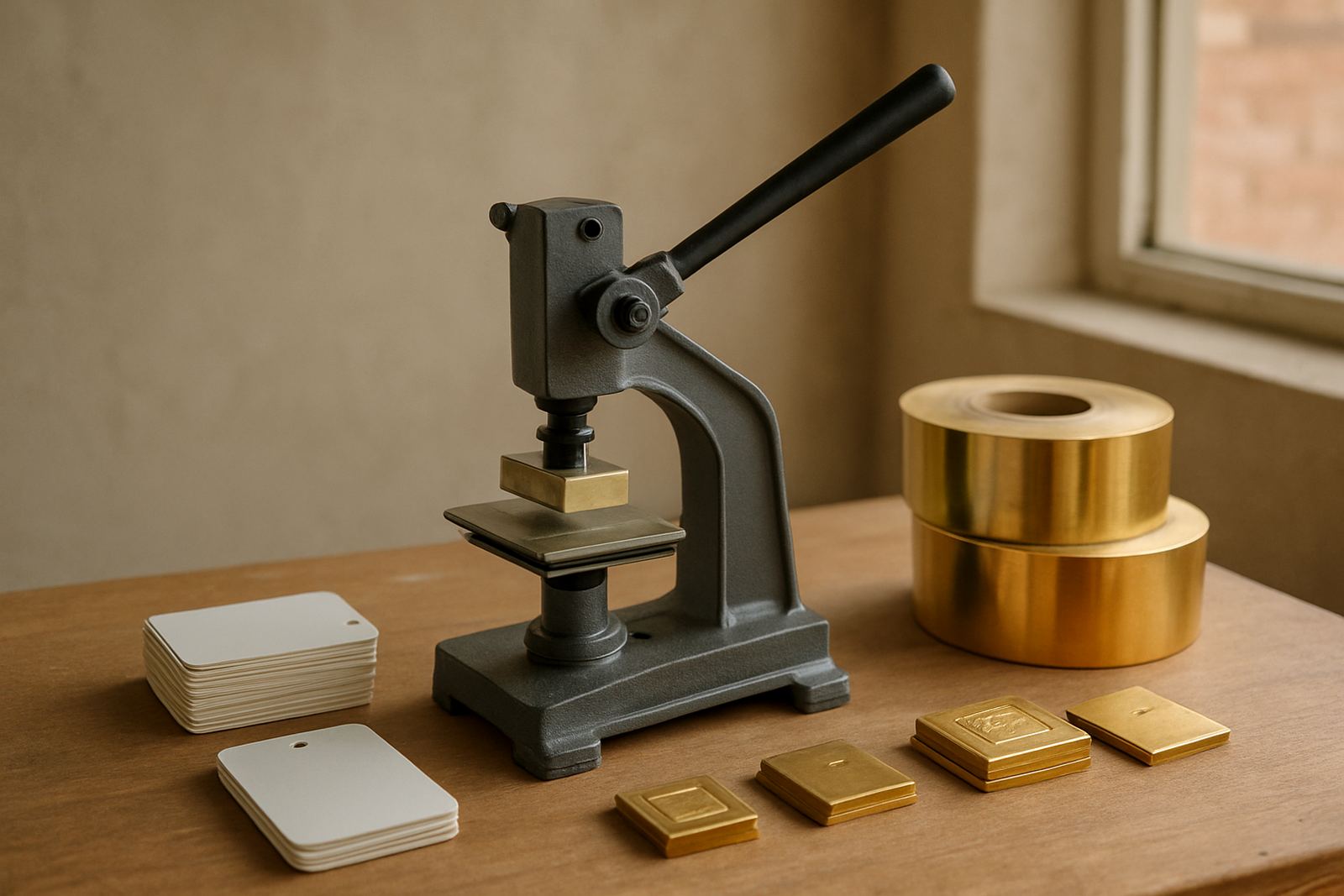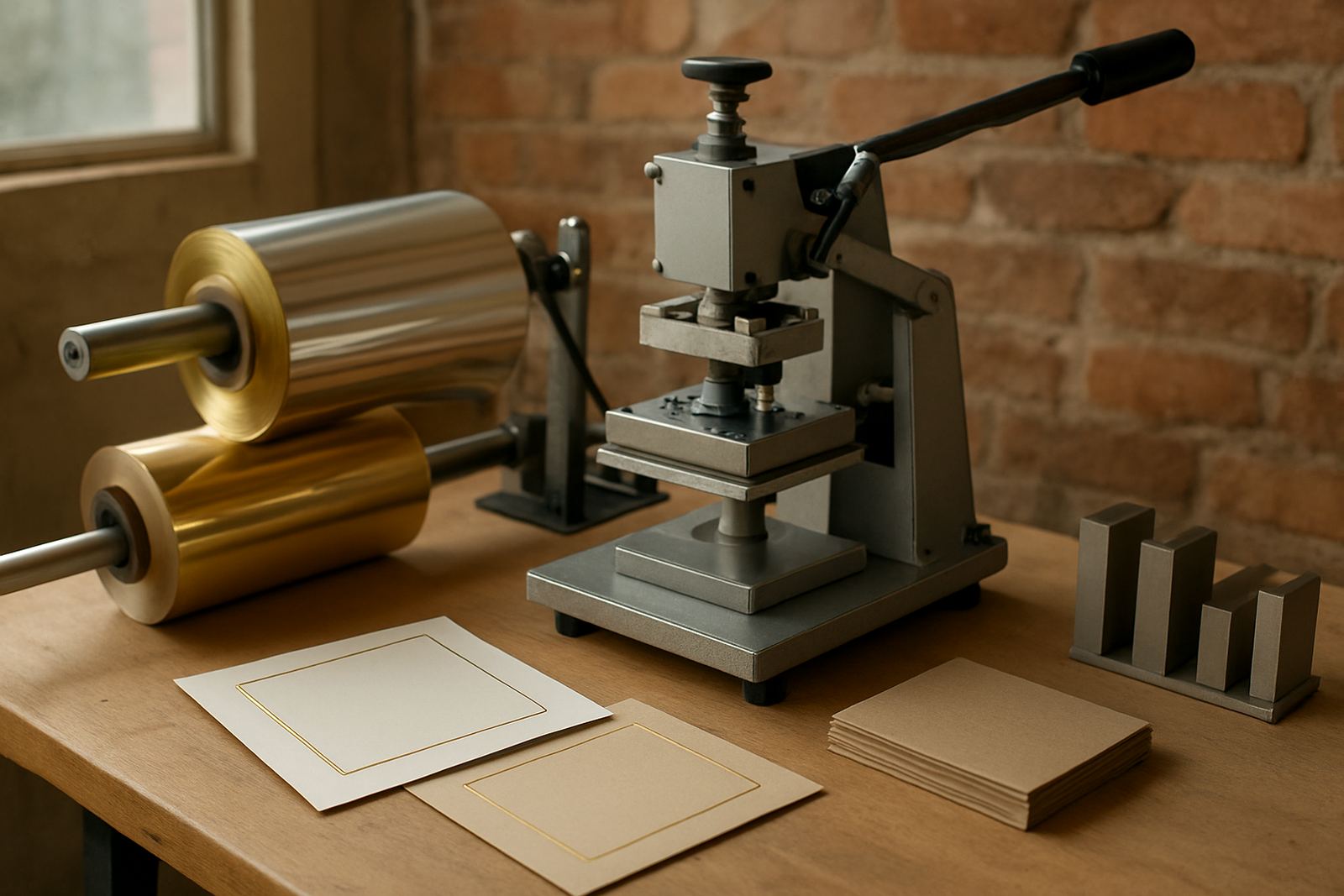
Built for short batches, samples, and personalised work
If your work changes from job to job, a short run hot-foil press keeps the setup practical. It is suited to invitation cards, folding cartons, sleeve labels, presentation boxes, hang tags, and short promotional runs where you need neat foil on a limited quantity, not hours of trial and error.
The main advantage is control. You can set up for smaller quantities without tying up floor space or wasting material on overlong warm-up periods. That matters for print shops, packaging converters, craft producers, and finishing departments that need a dependable machine for mixed work.
- Personalised runs with names, dates, event details, or batch codes
- Short packaging orders where speed to production matters
- Sampling, proofing, and repeat work with the same finish requirements
- Foil accents on coated board, labels, and selected synthetic stocks
Typical sizes and working options
Short run presses are available in compact formats for smaller work areas and in wider bed options for larger sheets. The right size depends on your product range, the largest sheet you run, and how often you change dies. In Johannesburg, Roodepoort, Randburg, Midrand, Sandton, and Germiston we often match the press to the actual carton or card size first, not only the foil area.
Common working widths suit small cards up to medium packaging panels, with bed sizes chosen to allow safe handling around the die and sheet edges. On many jobs, a smaller press gives faster changeover and lower power draw, which is useful in premises that already run cutters, compressors, and heaters.
- Compact units for cards, tags, labels, and sample cartons
- Mid-size units for sleeve work and short packaging production
- Manual or semi-automatic feeding options depending on output
- Single-zone or multi-zone heat control depending on the tooling and stock
Where this press suits best
This unit suits businesses that need good foil definition without committing to a large production line. A small stationery shop in Pretoria, a packaging workshop in Industria West, or a manufacturer in Midrand doing seasonal runs can all benefit from the same principle: steady finishing on short, repeatable jobs.
It is also practical for companies handling mixed materials. If you work with heavy card, laminated board, or coated packaging substrates, the press can be set up for the pressure and heat needed on that stock. If your jobs change often, short run equipment helps keep the workflow manageable and the makeready time under control.
- Card and stationery finishing
- Short-run packaging and presentation packs
- Event and wedding print work
- Small manufacturer branding and sampling
Installation, power, and workshop planning
Before installation, check the floor space, access for loading, and whether your power supply is suitable for the heater load. Most short run presses need a stable electrical supply, proper earthing, and enough room around the machine for handling sheets and storing dies. If the unit is fitted with a compressor or air-assist function, that needs to be planned as well.
In South African workshops, load-shedding and fluctuating supply can affect heat stability, so it is worth discussing backup power or staged start-up planning before delivery. Where a site has older wiring or limited breaker capacity, a site check helps avoid nuisance trips once production starts. For customers near the coast, humidity control also matters because damp air can affect foil release and storage conditions.
- Confirm mains supply and breaker rating before installation
- Allow space for operator movement, material stacking, and die changes
- Plan for power backup if the machine must run through outages
- Keep foils and boards in a dry area to protect consistency
Care, servicing, and keeping results consistent
Like any finishing machine, a short run press works best when the basic checks are done often. Heat plates should be calibrated, pressure settings checked, and moving parts kept clean. Dust, foil waste, and adhesive residue can build up quickly in a busy production area and lead to poor impression quality or uneven transfer.
Preventive servicing is usually cheaper than breakdown repairs, especially when a press is used for paid work every day. FoilPress supports installation, operator training, preventive servicing, heater calibration, pressure setup, breakdown repairs, die mounting, foil matching, spares supply, and production optimisation. That support is useful for teams that need less downtime and fewer rejects.
- Check heater performance and temperature recovery regularly
- Inspect pressure, alignment, and die condition before long runs
- Keep guides, beds, and tooling clean from foil dust and trim
- Store spare parts and consumables for planned maintenance
What to check before you place an order
When ordering a short run press, start with the products you make most often. Measure the sheet size, the foil area, and the clearances needed for feed and removal. If you are working on packaging, confirm the board thickness, coating type, and whether you need hot foil only or additional embossing pressure as well.
It also helps to know your expected daily output, the number of changeovers per shift, and whether one operator or two will run the machine. Those details help match the press to your workload instead of buying more capacity than you need. If you are based in South Africa and need a machine in Johannesburg, Roodepoort, Randburg, Midrand, Sandton, Germiston or elsewhere nationwide, it is worth asking for a specification matched to your actual jobs, not only the brochure figures.
- Largest sheet size and foil coverage area
- Stock type, thickness, and finish quality required
- Daily quantity and how often jobs change
- Power availability, floor space, and access route for delivery
Key facts
| Machine type | Short run hot-foil stamping press |
|---|---|
| Best for | Personalised cards, short packaging runs, samples, and mixed finishing work |
| Working sizes | Compact to mid-size formats, matched to sheet and foil area |
| Power needs | Stable electrical supply with correct earthing; final rating confirmed on specification |
| Operator setup | Manual or semi-automatic feed options depending on model |
| Support | Installation, training, servicing, calibration, repairs, spares, and production optimisation |