Why laminated sheets behave differently under foil
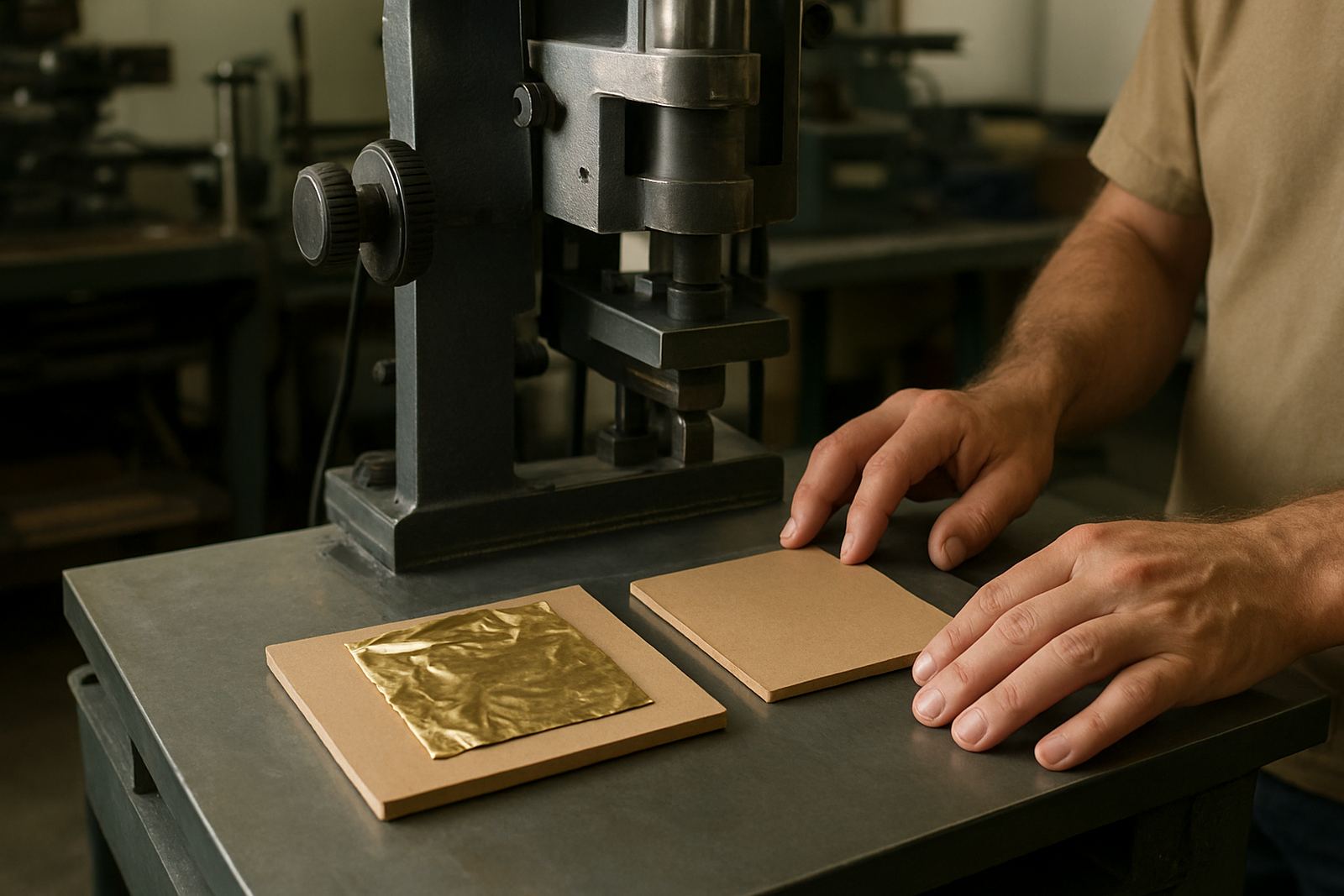
Laminated card and board carry a smooth film layer that changes how heat moves into the surface. Instead of the foil biting straight into raw fibres, the press has to work through the laminate and lock the image into a much less porous face. That is why a setting that works on uncoated carton can fail badly on gloss or matt laminated material.
The challenge is not only adhesion. Laminates can reflect heat, soften unevenly or show press marks if the pressure is too high. In summer, when a workshop in Industria West or Germiston is running warm and the press is already holding heat, small changes in presssure can give you a very different result. If you are running short runs for gift boxes, presentation folders or premium sleeves, the material itself must be treated as part of the setting, not just a surface to stamp.
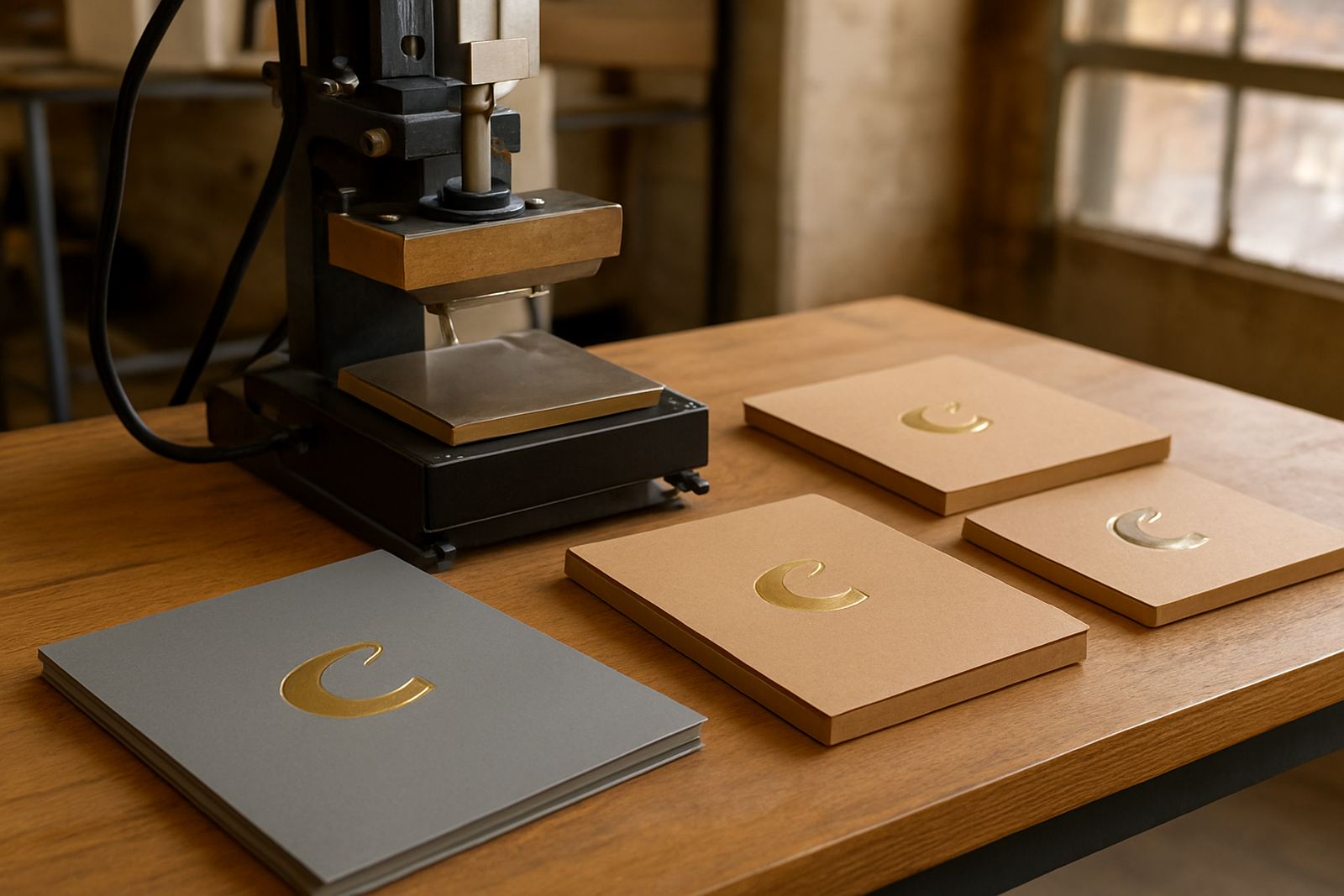
A good foil result on laminated stock usually comes down to three things: a controlled platen temperature, enough dwell time for the foil adhesive to activate, and a foil grade made for coated or film-covered surfaces. Get those three aligned and the finish looks crisp rather than overcooked.
Set heat for the laminate, not for the board beneath it
One of the common mistakes is using the same temperature for every job because the board thickness looks similar. Laminates vary a lot. A matt film may need a different approach from a high gloss film, and a soft-touch laminate often behaves differently again. The aim is to bring the adhesive on the foil up to working temperature without blistering the film or flattening the texture.
Start with a test strip and move in small steps. A tiny change in temperature or a slightly longer dwell time can improve adhesion without forcing extra pressure onto the sheet. On some jobs, reducing heat and extending dwell by a fraction gives better definition than pushing the press harder. That is especially true on detailed logos, fine type and small line work.
- Use a calibrated heater rather than guessing by feel.
- Test on the exact laminate, not on a similar sample.
- Watch for signs of overheat such as haze, rippling or softened edges.
- Allow the press to stabilise before running the first production sheets.
If you are running through load-shedding windows, check recovery time before the production shift starts. A press that has cooled and reheated may need a fresh test because the first few pulls after power returns can behave differently.
Choose foil that matches coated and film-covered stocks
Not every foil suits laminated work. Standard grades that perform well on uncoated board may not anchor properly to slick laminates. For packaging and presentation pieces, you need a foil that has the right adhesive layer for the substrate and the right release properties for a clean lift. If the foil is too aggressive, it can leave marks. If it is too light, it may sit on the surface and scratch off during handling.
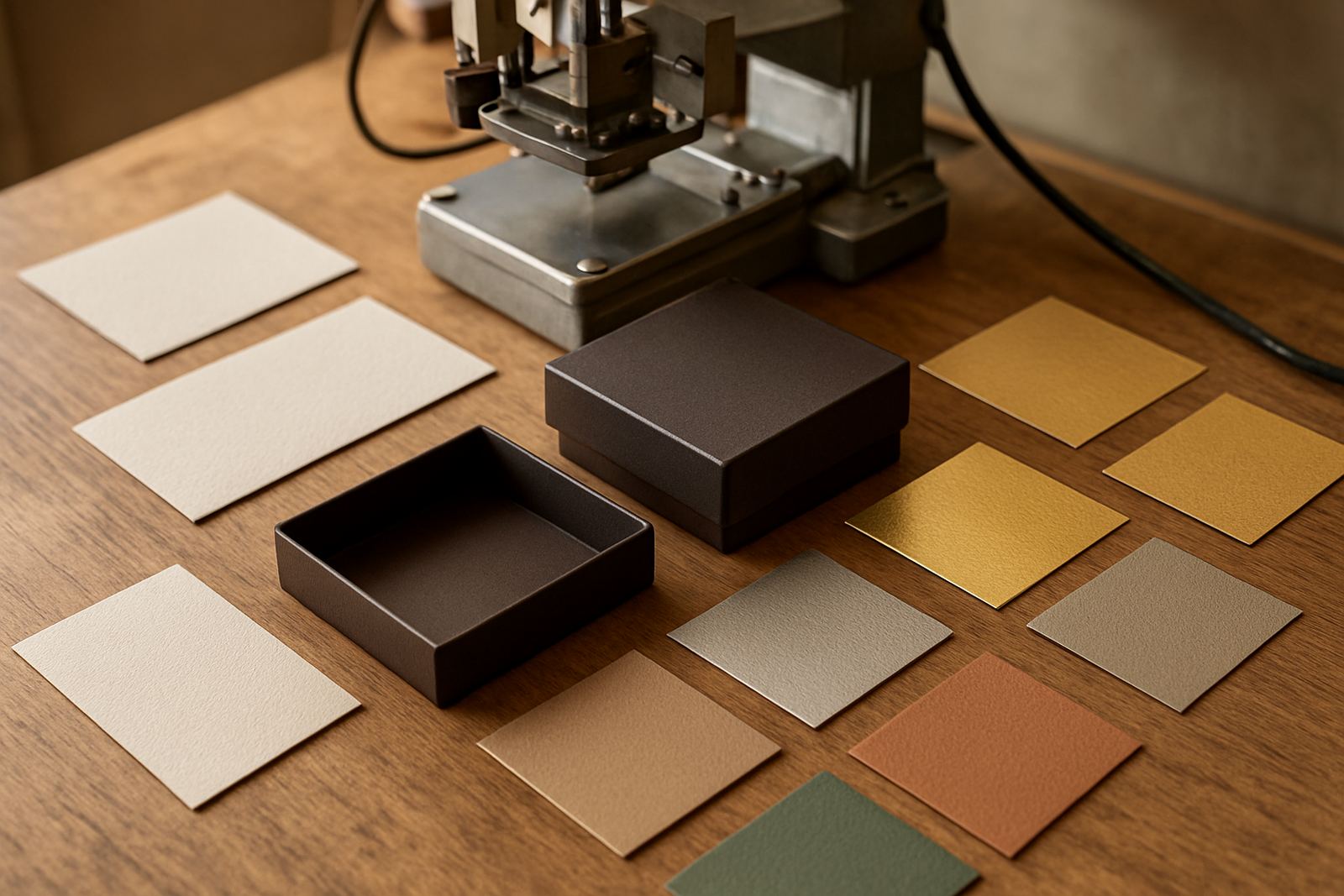
Colour also matters. Gold and silver are common, but black, holographic and pigment foils can behave differently on matt and gloss laminate. A deep black foil on a dark laminate may look sharp in the workshop but lose contrast once the light changes in a retail setting. For a box line going to Sandton or Midrand, ask how the finished pack will be viewed, stored and transported before you settle on the foil grade.
- Match foil grade to the laminate finish: gloss, matt or soft-touch.
- Check whether the job needs high abrasion resistance.
- Keep small samples of each approved foil for repeat runs.
- Record which foil worked best on each customer stock code.
Pressure, dwell time and die mounting on smooth surfaces
Once heat and foil are right, the press still needs clean mechanical setup. On laminated stock, pressure must be even across the die area. Too little pressure gives weak edges and broken solids. Too much pressure can crush the board, distort the laminate or cause the image to spread beyond the die line. The goal is a firm, even impression that transfers the foil without damaging the face.
Dwell time should be set with the size of the image in mind. Small marks often need less dwell than broad panels, but fine detail may need a slower pull if the stock is difficult. Die mounting matters too because a die that sits even slightly out can throw the whole job off. On repeat work, keep the same backing, packing and register notes so the next run starts from known settings rather than a fresh guess.
For laminated covers, sleeves and cartons with tight creases, check the sheet path and feed method as well. A neat die line means little if the sheet shifts before it reaches the platen. Good setup saves rework and keeps the finish uniform from the first sheet to the last.
Local production problems we see in Johannesburg workshops
In City West and the western side of Johannesburg, laminated work often comes in after print, cut and fold, which means the foil stage has to fit into a busy schedule. A small craft printer in Roodepoort may bring in a short run of branded gift boxes on a matt laminate, while a packaging plant in Germiston might need a larger batch of presentation cartons with metallic foil panels. The pressure is the same: the finish must be clean, and the deadline is often tight.
Humidity and temperature shifts can affect storage as well. Stock kept near open doors, or in a workshop with uneven cooling, can change enough to alter the result. When a laminated pile has absorbed moisture, the surface may react differently under heat, especially on longer runs. Keeping cartons and sheets sealed until use, and letting them settle in the work area, can save a lot of grief.
Many faults blamed on the press are actually caused by handling. Finger grease, dust from cutting and scuff marks from stacking can all stop foil from locking properly. Before the run, wipe the surface if needed and make sure the sheets are clean and flat. It sounds basic, but it solves more problems than most people expect.
Keeping laminated foil jobs consistent from trial to full run
Once the job is approved, consistency becomes the main issue. Record the foil grade, platen temperature, dwell setting, pressure setup and die notes for every laminated stock you plan to repeat. If you serve customers across Johannesburg and beyond, that record becomes valuable when a reorder comes in months later and the stock supplier has changed a film or board spec.
Preventive servicing helps here. A press that holds its heat properly, closes evenly and opens cleanly will give you far fewer surprises on coated and laminated work. If you notice uneven transfer, recurring weak corners or slow warm-up, get the heater calibration and pressure setup checked before the next batch. Breakdown repairs are always more costly than a planned stop between jobs.
- Log every approved setting after the first good run.
- Replace worn packing before it affects registration.
- Keep spare heater parts and common consumables on hand.
- Train operators to spot laminate movement, not just foil failure.
For laminated packaging, good foiling is not about pushing the machine harder. It is about control, repeatability and knowing how each stock behaves. Once those factors are understood, the finish becomes cleaner, the waste drops and the press earns its keep on every shift.