When a manual press makes sense in South African production
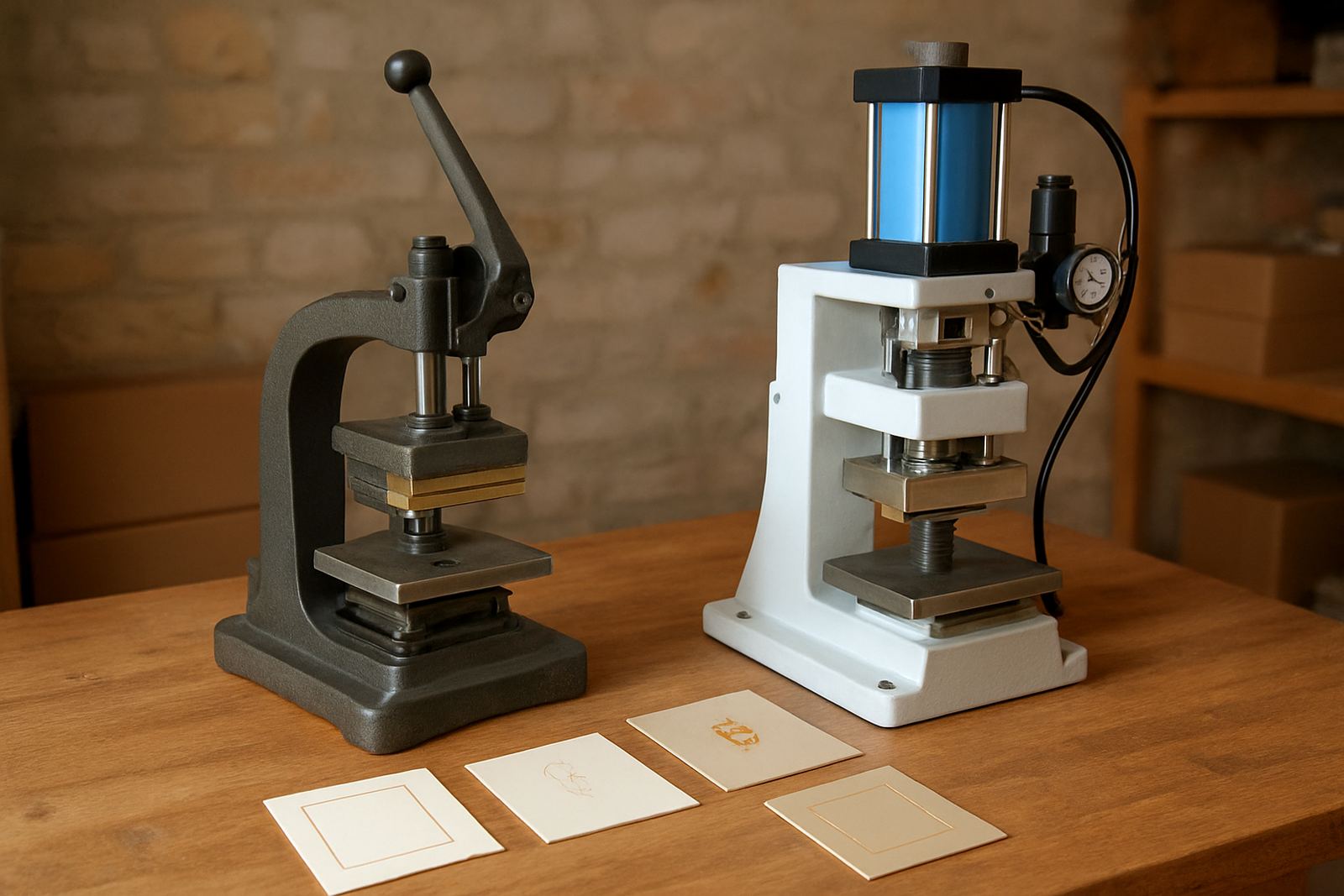
A manual press suits shorter runs, sample work and smaller shops that need control without a large upfront spend. If you are doing wedding stationery, short packaging batches or custom labels in Johannesburg, a manual unit can give very good results when the operator knows the material and sets the heat carefully.
For a business in Industria West or Roodepoort working with mixed jobs, the appeal is simple: lower capital cost, less compressed air infrastructure, and easy placement in a modest workshop. It also helps when power cuts or air supply issues interrupt production, because there is no compressor dependency.
- Lower purchase price and simpler setup
- Good for short runs, prototypes and personalised work
- No compressor required
- Easier to move within a workshop
Why pneumatic presses win on consistency and speed
Pneumatic presses use air pressure to drive the stamping cycle, which gives more even pressure from impression to impression. That matters when you are running cartons, gift boxes or repeat packaging jobs where the foil must sit cleanly across a large area. For higher volumes, the machine does more of the physical work and the operator can keep pace without strain.
In practical terms, the benefit shows up in fewer weak impressions, steadier registration and less variation between the first and last sheet. On a busy line in Midrand or Germiston, that consistency can save real money because there is less scrap and fewer stoppages for manual correction.
- More consistent pressure across long runs
- Better suited to repeated production jobs
- Less operator fatigue over a full shift
- Improved repeatability for packaging work
The real cost difference is more than the machine price
Many buyers compare only the purchase figure, but that is only part of the story. A manual press may be cheaper upfront, yet it can cost more in labour if one person must push through long shifts or if output is limited by operator speed. A pneumatic machine needs air supply and proper servicing, but it can deliver more pieces per hour with steadier results.
For businesses near Sandton or Randburg serving retail packaging clients, the better choice often depends on daily volume. If the press is running for a few hours a week, manual can be practical. If it is running most days, the faster cycle and lighter physical effort of pneumatic usually justify the higher spend.
- Manual: lower entry cost, lower running complexity
- Pneumatic: higher setup cost, better output per hour
- Check compressor size, power supply and air quality
- Factor in labour, rejects and downtime, not just the quote
Operator effort, training and workplace safety
Manual presses ask more of the operator. That is not only a comfort issue, it affects repeat accuracy and safety over time. Someone pressing all day can tire, and tired hands make inconsistent pressure and slower cycle times more likely. In a workshop with several operators, that difference becomes obvious by the end of the week.
Pneumatic presses reduce physical strain, but they still need proper training. Pressure setup, die mounting, heater calibration and foil matching must be handled properly or the machine will not perform as expected. At FoilPress, we see the best results when teams get hands-on training early, especially where staff rotate between shifts.
- Manual presses need stronger operator technique
- Pneumatic presses still need correct setup and training
- Safety checks matter around moving parts and hot surfaces
- Good training reduces waste and repeat faults
Matching the press to the job, not the trend
The right press depends on what you are stamping, how often you stamp it and how uniform the finish must be. A craft business producing 20 to 50 items a day may not need air-driven automation. A packaging plant in the City West handling longer runs, by contrast, will usually benefit from pneumatic output and reduced operator strain.
Coastal humidity, winter dryness inland and load-shedding all affect production in different ways. Foil storage, heater stability and workshop conditions can influence results, so the machine choice should fit your environment as well as your order book. If your work changes often, the safer option is the press that gives room to grow without constant rework.
- Short runs and samples: manual is often enough
- Longer runs and repeat jobs: pneumatic is usually stronger
- Mixed production: assess changeover time and labour
- Environmental conditions can affect foil performance
A Johannesburg example from a busy packaging workshop
A small packaging outfit in Industria West started with a manual press for boutique cartons and gift sleeves. It worked well at first, but once they secured recurring orders from a chain supplier, the operator was spending too much time on each cycle and the finish varied on larger sheets. The team moved to a pneumatic setup after reviewing output, labour and the cost of rejected stock.
The change was not only about speed. Their production became steadier, the team handled longer shifts with less strain and they could quote more accurately because the press behaved the same from batch to batch. For businesses in Roodepoort, Germiston or Midrand, that kind of decision often makes the difference between a press that copes and one that becomes a bottleneck.
If you are weighing manual against pneumatic, look at the whole process from setup to final inspection. A good supplier should help with installation, servicing, breakdown repairs and production optimisation so the machine fits the work you actually do, not just the brochure figure.