Why makeready minutes add up so fast
In hot-foil work, setup time is often hidden in plain sight. A few extra minutes here and there for die mounting, pressure checks, heater adjustment and foil alignment can turn into hours lost over a week, especially when the same machine is handling short runs for cards, cartons and promotional packaging. If your operators are redoing the same steps on every job, you are paying for that repetition in labour, foil waste and machine downtime.
The real cost is not only the delay before the first good piece comes off the press. It is also the pressure on scheduling. A line that should handle six small jobs a day may only clear four, which means overtime, missed delivery slots and more changeovers for the next shift. Once a business in Industria West or Roodepoort starts tracking setup minutes properly, the pattern usually becomes clear very quickly.
Start with a fixed changeover sequence
The simplest way to cut makeready time is to remove guesswork. Every operator should follow the same order for job setup, from cleaning the bed to checking heater setpoints and confirming die position. A written sequence helps new staff, but it also prevents experienced operators from skipping steps when the workshop gets busy.
A good sequence should cover the same core actions every time:
- Clear the press bed and remove old foil, dust and adhesive residue.
- Check the die face and mounting surface for wear, burrs or damage.
- Set the heater to the correct temperature before loading the job.
- Confirm pressure and dwell settings against the job card.
- Align the foil path and tension before the first pull.
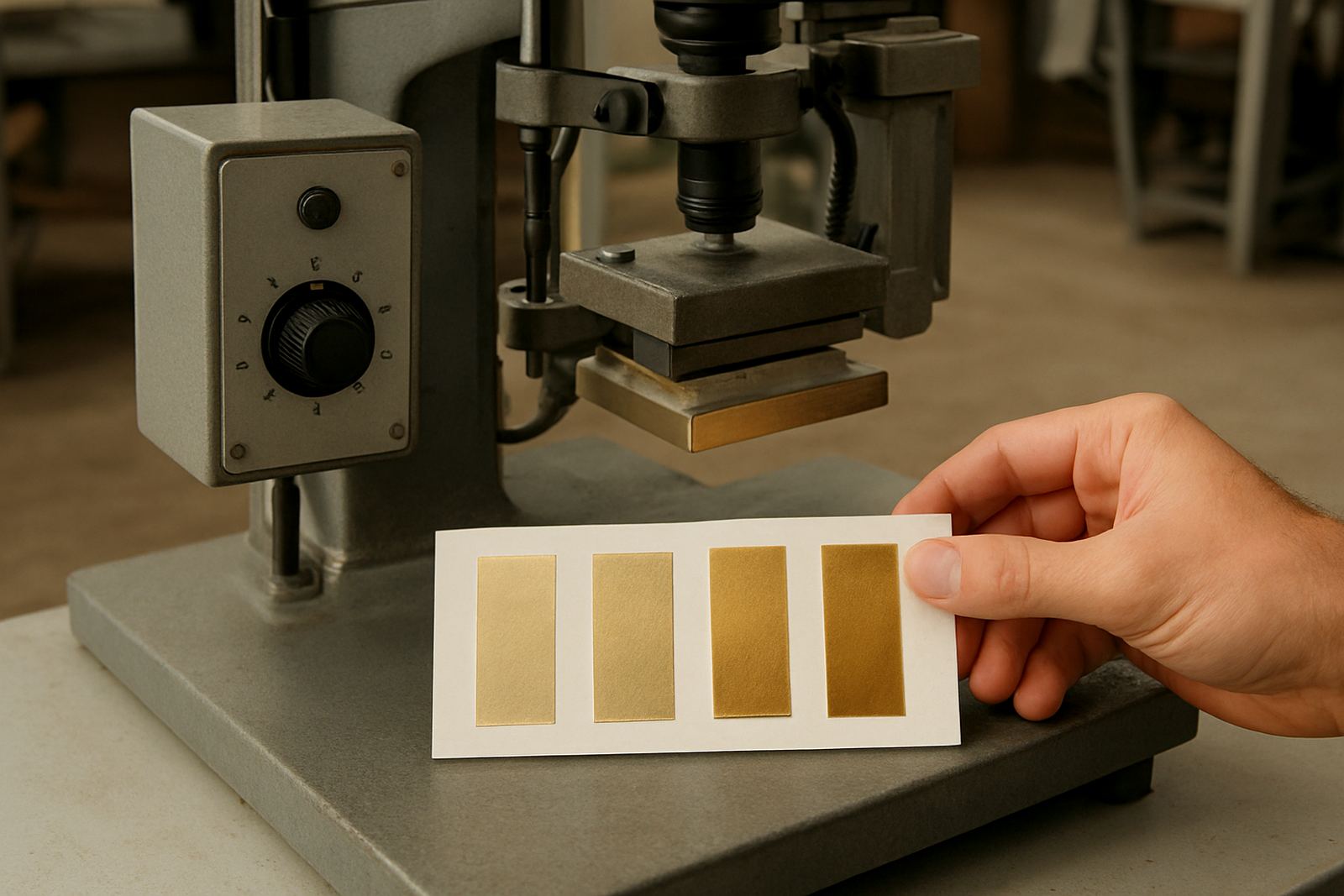
- Run a short test sheet and inspect the first impression under proper light.
When the sequence is followed in the same order, fewer steps are repeated and the operator can see problems earlier. That alone can save 10 to 20 minutes on a modest job, and sometimes more on detailed packaging work.
Keep dies, foils and settings close to hand
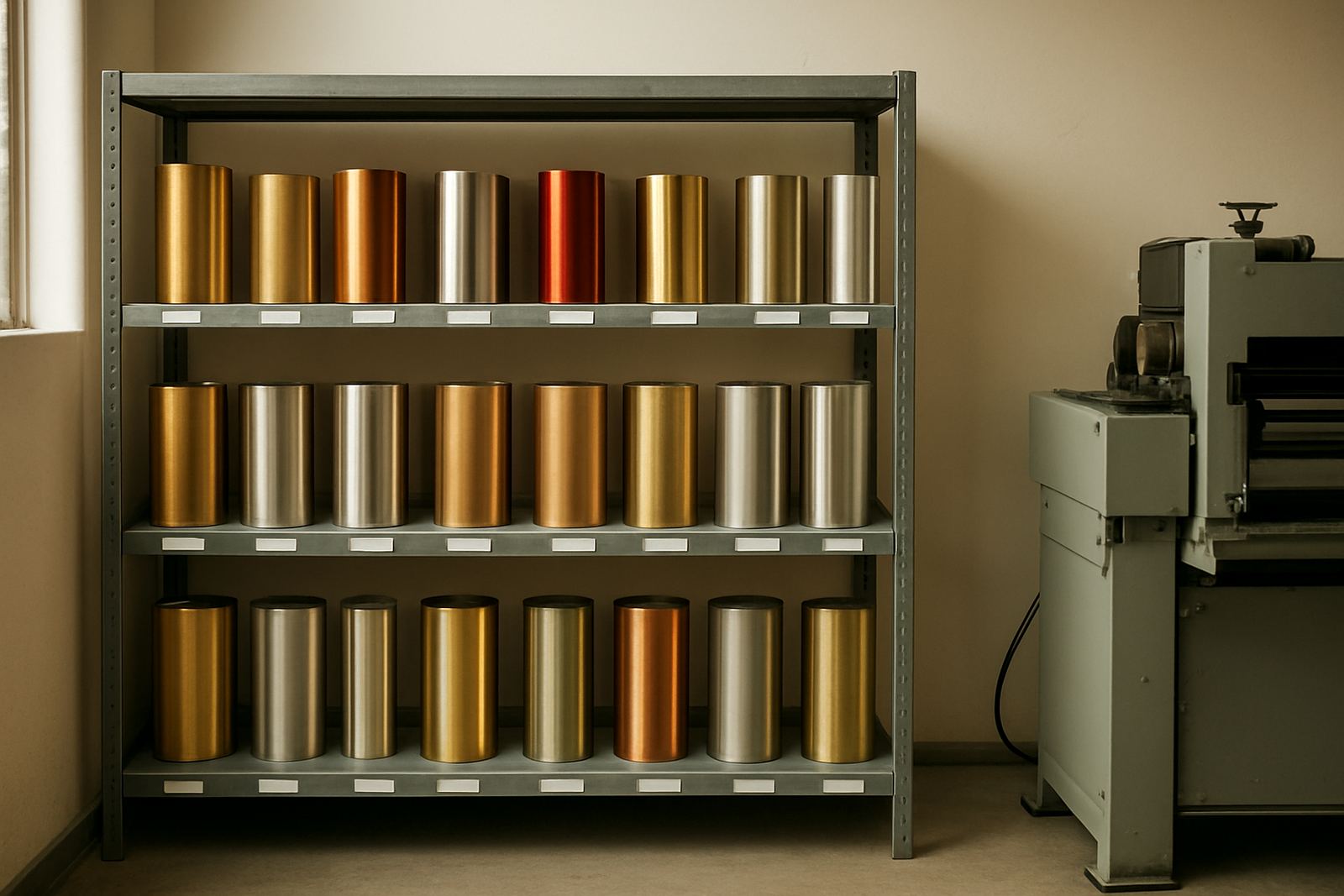
Many setup delays are caused by simple searching. The right die is not on the rack, the foil reel is still in another room, or the pressure notes from the last run are missing. A neat stores system does more for output than most people expect. If your frequently used sizes are clearly marked and grouped by job type, the press crew can load faster and make fewer mistakes.
This is where production notes pay off. Keep a short record for each repeat job, including temperature, pressure, foil type, paper stock, board thickness and any adjustments that improved registration. Over time, this becomes a practical guide for similar runs. It also helps when humidity changes in summer or when a board from a different supplier behaves slightly differently on the machine.
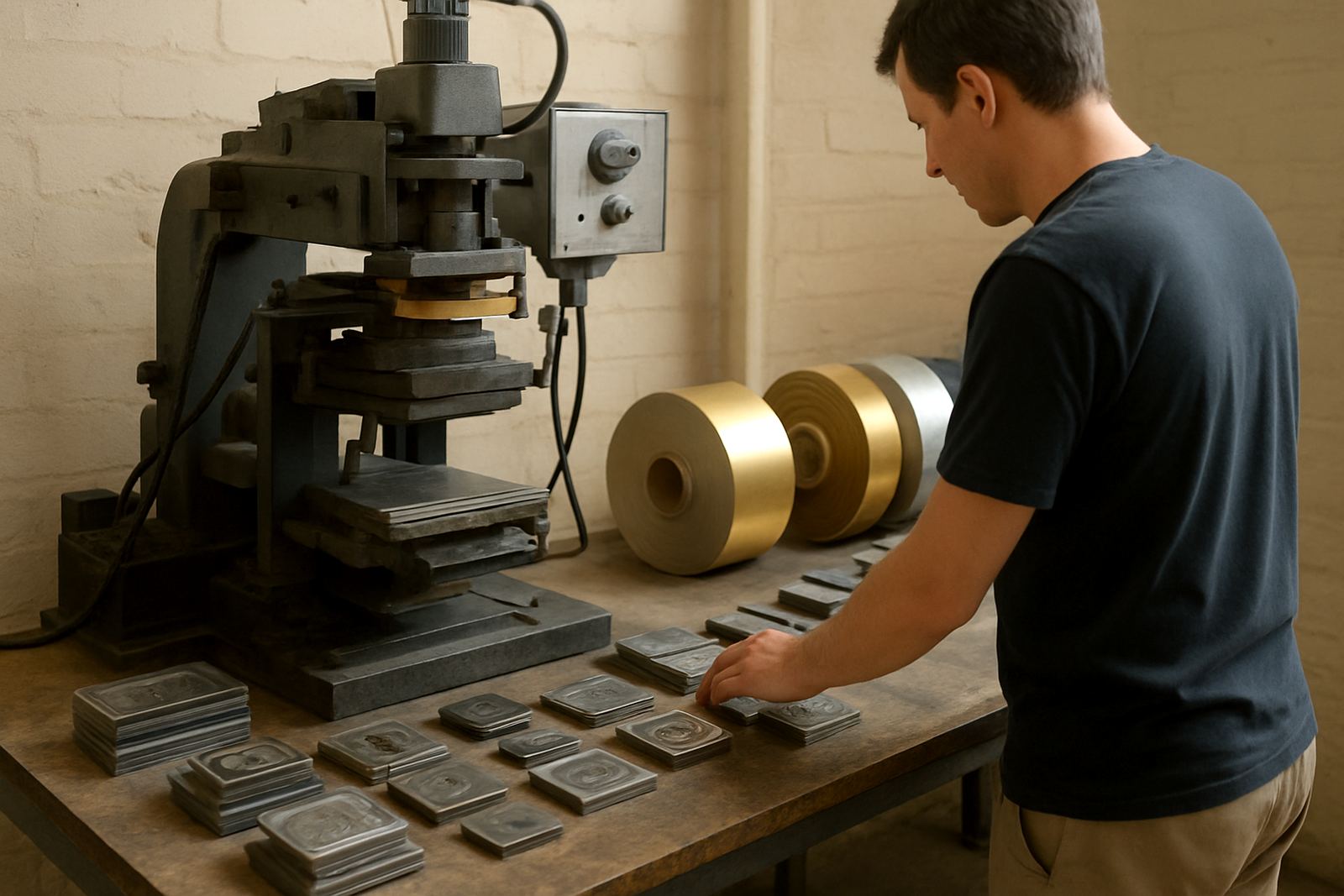
- Label die storage by size, shape and client code.
- Store common foils near the press, not across the workshop.
- Keep setup cards with the actual working settings, not just the job name.
- Separate finished tooling from dies that still need servicing or sharpening.
Use calibration to reduce trial and error
If the heater reads one thing but the foil is not transferring properly, the operator will keep chasing the problem with test pulls and pressure changes. That wastes time and can damage the job. Regular heater calibration and pressure setup remove a lot of that uncertainty. When the press is reading accurately, operators can trust the starting point and spend their time fine-tuning instead of guessing.
For businesses in Johannesburg City West, this matters even more during load-shedding or after power interruptions. A press that has been off, restarted or left to drift may not come back to the same settings as the previous shift. It is worth checking the temperature recovery and verifying pressure before the first production sheet goes through. A quick calibration routine can prevent a long morning of small faults and rework.
Train operators to spot problems before production starts
Good setup time is as much about people as it is about equipment. Operators who understand the press can tell the difference between a placement issue, a foil quality issue and a heat or pressure fault. That means they do not keep changing the wrong setting while the clock runs. Training should not only show how to use the machine, but also how to recognise signs of trouble early.
For example, if the first impression is patchy, the answer may not be more heat. It may be poor die contact, uneven substrate thickness or a foil that is not suited to the stock. If the foil is breaking at speed, the cause could be tension or a feeding problem rather than the die itself. The more confident the operator, the faster the setup becomes because there is less back-and-forth and less trial work.
A short refresher every few months helps too. Staff change, job types change, and packaging customers often ask for tighter finishes on shorter lead times. A team that knows how to adjust quickly will keep the press productive without cutting corners.
Protect machine hours with preventive servicing
When a press starts taking longer to set up, the reason is often mechanical. Worn guides, sticky controls, heater drift, loose mounts or tired pressure components all slow the operator down. Preventive servicing keeps those issues from turning into daily delays. It also reduces breakdown repairs, which always cost more time than planned maintenance.
A sensible servicing plan should include cleaning, inspection, lubrication where required, checking heaters, confirming alignment and replacing consumables before they fail. For workshops in Sandton, Midrand or Germiston handling both short runs and repeat orders, this kind of discipline protects production hours. It is not glamorous work, but it keeps the press ready when the next job arrives and that counts more than people admit.
- Set a weekly check for alignment and pressure consistency.
- Book servicing before peak seasons, not after faults appear.
- Replace worn parts before they cause repeat setup failures.
- Record every adjustment so the next operator starts from the right point.
A practical Johannesburg example
A packaging client in City West was losing nearly half an hour on each changeover because the team was setting temperature, pressure and foil tension from scratch every time. The press itself was fine, but the process around it was messy. After tightening the job cards, labelling tooling and running a short training session on setup order, the team cut average changeover time by close to 15 minutes. That was enough to add another useful production slot to the day without buying another machine.
The same approach works whether you are running a small craft line or a bigger factory with multiple shifts. You do not need complicated systems. You need clear steps, organised tooling and a habit of checking settings before production begins. Once that discipline is in place, the press becomes quicker to set up and easier to keep busy.
If you want help reducing setup time on your hot-foil press, FoilPress works with businesses across Industria West, Roodepoort, Randburg, Midrand, Sandton and Germiston. The team can assist with press installation, operator training, heater calibration, pressure setup, die mounting, foil matching and production optimisation.