Why Greeting Card Foil Has to Look Right First Time
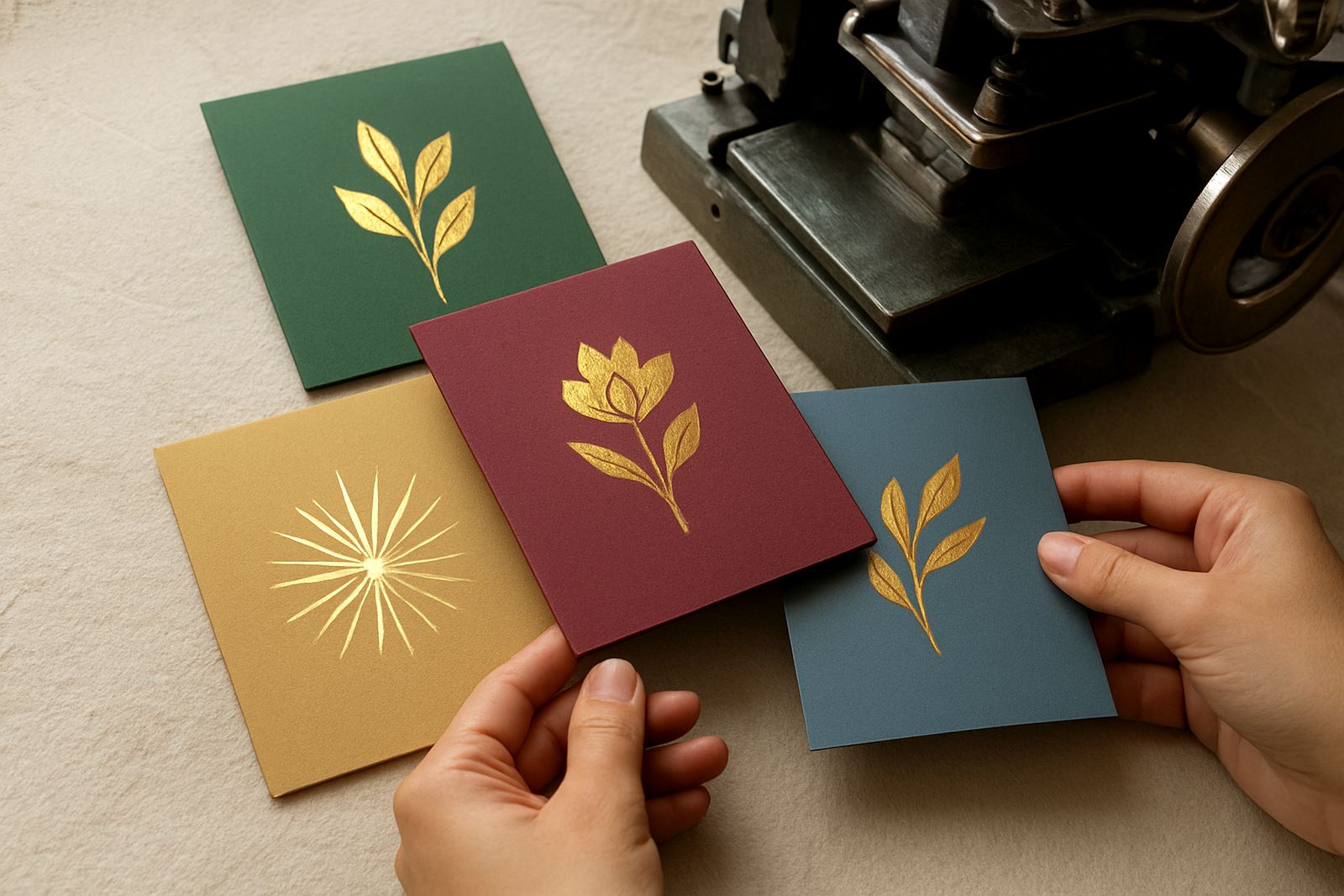
Greeting cards are unforgiving. Buyers see the front panel before they read a word, so the foil has to sit exactly where it should, with crisp edges and even pressure across the full design. A slight misregistration or patchy transfer is easy to spot on a small card face, and it can turn a premium product into a reject very quickly.
For card makers in Johannesburg, Roodepoort, Randburg, Midrand, Sandton and Germiston, the usual pressure points are short lead times, mixed paper stocks and batch changes for different occasions. Valentine’s Day, Mother’s Day, weddings, birthdays and festive ranges all call for different artwork and foil colours, and the press needs to keep up without constant fiddling. FoilPress works with businesses that need repeatable results on 250 gsm to 400 gsm board, with enough control to handle textured card, coated stock and heavier folded cards.
Typical Press Setup for Card Production Lines
The right setup depends on volume and card size, but most greeting card operations need a press that can handle accurate positioning, steady heat and consistent pressure over many cycles. Small craft studios often start with a compact manual or semi-automatic press, while larger manufacturers usually need a machine that can take bigger plates and maintain output across full production days.
- Press bed sized for A5, A4 and folded square cards
- Accurate heater control for fine detail and solid foil blocks
- Adjustable pressure for smooth card stock and textured board
- Quick die change for mixed designs and seasonal ranges
- Foil feed suited to narrow logos, wording and border work
FoilPress also supplies foils nationwide, which matters when a run has to continue without waiting for stock to arrive from elsewhere. In Johannesburg’s warmer workshops, especially in summer, heat control and foil handling need close attention. In coastal orders sent out from Gauteng to Durban or Cape Town, the finished cards also need to cope with humidity during transit and storage.
Layout and Planning Advice Before the First Run
Good foil work starts before the press is switched on. The artwork should allow for clean die lines, sensible spacing and enough margin around folds, scores and glued areas. Where the card has embossing, a window cut, or layered inserts, the press setup should be planned around the thickest point so the foil lands evenly instead of crushing one side.
It helps to think in zones. For example, a main greeting word in foil can sit high on the card front, while a smaller line such as the occasion, date or family name stays clear in print. This makes the design more flexible and reduces the risk of a full rework if one element needs changing. On short runs, a small test sheet can save a lot of wastage, especially when there are multiple paper batches or a supplier has changed board finish mid order.
- Keep foil elements away from fold lines and glued flaps
- Allow enough clearance for die edges and trimming marks
- Test at least one sample from every new paper batch
- Match foil colour to the card background, not only the artwork
- Check how metallic foil looks under indoor and natural light
Common Mistakes That Push Up Scrap and Rework
The most common mistake is choosing the wrong paper. Very absorbent stock can pull the foil unevenly, while overly smooth coated stock may need tighter pressure control. Another problem is running too much heat in the hope of forcing a better transfer. That usually gives you edge spread, dull patches or marks around fine details, and the cards need sorting by hand afterwards.
Misplaced dies are another headache. On greeting cards even a millimetre off can make the whole front feel wrong. Some workshops also rush the foil matching stage and end up with a colour that looks good on a swatch but too harsh on the finished card. For wedding and sympathy ranges, the finish should be elegant and restrained, not loud. The market notices that difference straight away, even if it cant explain why.
FoilPress helps with die mounting, foil matching, pressure setup and heater calibration so the machine is set for the job rather than guessed. That matters when a run is split across multiple titles or when a client wants the same look month after month. A press that drifts, or a heater that runs unevenly, will show its faults in the first few dozen cards.
Budget Ranges for South African Card Makers
Budgets vary widely depending on output, card size and whether the business is a craft studio, a small print room or a full manufacturer. For greeting cards, it is usually better to buy around the real production need rather than overbuying for future growth that may never arrive. A smaller press can still deliver beautiful results if it is matched to the job and maintained properly.
- Entry level manual setup for short runs: about R35 000 to R85 000
- Semi-automatic press for growing card volumes: about R90 000 to R220 000
- Larger production press with stronger control and throughput: from about R250 000 upwards
- Die sets, foil stock, setup materials and first servicing should be budgeted separately
For recurring seasonal work, the hidden cost is downtime. A press that stops in the middle of a Mother’s Day run can quickly cost more than a better machine would have upfront. That is why preventive servicing, spares supply and fast breakdown repairs are worth planning for from day one. In Johannesburg, where many small card businesses are working with tight staffing and load shedding schedules, a machine that starts reliably and holds its settings is worth its weight in saved labour.
Support From Industria West to the Rest of the Country
FoilPress is based in Industria West, Johannesburg and supports card makers across City West and beyond, including Roodepoort, Randburg, Midrand, Sandton and Germiston. The team handles press installation, operator training, preventive servicing, breakdown repairs, heater calibration, pressure setup, die mounting, foil matching, spares supply and production optimisation. That makes it easier to get a new line running properly and keep an existing one in shape for the busy seasons.
For greeting card businesses, support should be practical. The machine has to run cleanly on the day the order is due, not only in a demo. If you are producing birthday cards, gift cards, Christmas ranges or event invitations, FoilPress can help you choose equipment that fits the press room, the budget and the output target. Small workshop or full production floor, the aim is the same: sharp foil, consistent sheets and fewer surprises.
For pricing, spec guidance or a call about a particular card range, send a message through our contact form.