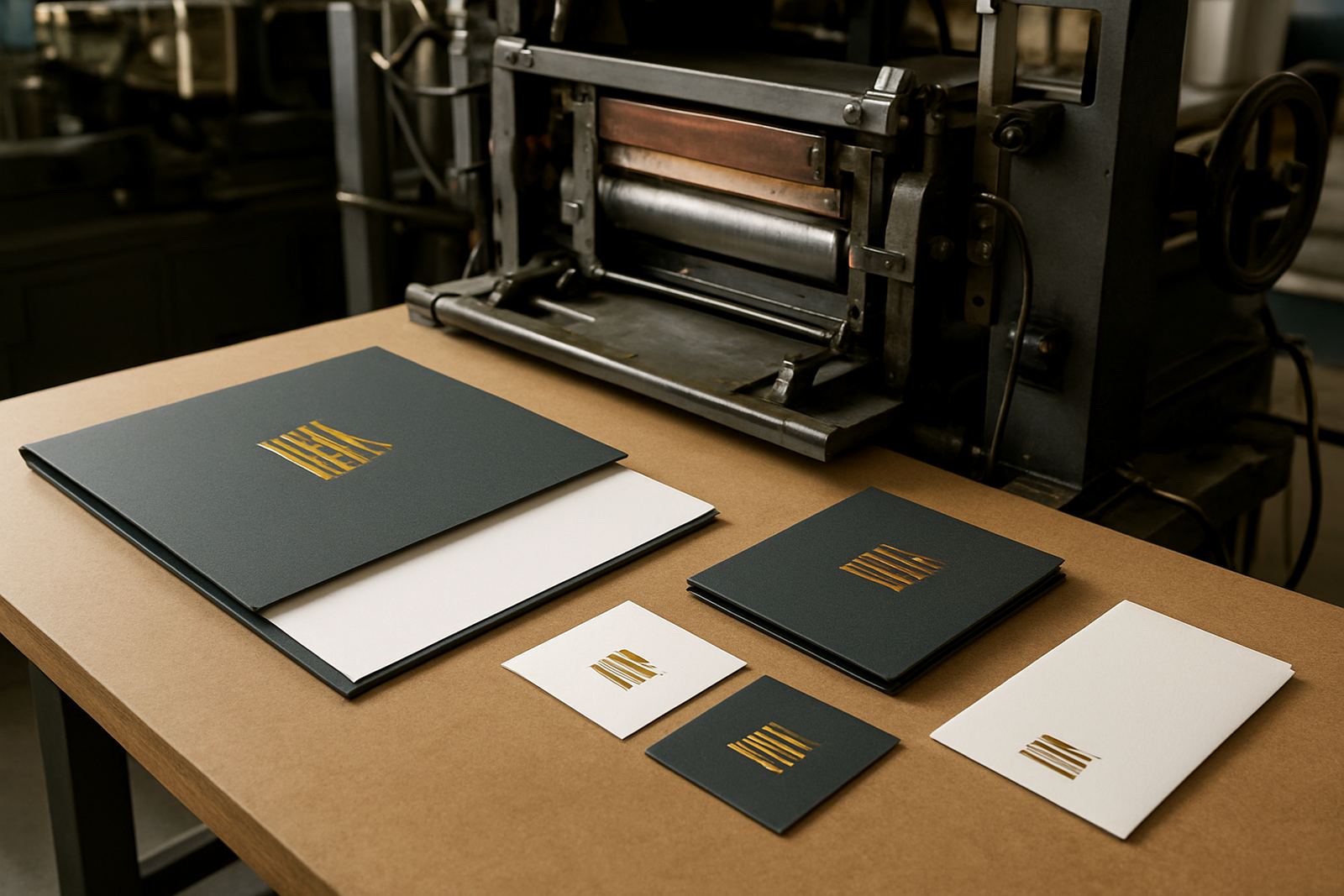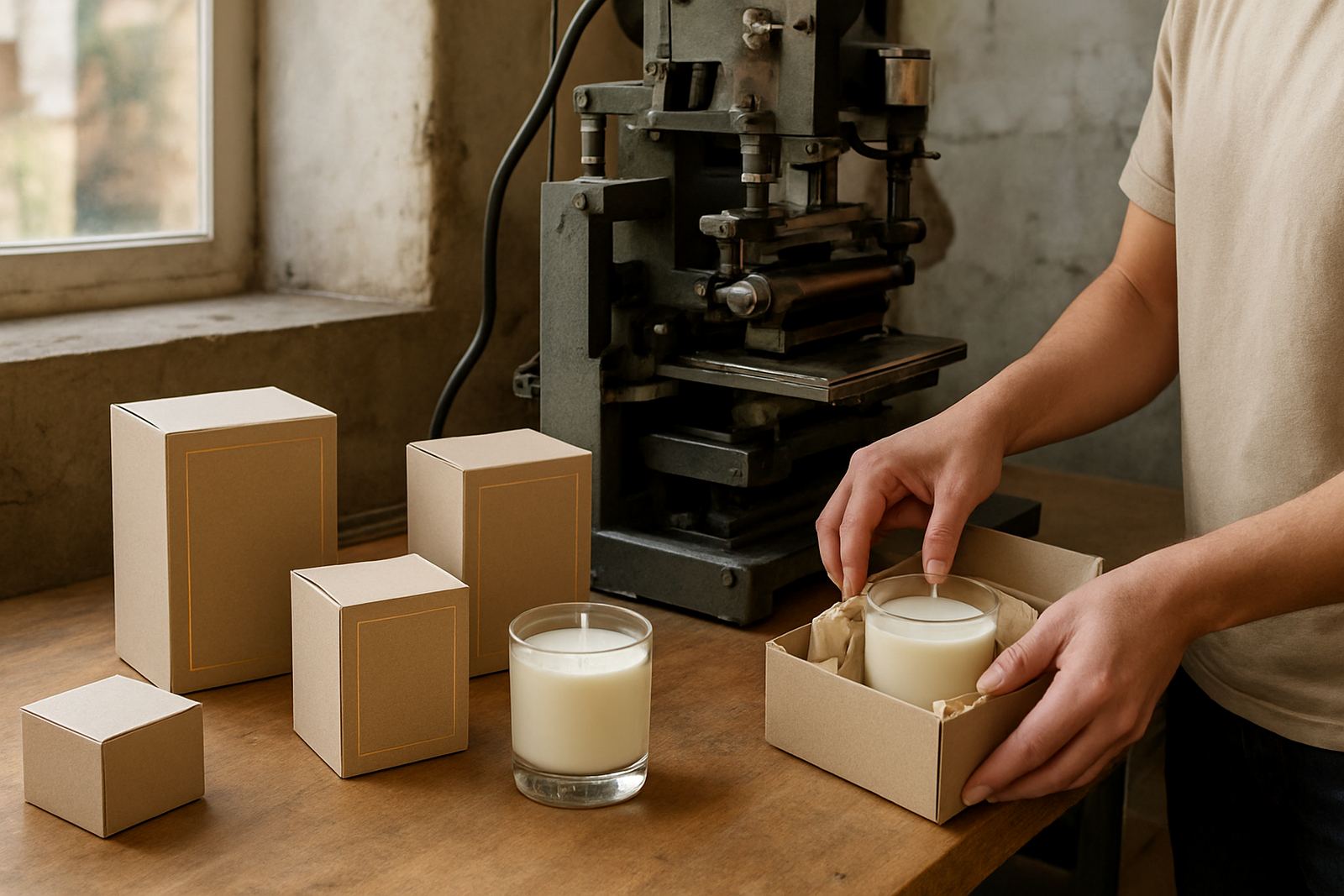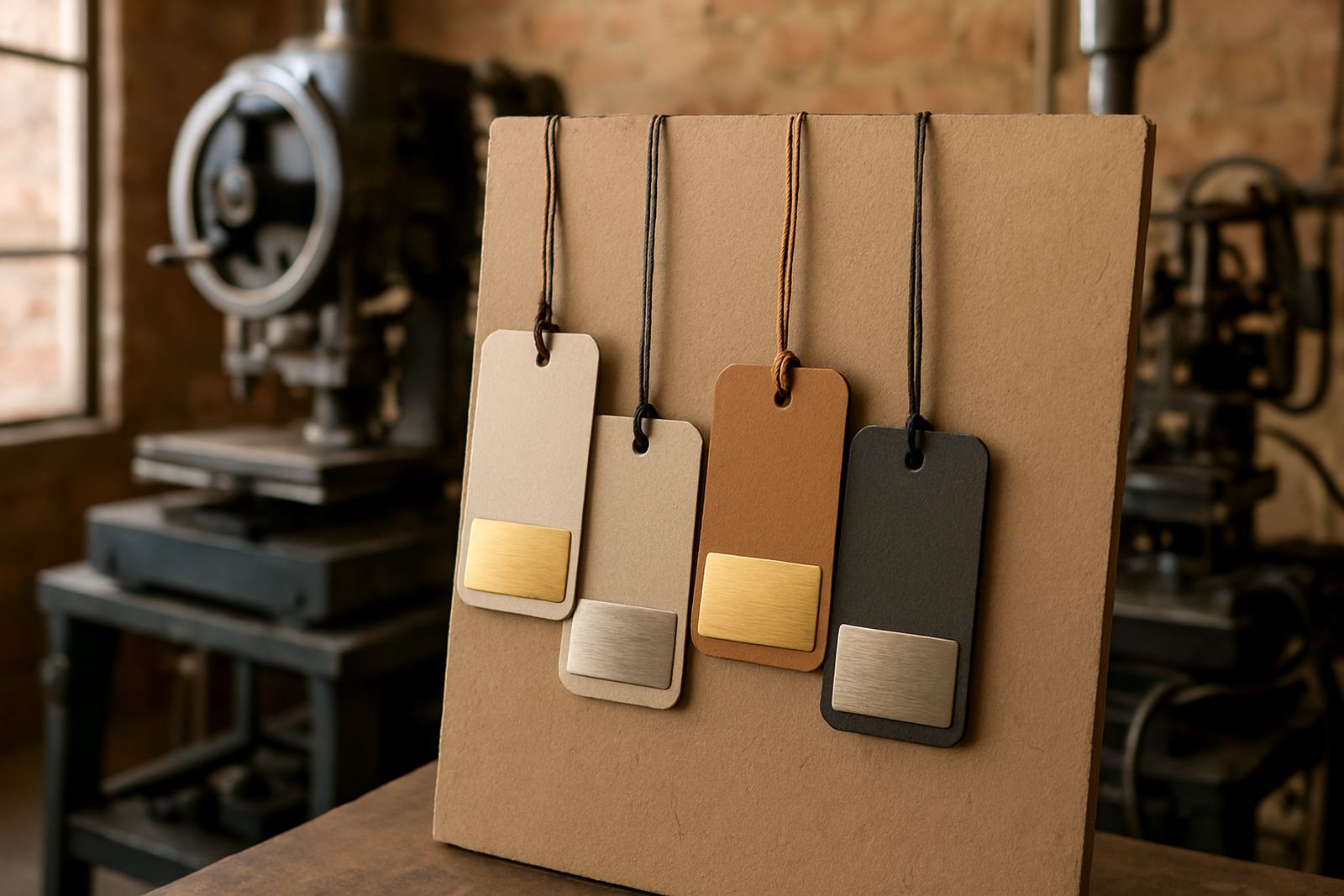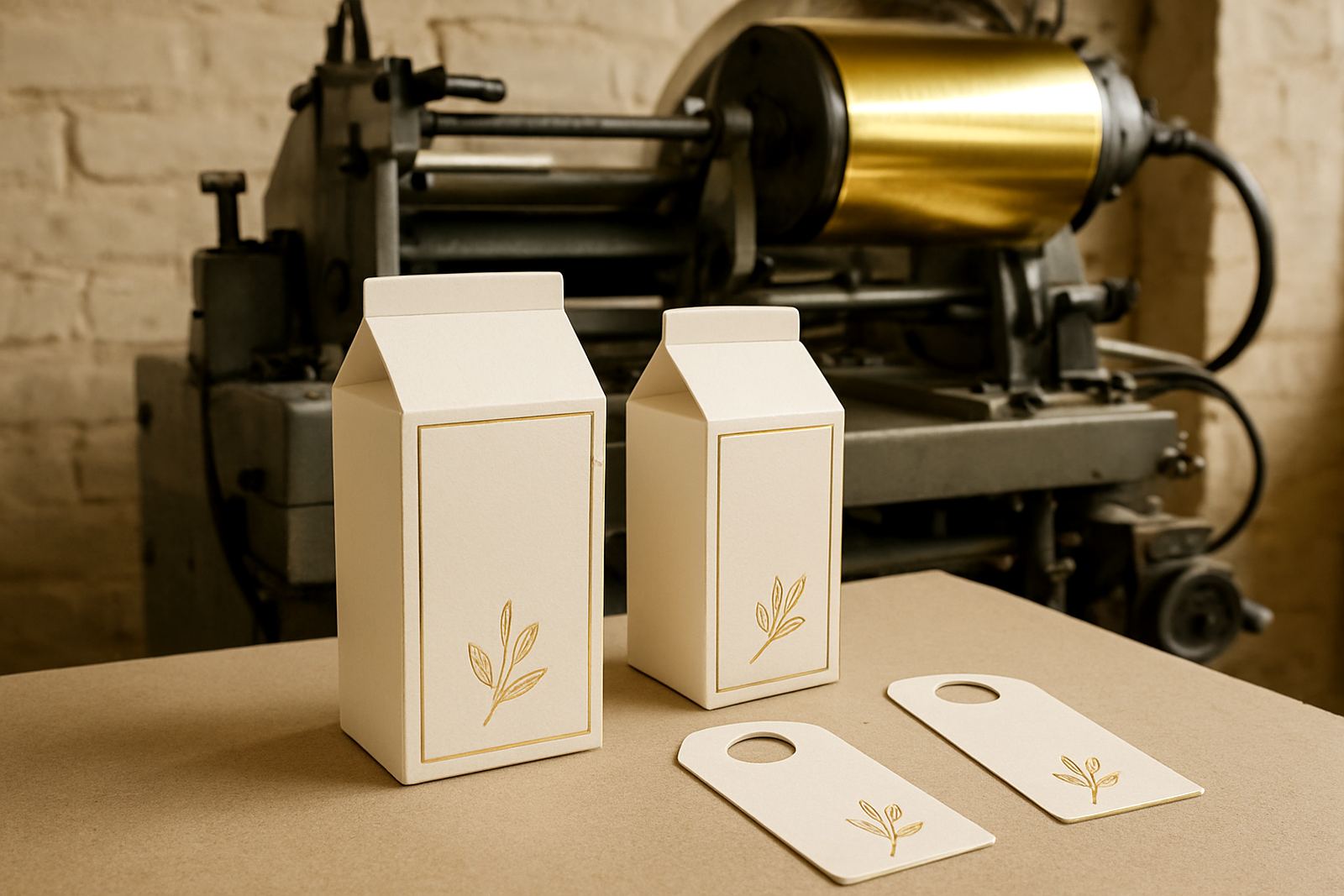
Why wine packs need accurate foil placement
In wine packaging, foil is doing more than decoration. It marks the brand, helps the carton read properly under retail lighting, and gives neck tags and gift packs a finished look that buyers notice straight away. On a shelf in Sandton or at a cellar door in the Cape the difference between a tidy foil mark and a patchy one is easy to see.
Cartons, sleeve wraps and neck tags often use lighter board than general packaging, so pressure and heat must be set carefully. Too much heat and the board can scorch or warp. Too little and the foil skips, breaks up, or pulls away after handling. For seasonal gift packs and limited releases, consistency matters because each pack has to match the next one, even when the run is only a few hundred units.
Typical press setup for wine cartons and neck tags
Most wine work is done on hot-foil stamping presses with adjustable heat, pressure and dwell time. For short runs and sample work, a compact manual press may be enough. For repeat carton and tag work, a heavier unit with more stable pressure control gives better registration and fewer rejects.
- Heated platen or chase for clean transfer on carton panels and tags
- Fine pressure adjustment for coated board, uncoated board and textured stock
- Temperature control for foil film, board density and production speed
- Die mounting system that keeps small lettering and border lines in position
- Guides or stops for repeat placement on folded cartons and hanging tags
For many Johannesburg and Gauteng clients, the real need is not a fancy machine but one that stays steady through a full shift. A workshop in Industria West or Roodepoort often has to switch between carton sizes, wine label components and neck tags without losing set-up time.
Planning the layout before foil starts moving
Good foil results start before the first sheet goes into the press. The layout has to suit the pack structure, the grain direction of the board and the way the carton will fold. On wine cartons, a logo placed too near a crease can crack when the box is assembled. On neck tags, a heavy foil block can make the card curl, especially in humid conditions near the coast or in a warm packing room with poor airflow.
Leave enough room around fine type and corner borders so the stamp can bite cleanly. If the design includes a crest, vintage line, or estate name, keep the foil area away from glue flaps and cut lines. Many problems come from artwork that looks fine on screen but does not suit real folding, creasing and die-cutting.
- Place foil away from folds, glue zones and stressed corners
- Allow for board stretch on long panels and wrap sleeves
- Keep small text bold enough to survive a first pass
- Test the exact stock, not a similar one
- Check colour and gloss under daylight and shop lighting
Common mistakes that cost time and stock
The most common mistake is treating every carton or tag as if it will behave the same. Different boards absorb heat differently, and a stock change can mean a new setting altogether. Another issue is using a foil that looks right on the sample but is too brittle for repeated handling or too soft for the storage conditions.
We also see production teams rushing setup after power interruptions. If load-shedding has interrupted a run, the press may need a fresh temperature check before work restarts. A unit that is slightly off can burn through a stack very quickly. It is also worth checking the die edges and mounting surface. A worn die or loose mounting plate can create ghosting, double lines, and the sort of off-centre mark that ends up in reject bins.
Costs and budgeting for wine packaging work
Budget depends on output, the size of the carton, how much detail is being foiled and whether the work is mostly sample runs or steady production. For a smaller setup doing neck tags and occasional carton runs, a practical starting budget for a suitable press and basic tooling can begin around R85 000 to R180 000. Mid-range production equipment with better control, stronger framing and more repeatability often sits between R180 000 and R420 000.
For higher-output packaging work, especially where multiple carton styles and regular changeovers are involved, complete setups can move above R500 000 once tooling, installation and operator training are included. Spares, heater elements, temperature controls and consumables should also be part of the monthly plan. It is cheaper to spend on correct setup than to lose cartons, board and foil on a rushed run.
Support for wineries, packers and carton converters
FoilPress supports clients across Industria West, Randburg, Midrand, Sandton, Germiston and wider South Africa with press installation, operator training, preventive servicing and breakdown repairs. For wine packaging, that support matters because many runs are seasonal and timing is tight around bottling, launches and export deadlines.
Our team also assists with heater calibration, pressure setup, die mounting, foil matching, spares supply and production optimisation. If your line is under strain from humidity, worn tooling or uneven carton supply, we can help bring the process back into line so the next batch does not need rework. Sibusiso Mthembu and the team know that in packaging, small faults become expensive very quickly.