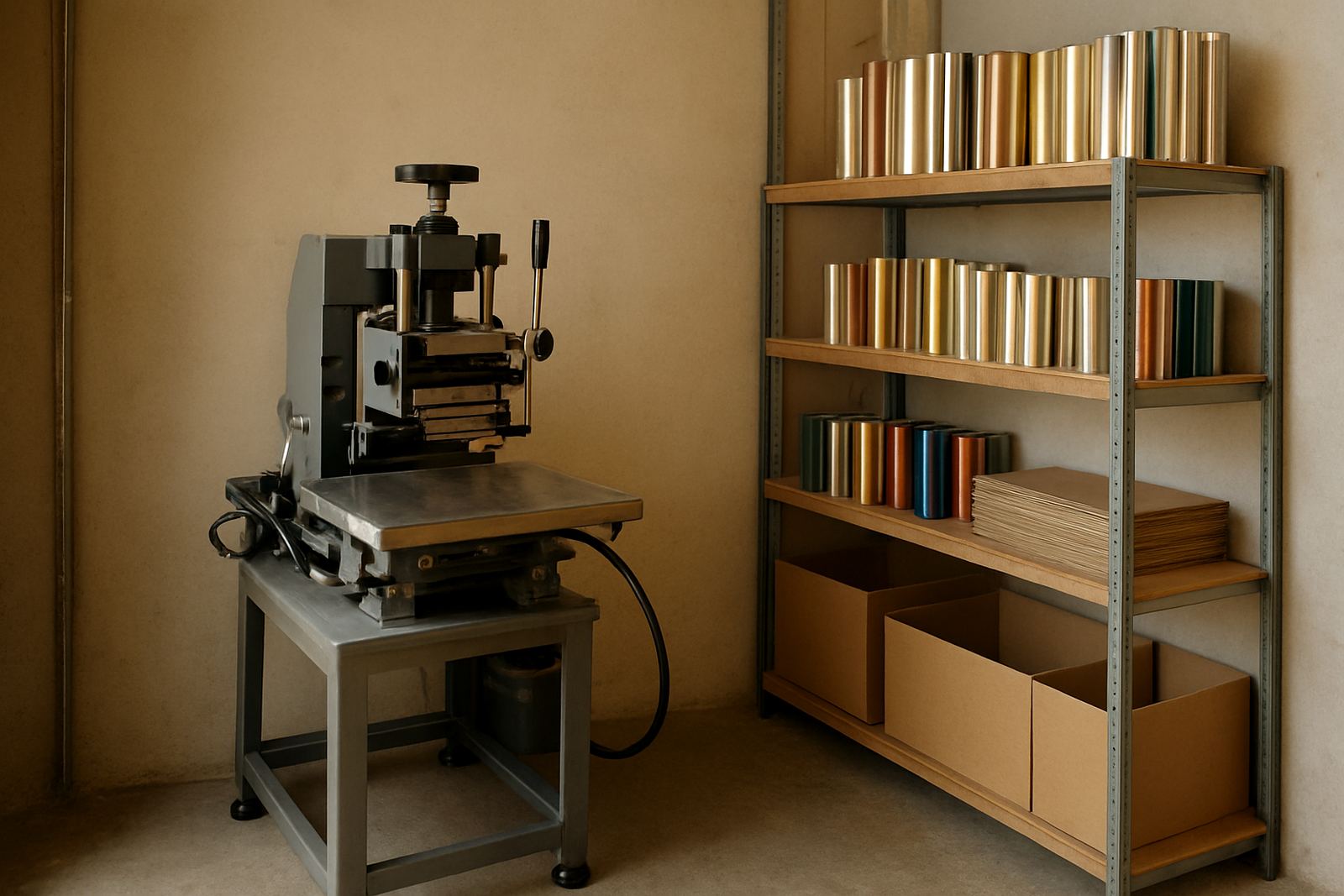
Start with the real footprint, not the brochure size
Measure the space where the press will live, then add room for foil rolls, finished stock, a trolley and safe operator movement. In many Johannesburg and Randburg workshops, the press itself is only part of the problem. You also need clear access for loading dies, opening covers, and moving card packs or cartons in and out without blocking other work.
Leave at least 900 mm of working clearance on the operator side and 600 mm where stock is only passed through. If the unit will sit near a wall, pillar or roller shutter, check that doors, guards and heaters can open fully. In a small room, a machine that looks compact on paper can become awkward once pallets, packing tables and guillotines are in place.
Match the press to your daily output, not peak ambition
Small teams often buy for the biggest job they hope to win, then spend months running below capacity. A better approach is to match the press to the average job size, the number of changes per shift and the foil areas you apply each day. For craft card work, short runs and repeat jobs usually matter more than very high speed.
If your work changes often, choose a setup that allows fast die mounting, simple pressure adjustment and repeatable heater control. That saves time when one operator is doing setup, running and packing. It also reduces waste on short runs where a few bad impressions can wipe out the margin.
- List your top 10 recurring jobs and note size, substrate and foil colour
- Record average run length, not the biggest order from last year
- Check whether one person can load, run and stack safely
- Confirm how much warm-up time the press needs before production starts
Plan the power supply before the machine arrives
Power is often the first hidden cost in a small workshop. A foil press may be compact, but heaters, controls and auxiliaries still need clean, stable supply. If you are in an area affected by load-shedding, you need to know whether the press can resume safely after an interruption and whether your generator or inverter setup can carry the load.
Ask for the electrical specification in plain figures and have a qualified electrician confirm the circuit, breaker size and cable route. In older industrial buildings around Industria West, Roodepoort and Germiston, it is common to find shared circuits, undersized points and sockets that were never intended for production equipment. That is where avoidable faults and nuisance trips start.
- Confirm voltage, amperage and phase requirements
- Separate the press supply from high-load equipment where possible
- Allow for surge protection and proper earthing
- Test how the press behaves after a power cut before full production starts
Use one operator station that keeps material moving
In a small space, the best layout is usually a simple straight line. Keep input stock on one side, the press in the middle and finished work on the other side. This reduces walking, bending and confusion, especially when one person is handling set-up while another is packing or trimming.
Use a single marked area for dies, foil rolls, cleaning cloths and basic hand tools. That helps with counting stock and cuts down on lost time when a job is waiting and someone is looking for the right spacer or temperature note. If you work with packaging in Midrand or Sandton, where turnaround can be tight, these small delays add up very quickly.
A clean bench, even a narrow one, is worth more than extra clutter. Keep only what is needed for the next job in reach. Everything else should have a fixed storage point so the operator does not waste time or crowd the press bed.
Set up for short runs, changeovers and mixed foils
Smaller workshops often handle many colours, stock types and customer requests in one day. That means your press needs a repeatable changeover routine. Keep heater settings, pressure notes and foil match details written down for each recurring job. This makes it easier to restart after a breakdown, power cut or shift change.
For mixed work, train staff to check substrate thickness, foil release and die alignment before every run. Incorrect pressure or temperature can waste material quickly on short jobs. If you are foiling cards, cartons or sleeves, keep test pieces nearby so you can confirm setup before committing to the full batch.
- Write down the correct temperature, pressure and dwell time for each job
- Store common dies in labelled trays or drawers
- Keep a small sample board of approved foil matches
- Run a first-off check on every job, no matter how small
Train for consistency when the team is lean
When staff numbers are limited, every operator needs to understand the basics of setup, safety and routine checks. That includes die mounting, foil threading, heater calibration, pressure setup and what to do if a sheet starts to shift. One person should be able to cover the work without guessing, even if the regular operator is off sick or stuck on another machine.
Keep the training practical and local to your own setup. Show the team where the breakers are, how to isolate the machine and who must be called if a fault appears. In a small business, that kind of clarity saves time and avoids damage. It also makes it easier to keep production moving during power interruptions or busy order weeks.
Keep a simple service plan so downtime stays low
In a compact workshop, a breakdown can stop the whole line. Preventive servicing is usually cheaper than waiting for a heater fault, pressure leak or misaligned guide to bring work to a standstill. A monthly visual check and a scheduled service visit can catch problems early, especially where dust, heat and coastal humidity affect equipment and materials.
Track the basics in one file: service dates, common faults, spare parts used and any production problems linked to heat or pressure. That record helps with future setup and makes technical support faster when you need it. It also shows when the press is being pushed beyond its intended duty cycle, which is important in smaller shops that run long hours to meet deadlines.
- Inspect heaters, cables and moving parts every week
- Check foil feed, pressure and alignment before each shift
- Keep spare consumables and fast-moving parts on hand
- Book servicing before peak periods, not after a failure